
Pilgrimage Scroll: Visual Memories of a Sacred Journey - UCLA Islamic Collections
Religious pilgrimages constitute an essential part of a Muslim’s life. Since pilgrimages are expensive, time-consuming, and often once in a lifetime experiences, many pilgrims have historically taken steps to memorialize their journeys. One such way was through pilgrimage certificates and illustrated pilgrimage scrolls, which became increasingly popular over the last two centuries.
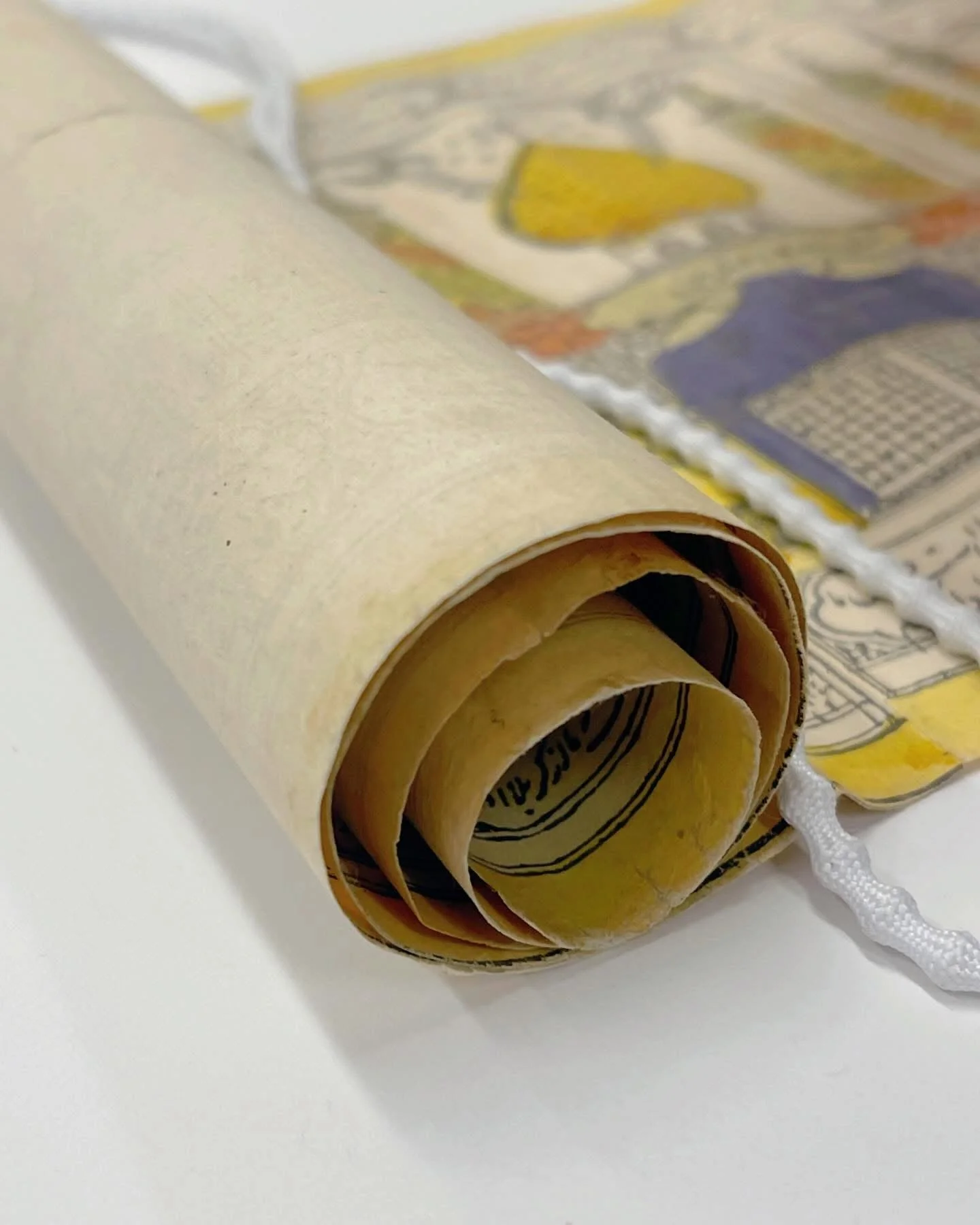
During my time at UCLA, I had the privilege of studying a nearly perfectly preserved Shiite pilgrimage scroll. This object is an invaluable source for understanding the history of pilgrimage. Shiite scrolls hold a unique place in the study of visual documentation of sacred sites, especially during a period when photography did not exist and architectural details were captured entirely through illustration. Because these scrolls were generally hung or pasted on walls, they were often exposed to light, water, insects, dust, and other damaging factors, making them prone to physical and chemical deterioration. Properly preserved examples are extremely rare, which makes the UCLA scroll particularly remarkable.
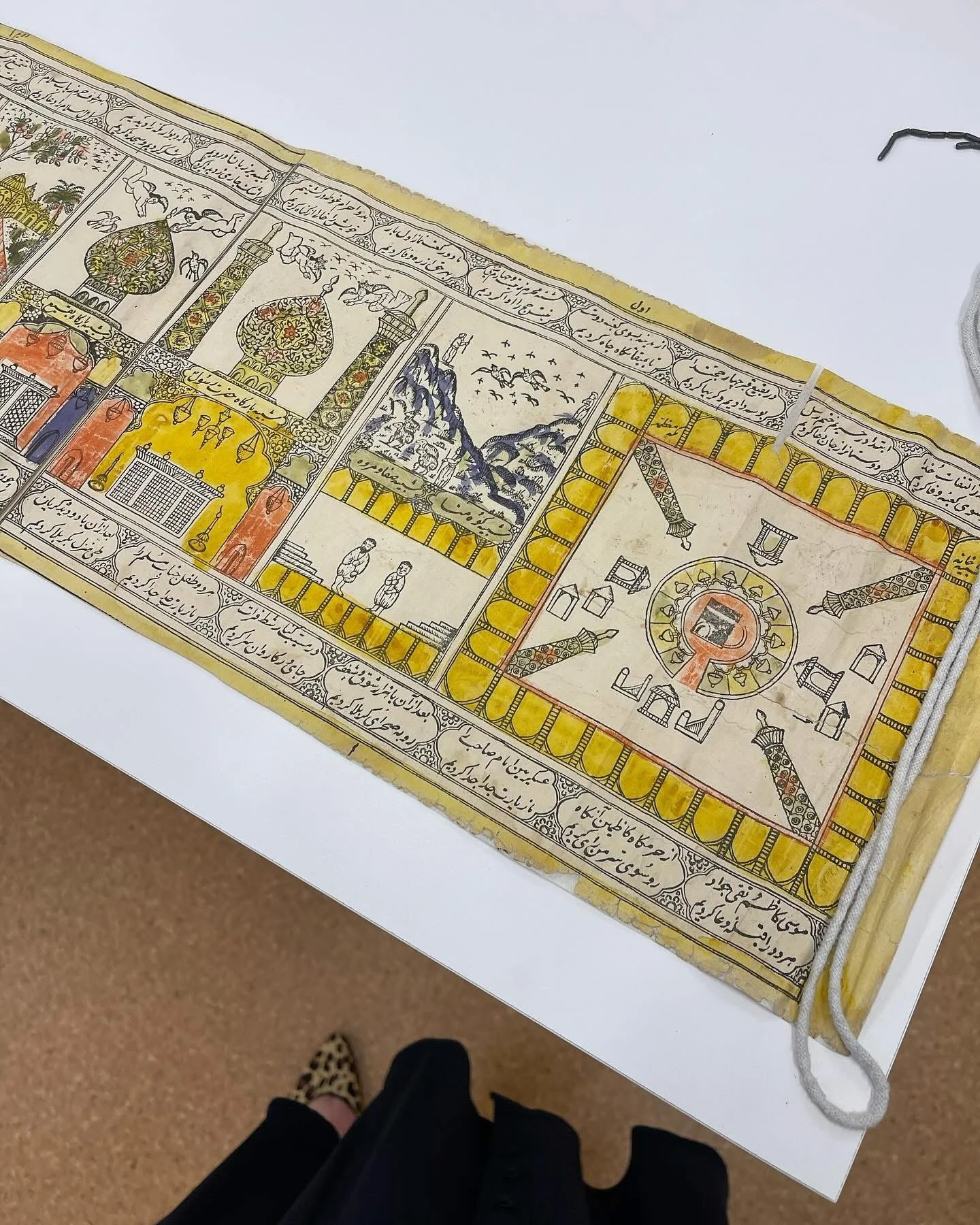
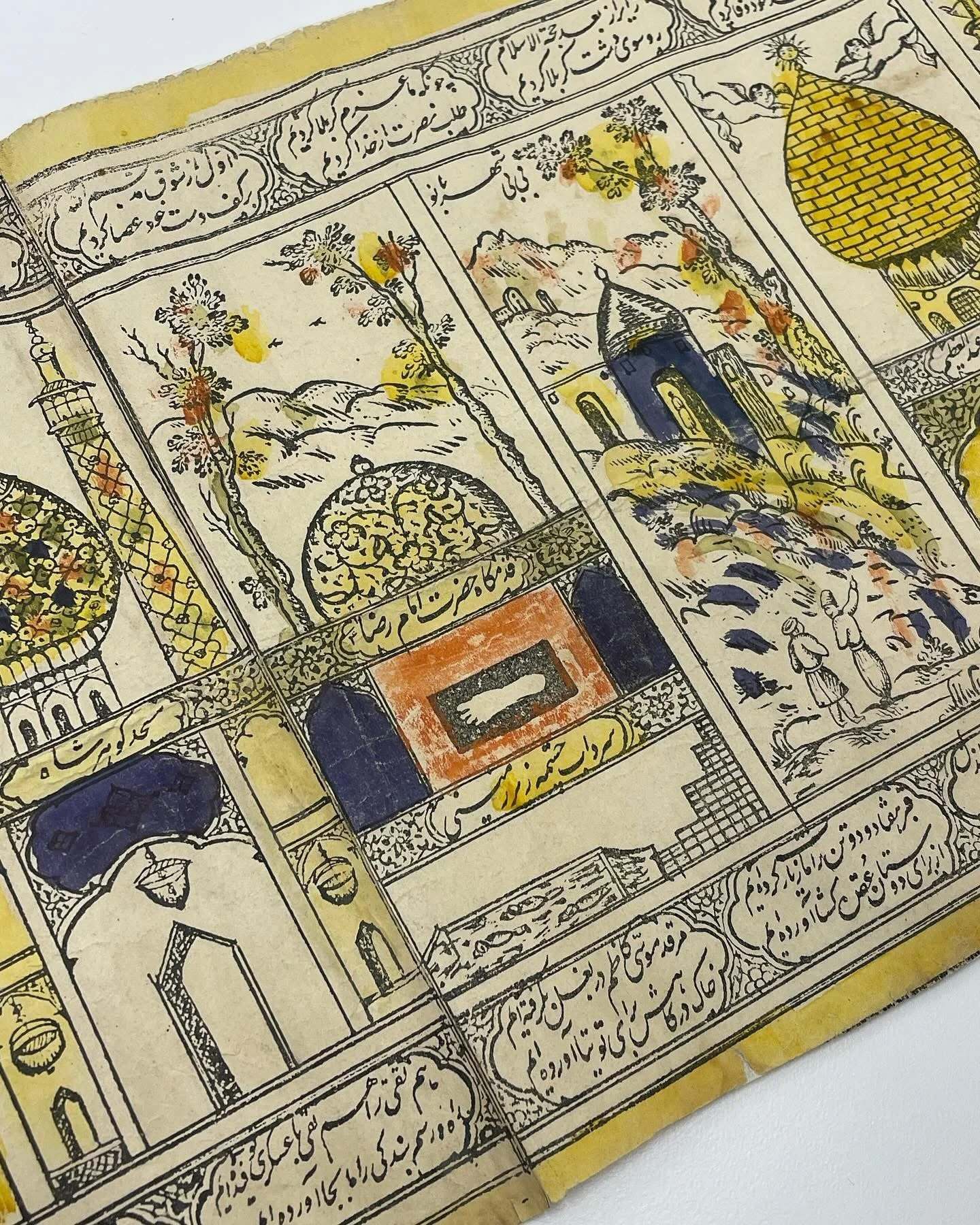
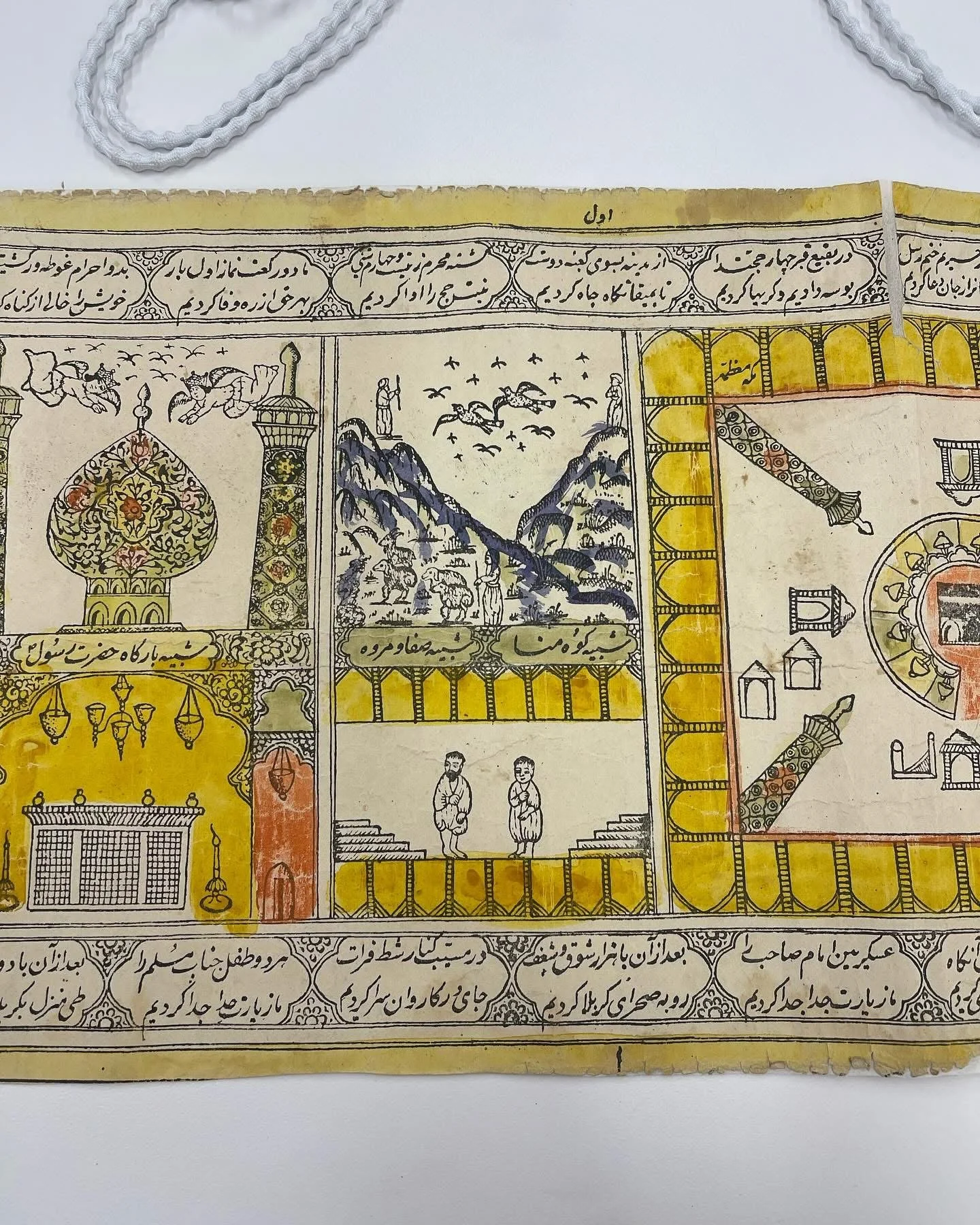
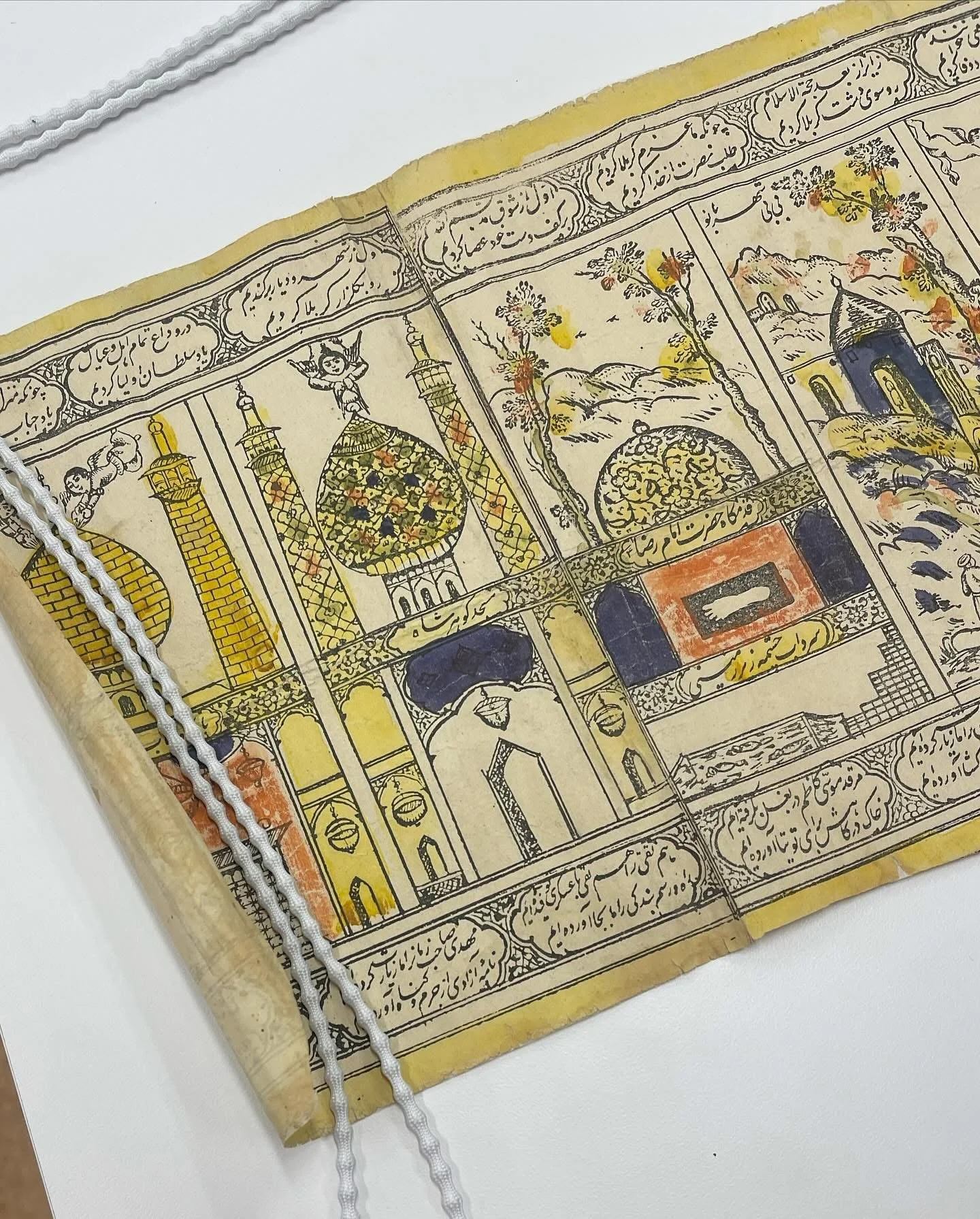
The scroll likely dates to the Qajar period. In Shiite pilgrimage traditions, among the sacred sites, the shrine of Imam Reza has always held a special status and is depicted in surviving scrolls as the ultimate destination. This scroll, of Iranian origin, is distinguished by its detailed depictions of sacred sites along the pilgrimage route to Mashhad. It includes several key locations, such as the Qadamgah of Neyshabur, the Goharshad Mosque, and the shrine of the Eighth Imam.
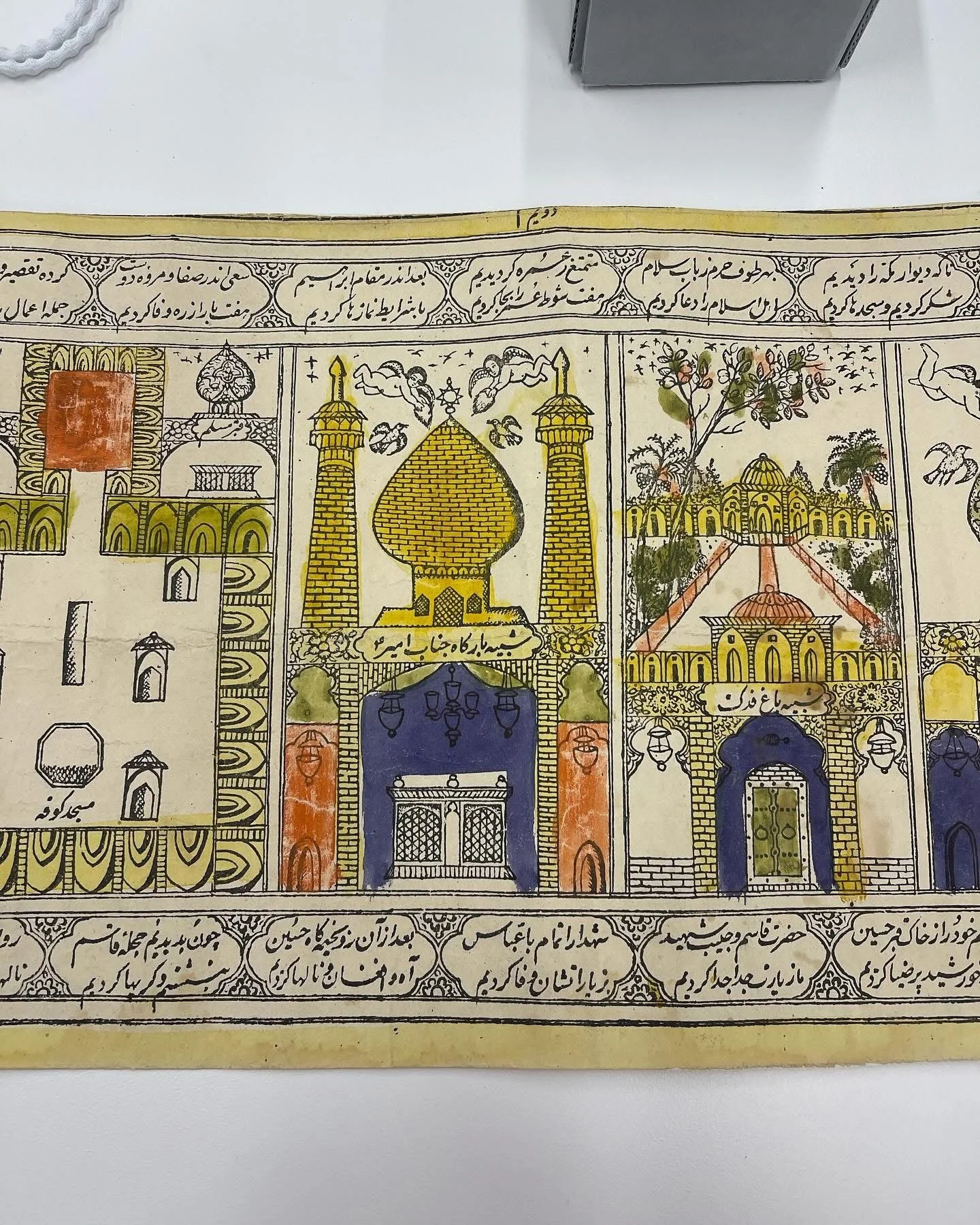
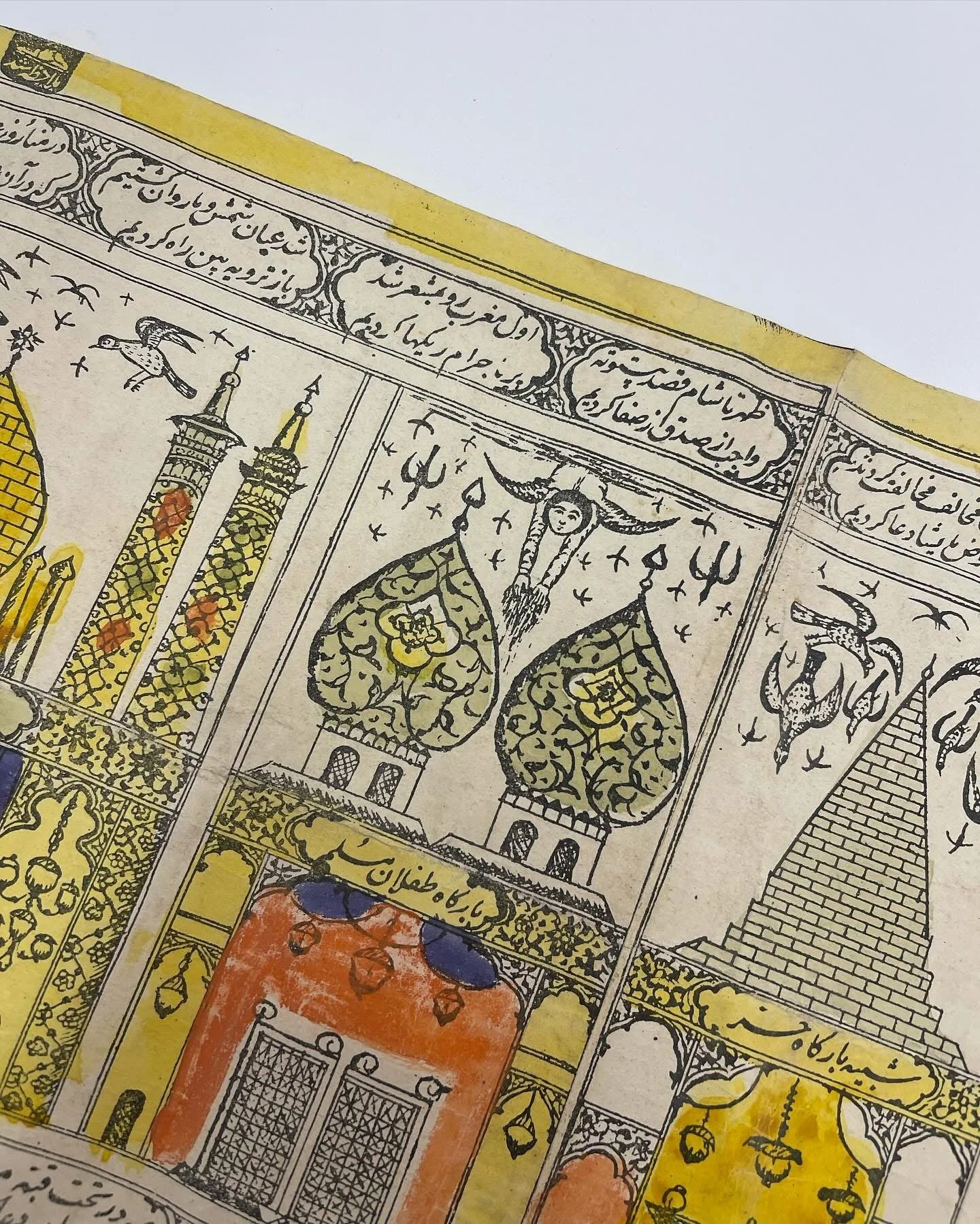
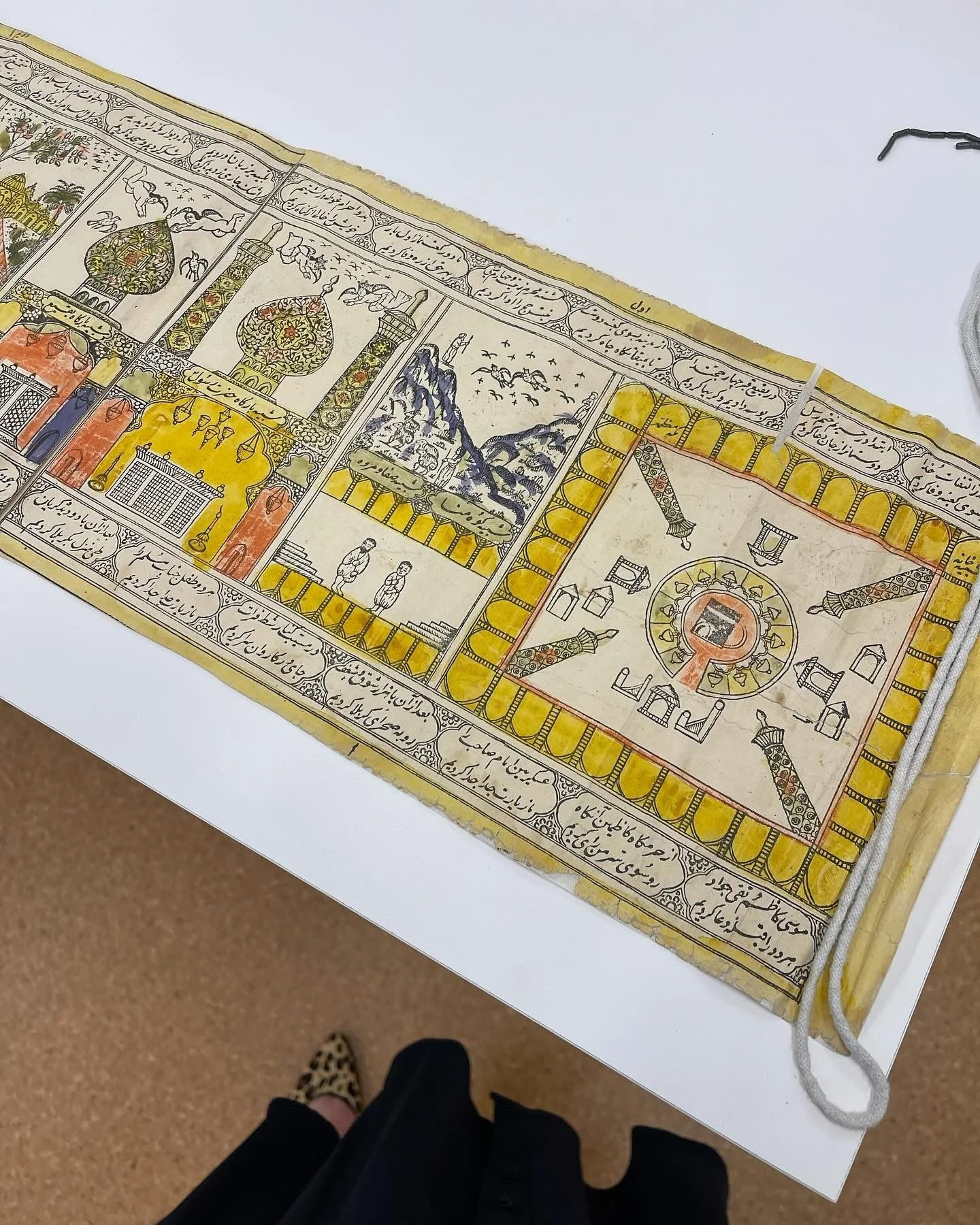
The scroll illustrates the pilgrimage journey from Mecca to Mashhad and is accompanied by short poetic verses describing the pilgrim’s visits to each sacred site. Visually, the scroll is arranged from right to left, beginning with the Hajj rituals in Mecca and progressing through sites in Medina, Najaf, Karbala, Kazimayn, and Samarra, before concluding with the shrine of Imam Reza and the Goharshad Mosque in Mashhad.
The scroll features vibrant blue, yellow, and orange tones, painted in a style that suggests the work was completed quickly. It is likely that multiple copies of this scroll were produced and sold in markets or near pilgrimage sites, allowing pilgrims to take home a visual record of their journey. The architectural depictions in the scroll are especially valuable. They allow viewers, even centuries later, to identify specific sacred buildings and spaces, offering both historical insight and a sense of connection to the sites.
One striking detail is the inclusion of a foot imprint. In Islamic tradition, such imprints, often called qadamgah, symbolize the presence of a holy person or prophet at that location. Pilgrims may use these imprints as focal points for veneration or prayer, representing both a spiritual and physical link to the sacred.