European Costume Scene
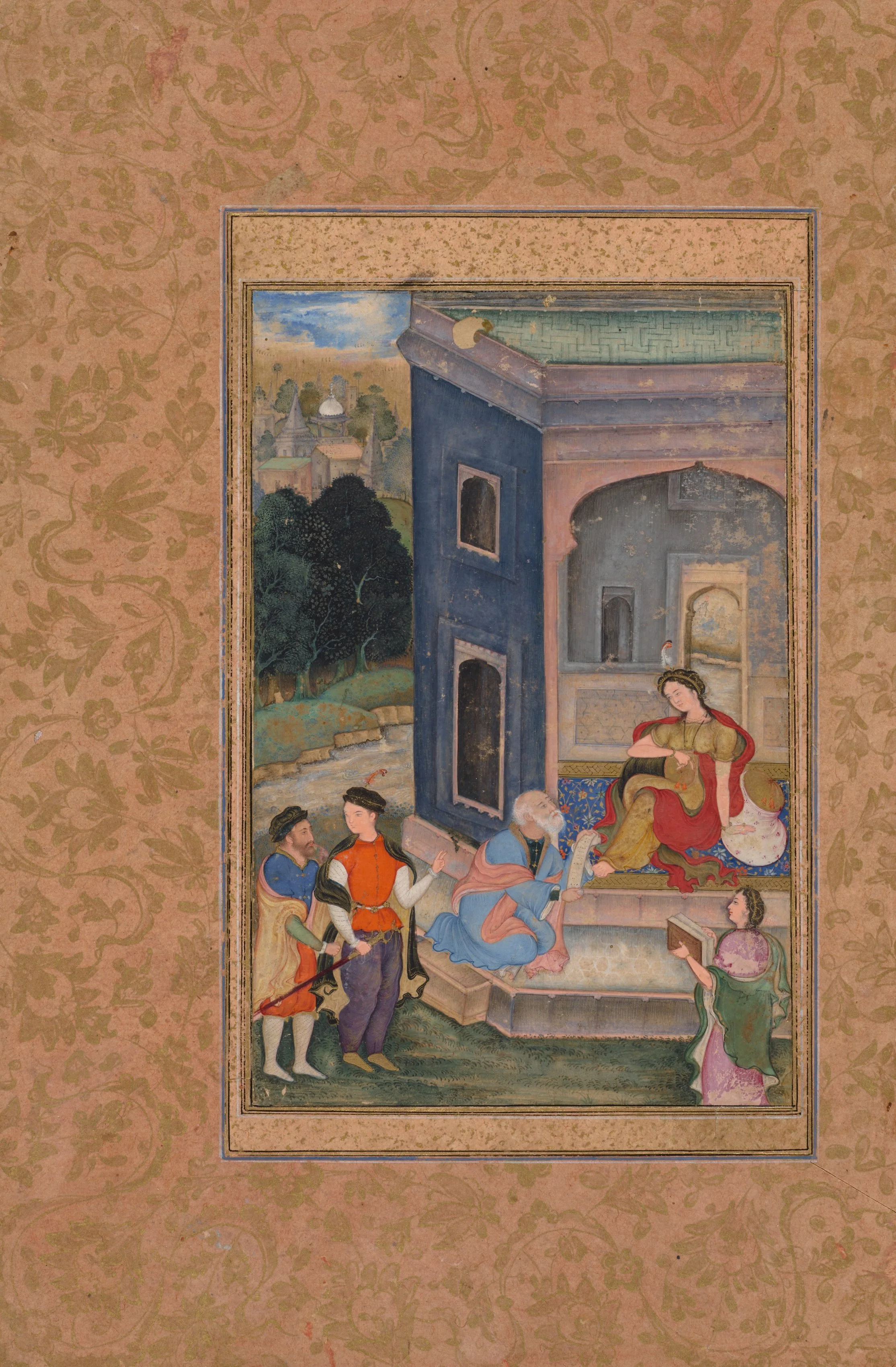
Painting: European Costume Scene
Date: circa 1590 to 1595
Place of Origin: Mughal India during the reign of the Mughal Dynasty (1526 to 1756)
Material: Gum tempera and gold on paper
Dimensions: Image 21.5 by 13.4 centimeters
Provenance: Acquired by the Cleveland Museum of Art through the Andrew R. and Martha Holden Jennings Fund in 1971 (Accession number 1971.89)
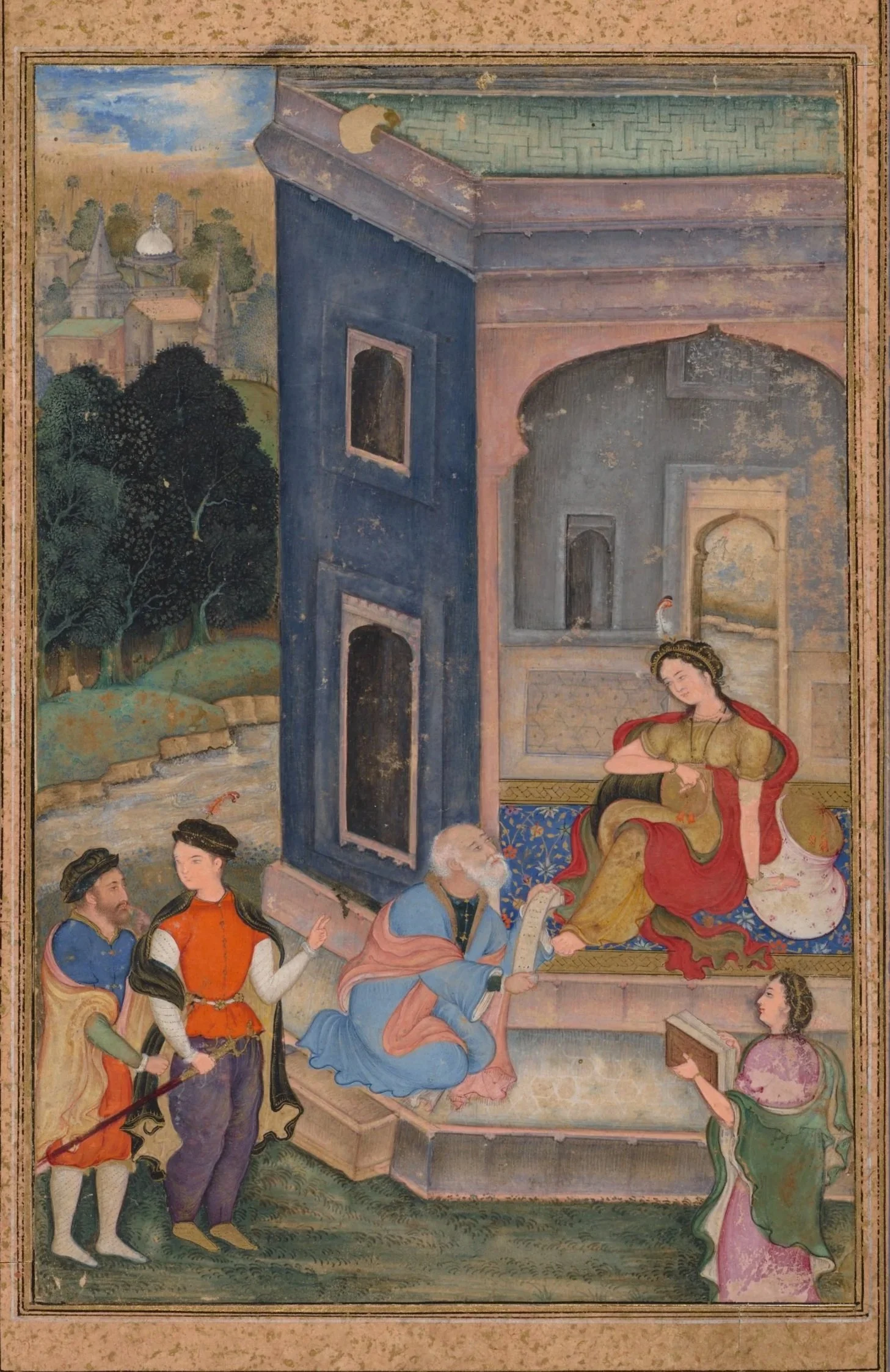
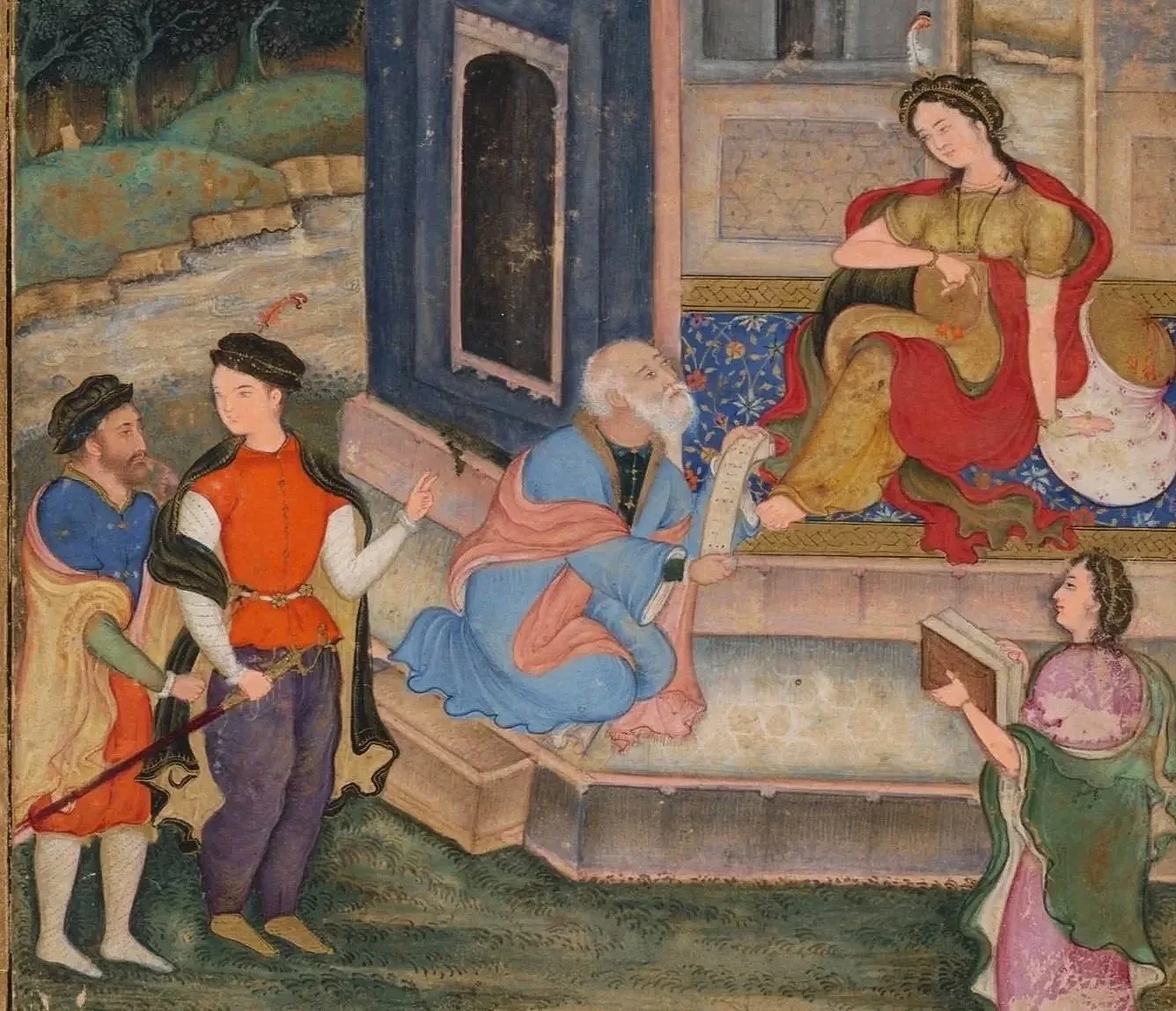
This enigmatic painting created by an unidentified Indian artist presents a group of European figures in a stylized setting. Two male figures dressed in European-style garments approach a domed pavilion where a seated woman receives a kneeling holy man who presents a scroll. The figures wear a mix of clothing styles from different eras which adds to the visual ambiguity and may indicate a Mughal artist’s imaginative interpretation of European subjects.
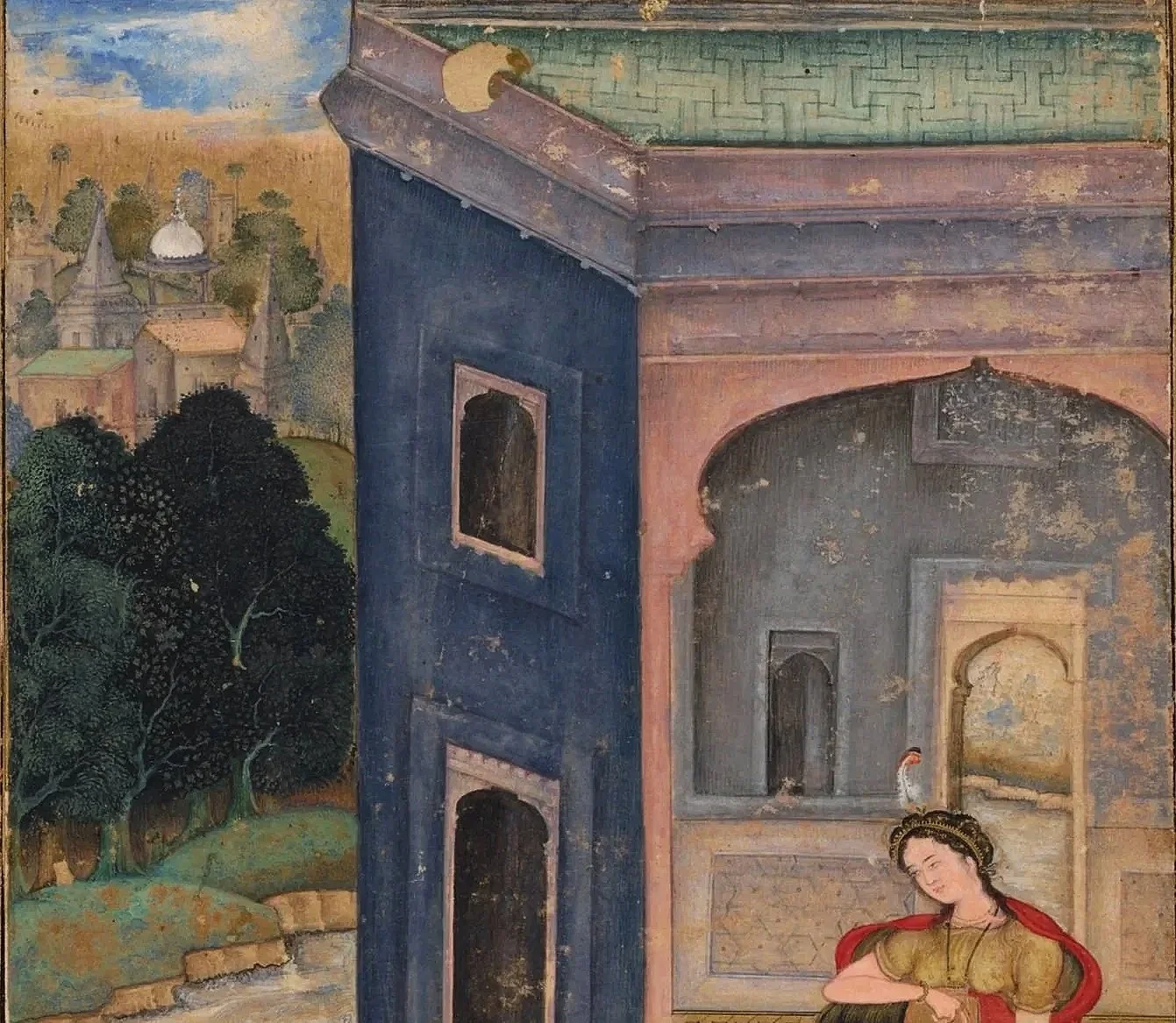
In the upper left background a detailed cityscape reveals further European influence likely based on engravings brought to the Mughal court by Jesuit missionaries. The architecture suggests a hybrid vision filtered through Mughal aesthetic conventions.The painting is delicately executed with fine lines and vivid pigments highlighting the garments architectural forms and facial expressions. The use of gold adds refinement and visual depth. The composition is compact yet layered with spatial cues that guide the viewer through the interaction between the figures and the built environment.
This image is part of a broader corpus of Mughal works responding to European artistic traditions introduced through missionary contact in the late sixteenth century. Jesuit visitors to Akbar’s court brought prints, paintings and religious texts which were studied and sometimes reinterpreted by the court artists. The work is not a direct copy but rather a creative reimagining that reflects the Mughal court’s fascination with foreign visual cultures. It also reveals the sophistication with which Mughal artists engaged with unfamiliar iconographies adapting them to local tastes and symbolic languages.