Early 17th Century Mughal Era Illuminated Qur’an at the State Library of New South Wales - 200 Years Celebration
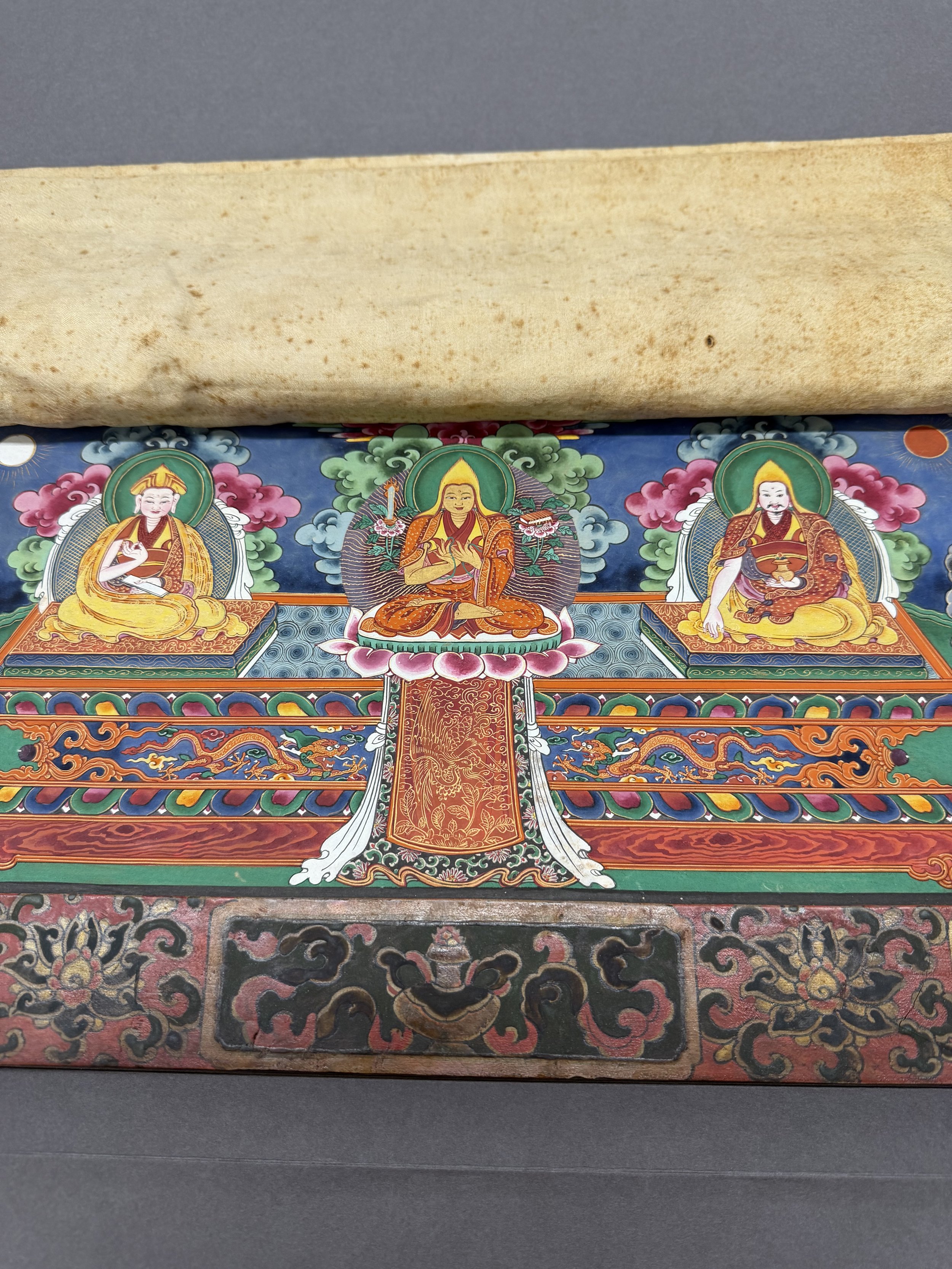
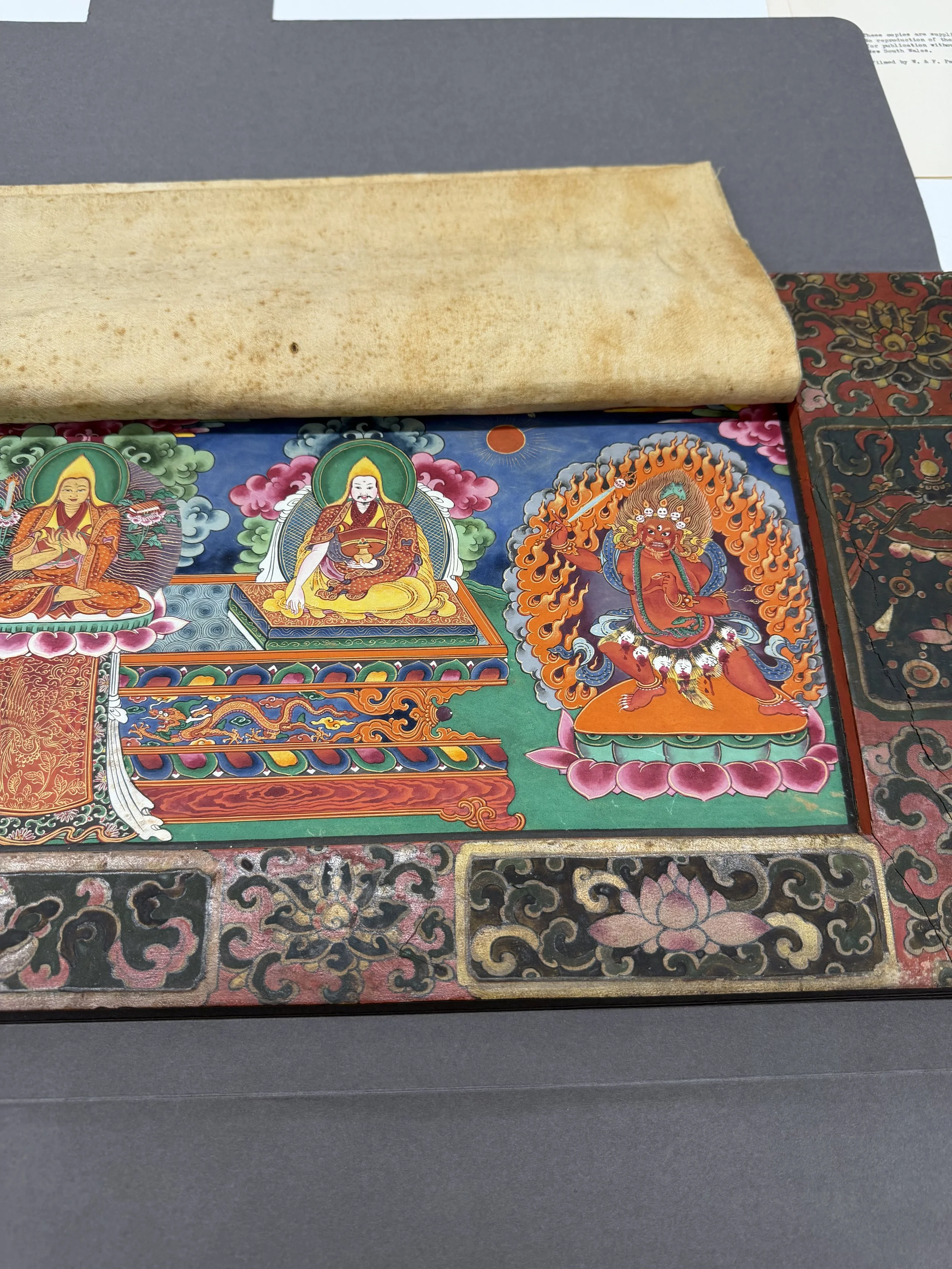
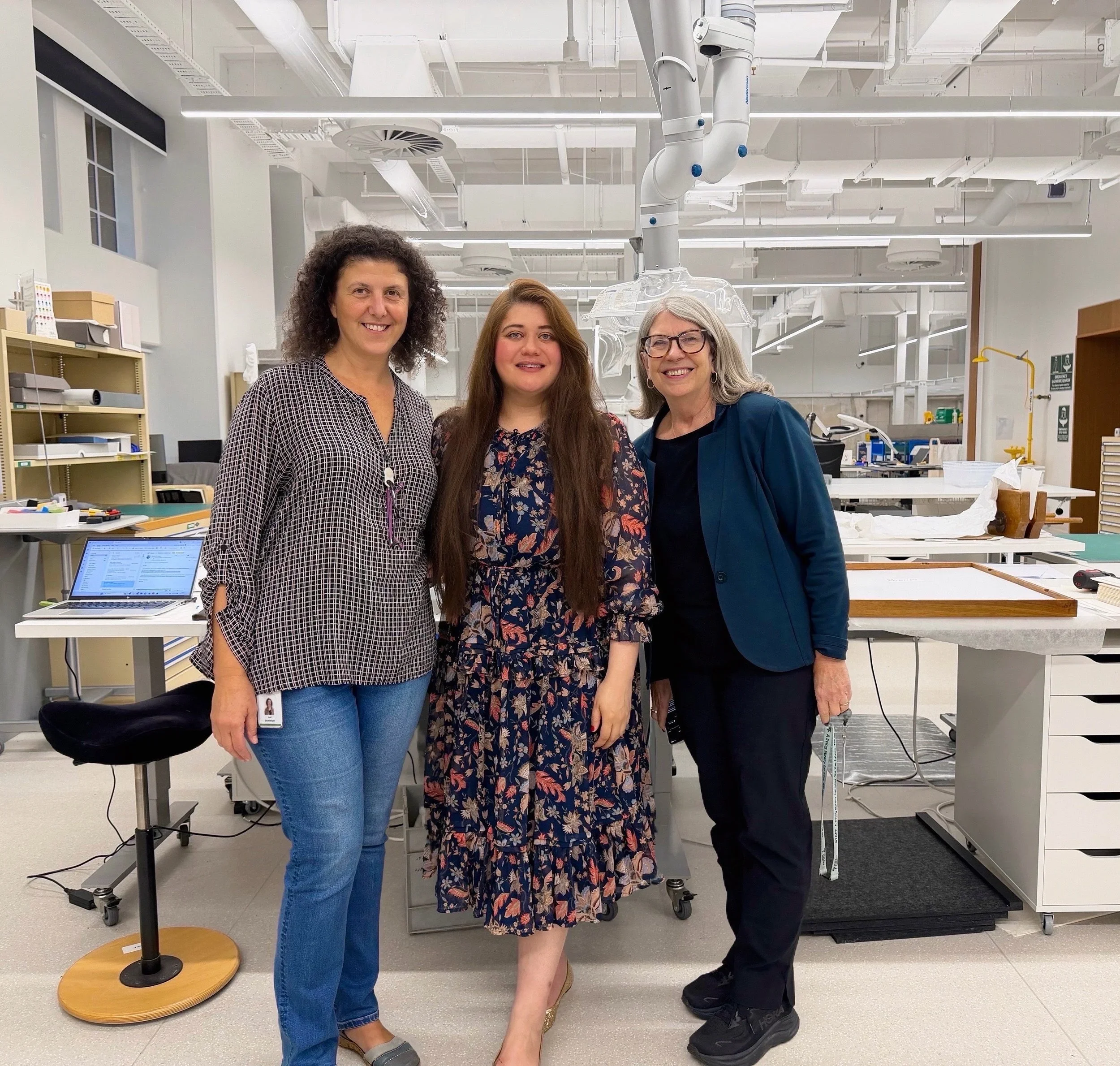
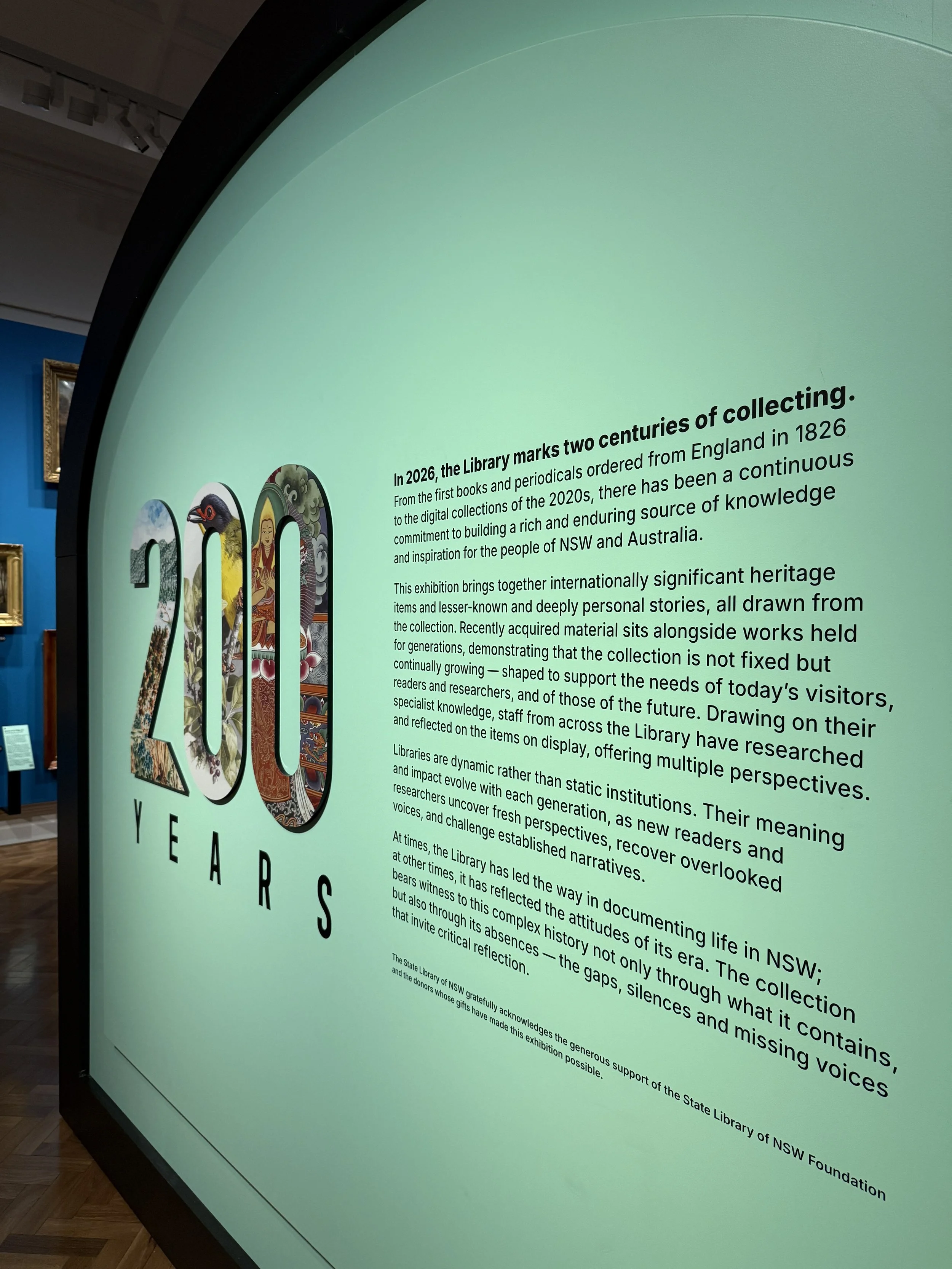
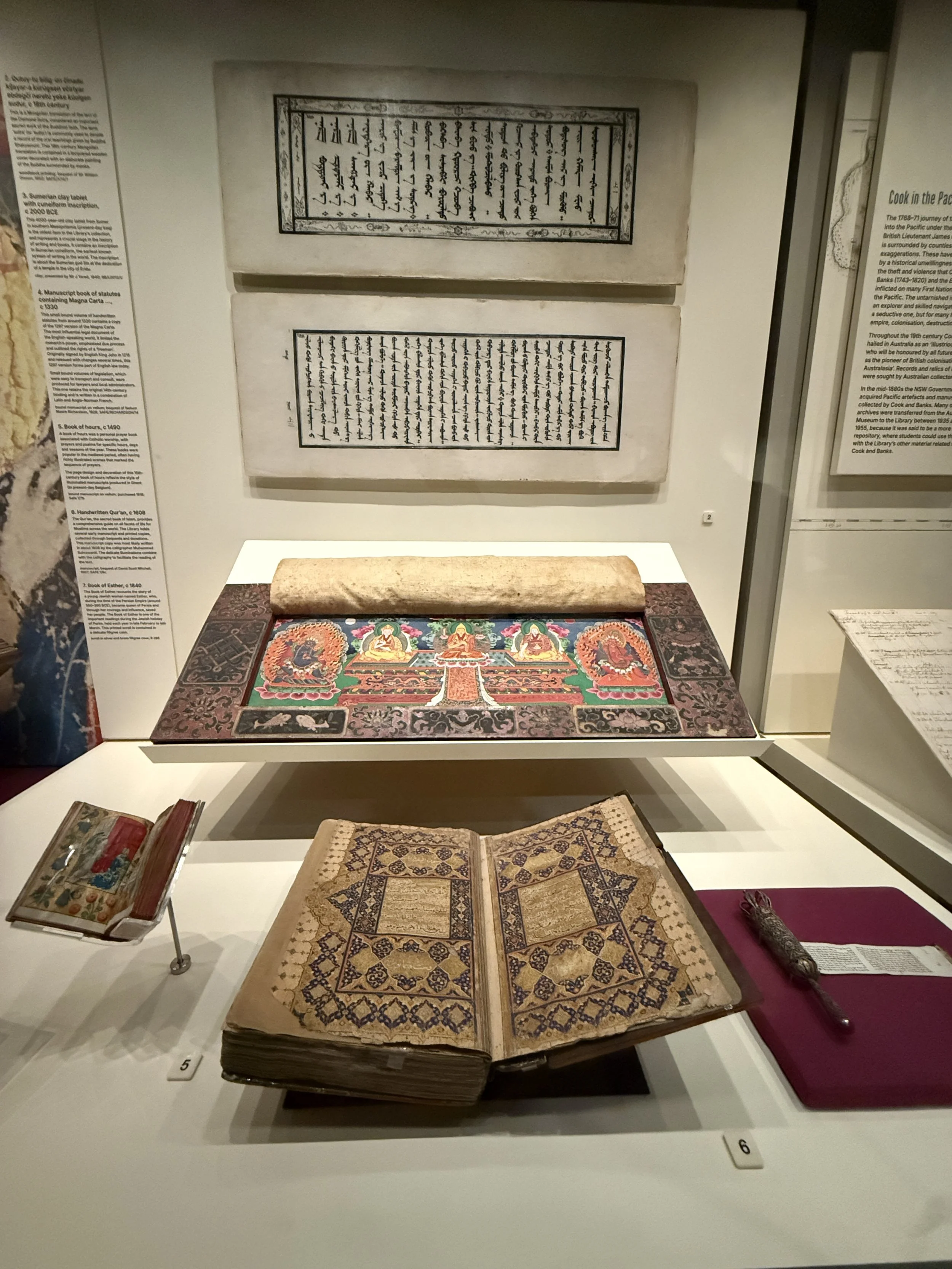
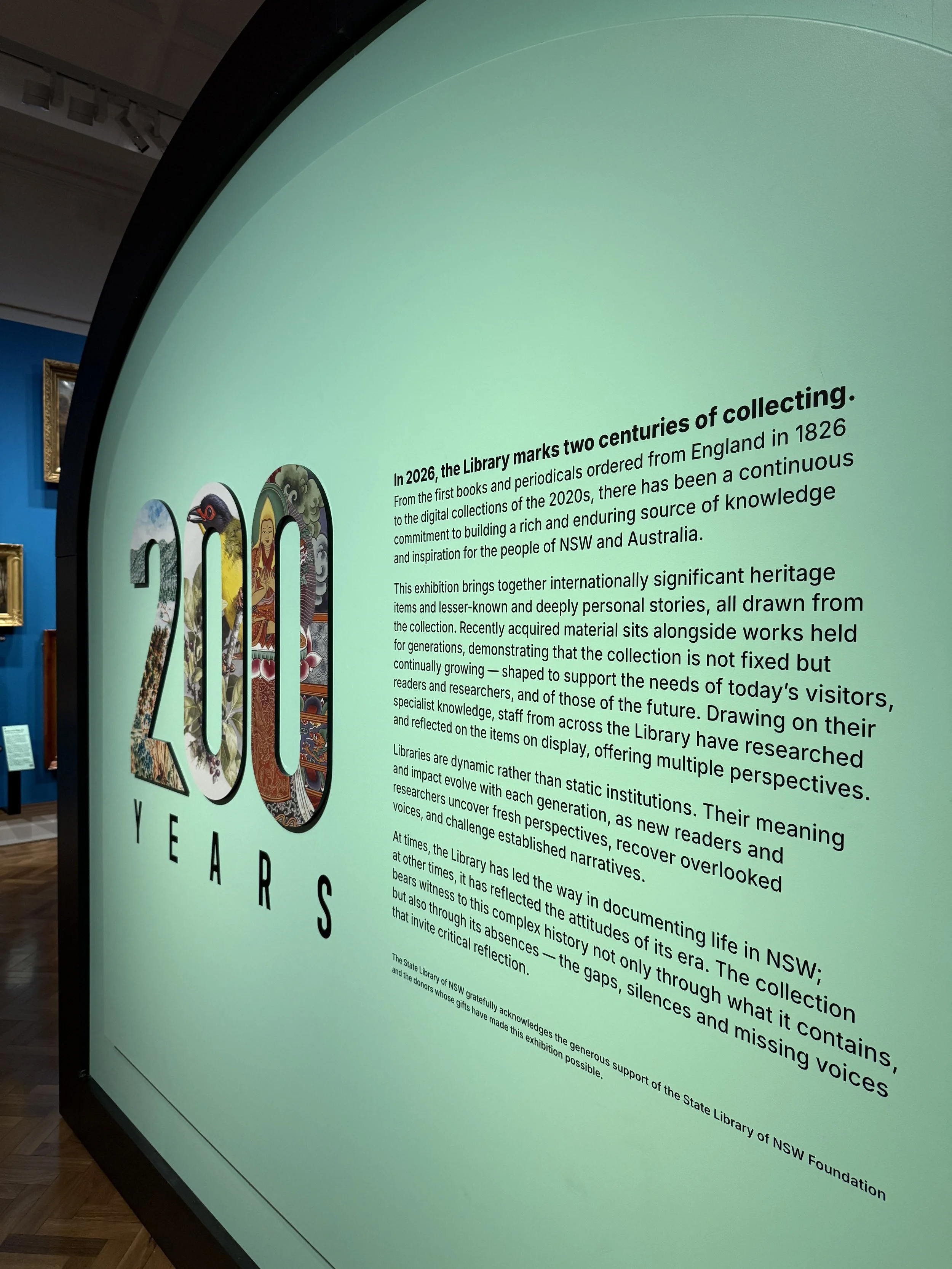
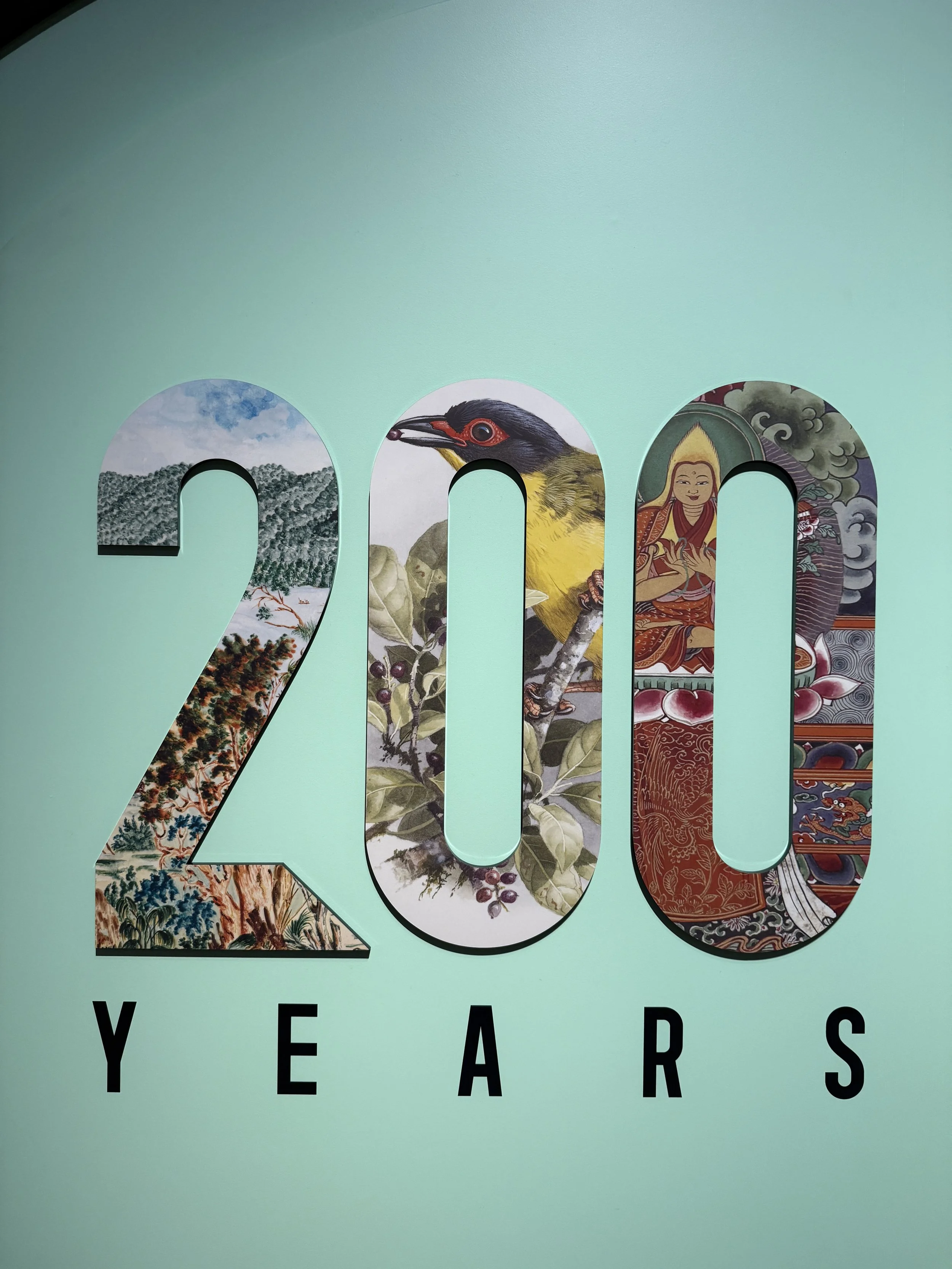
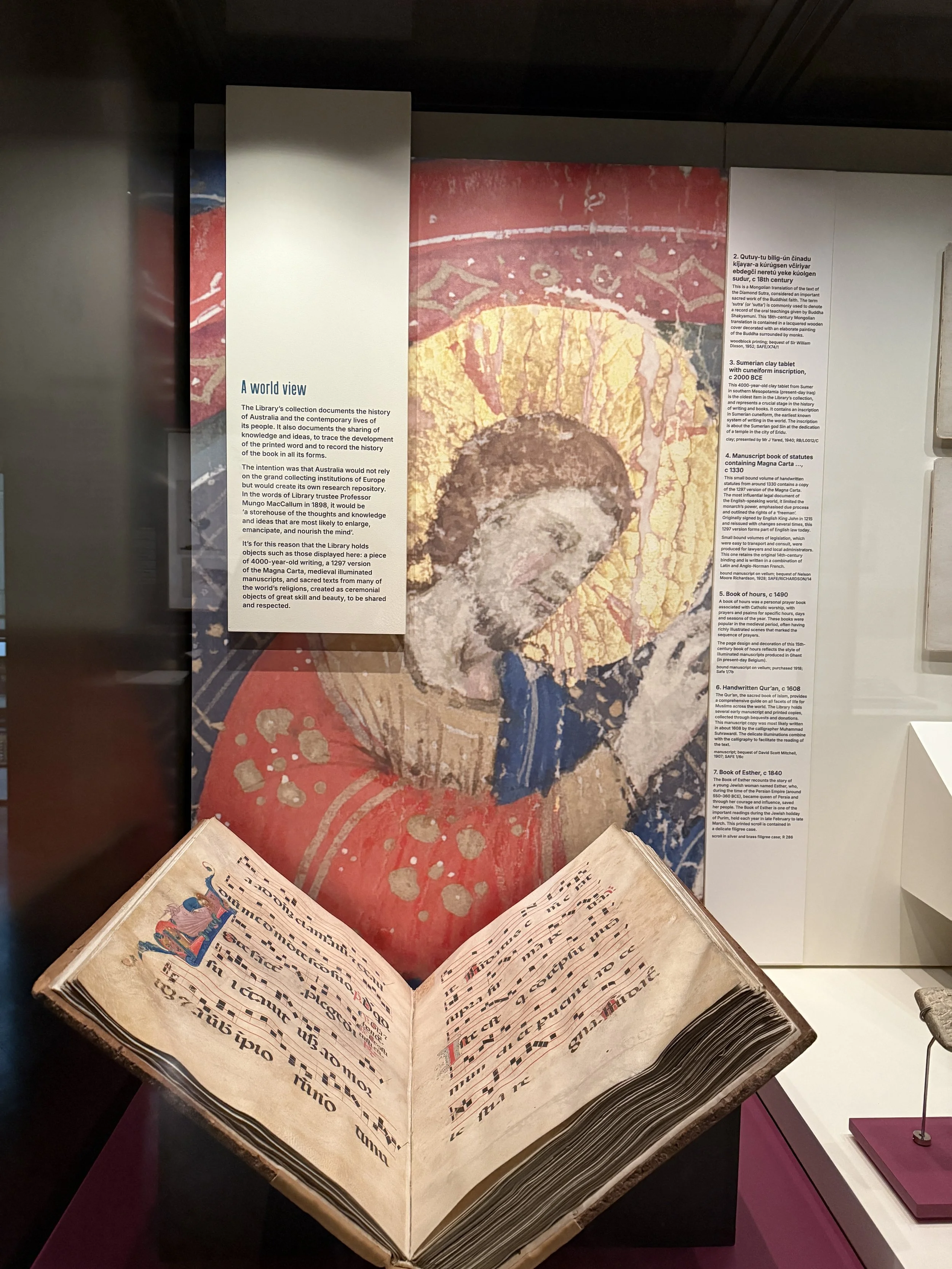
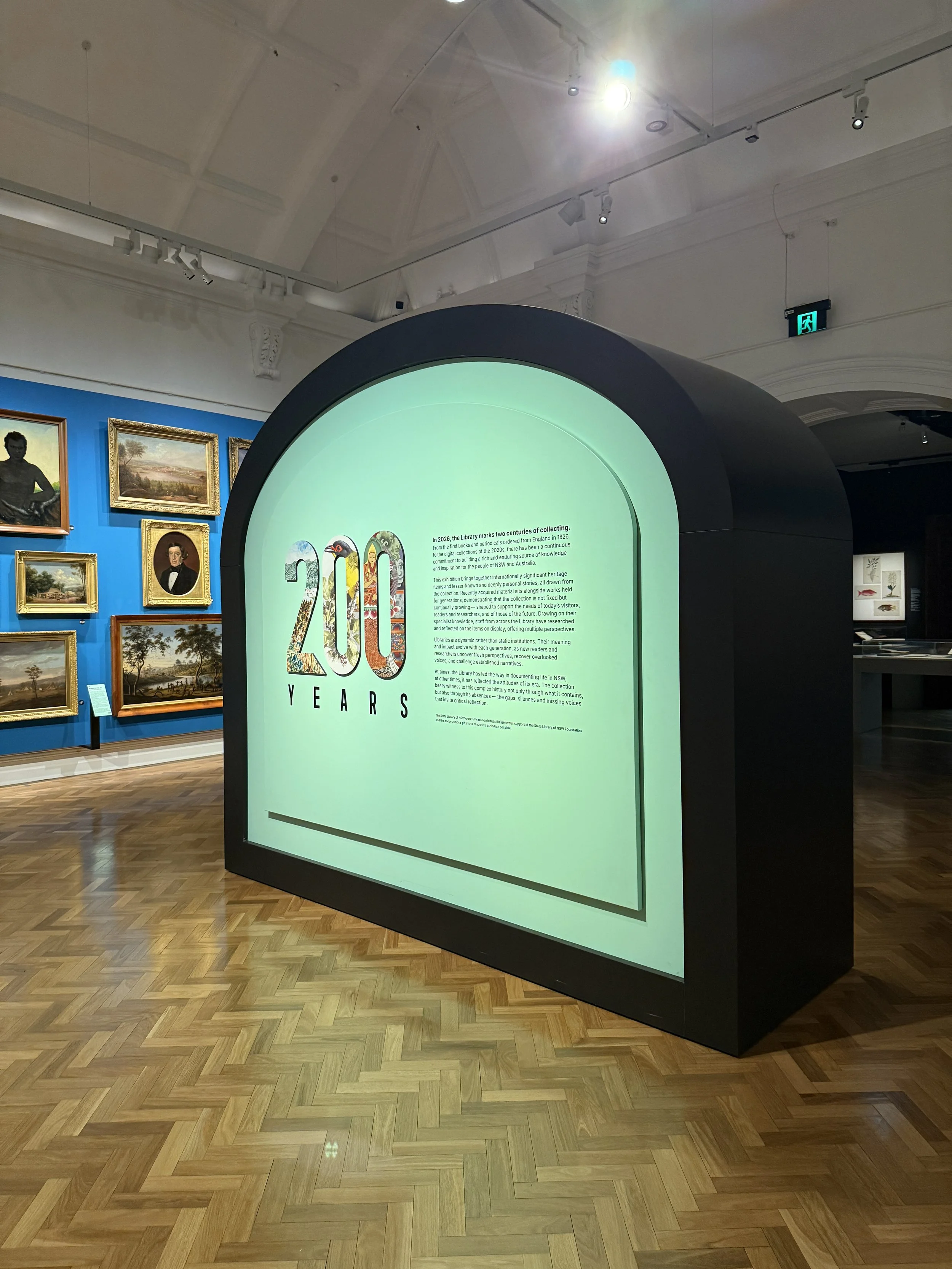
I had the privilege of working closely with the State Library’s team, including Maggie Patton, on the research and interpretation of two manuscripts subsequently selected for inclusion in the bicentenary exhibition at the State Library of New South Wales. The Library was founded in 1826 as the Australian Subscription Library in Sydney by a group of prominent citizens, including figures such as Dr. William Bland and Archibald Bell, who aimed to build a shared repository of knowledge for the colony; nearly two centuries later, the library is marking this milestone with a special bicentenary exhibition. Marking its 200th anniversary, the Library has assembled an ambitious display of 200 objects drawn from its vast holdings, spanning from some of the earliest surviving written records such as a cuneiform tablet to significant modern acquisitions. Within this expansive chronological and geographical scope, particular attention has been given to the manuscript traditions of the Middle East and South and Southeast Asia. Among these are two works I had the opportunity to study closely during a research visit this past February: an illuminated Qur’an produced in Mughal India in 1608, and an eighteenth-century Mongolian translation of the Diamond Sutra, a foundational text of the Buddhist canon.
Examining this Qur’an within an Australian institutional collection reveals how a single manuscript can operate as a site of historical, aesthetic, and communal meaning. Originating in the cosmopolitan courtly environment of Mughal India, such a text carries with it the intellectual rigor of Islamic scholarship alongside refined traditions of calligraphy, illumination, and manuscript production that signal both devotional purpose and elite patronage. Its present location in the Library places it within a contemporary knowledge system that prioritizes preservation, cataloguing, and public access, allowing the manuscript to participate in new circuits of interpretation beyond its original context. For communities engaging with it today, particularly Muslim diasporas in Australia, the object serves as a tangible link to a deep historical continuum of faith, learning, and artistic expression, while also functioning as an educational resource that broadens public understanding of Islamic civilizations. The manuscript’s presence in such a collection encourages reflection on the mobility of cultural heritage, the responsibilities of custodianship, and the role of libraries as spaces where global histories are encountered and reinterpreted through local experience.
I would especially like to commend the team for their judicious and attentive stewardship of this mushaf, demonstrating a level of curatorial care commensurate with its religious, historical, and material significance.
Historical Context and Production
The Qur’an, copied in 1608 by Muḥammad Suhrawardī, emerges from a moment of remarkable artistic and intellectual vitality within the Mughal Empire under the reign of Jahangir (r. 1605–1627). Jahangir’s court inherited and further refined the imperial atelier system established by his father, Akbar, fostering an environment in which calligraphy, illumination, and manuscript production reached exceptional levels of technical and aesthetic sophistication. Qur’anic manuscripts from this period carried particular significance, bound up with practices of devotion, claims to political legitimacy, and systems of artistic patronage. The production of a finely executed Qur’an served as an act of piety and as a statement of cultural authority, reflecting the Mughal court’s engagement with Persianate artistic conventions alongside distinctly South Asian inflections in ornament and palette.
The attribution to Muḥammad Suhrawardī invites further consideration of the intellectual and spiritual networks that shaped manuscript culture in this period. The nisba Suhrawardī links the scribe to the legacy of Abu Hafs Umar al-Suhrawardi (1145–1234), the Baghdad-based Sufi authority whose treatise ʿAwārif al-Maʿārif played a central role in the formation and dissemination of the Suhrawardiyya order. By the sixteenth and early seventeenth centuries, this lineage had become deeply embedded in the religious and scholarly life of the Indian subcontinent, with major centers in Multan, Uch, and Delhi. These networks engaged with courtly culture, as Sufi-affiliated scholars, scribes, and calligraphers participated in the production and circulation of manuscripts.
Material Description and Use + Condition and Conservation
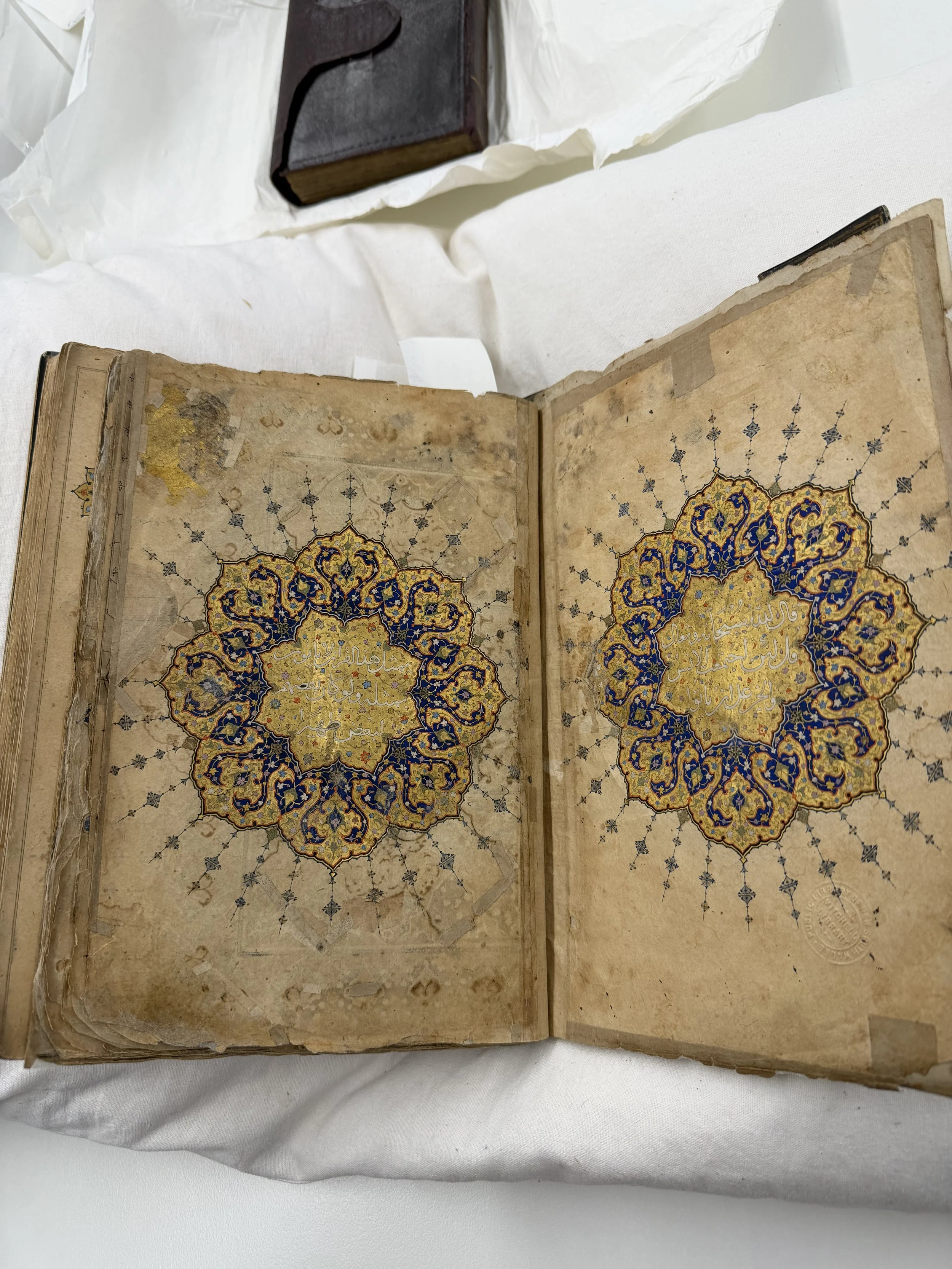
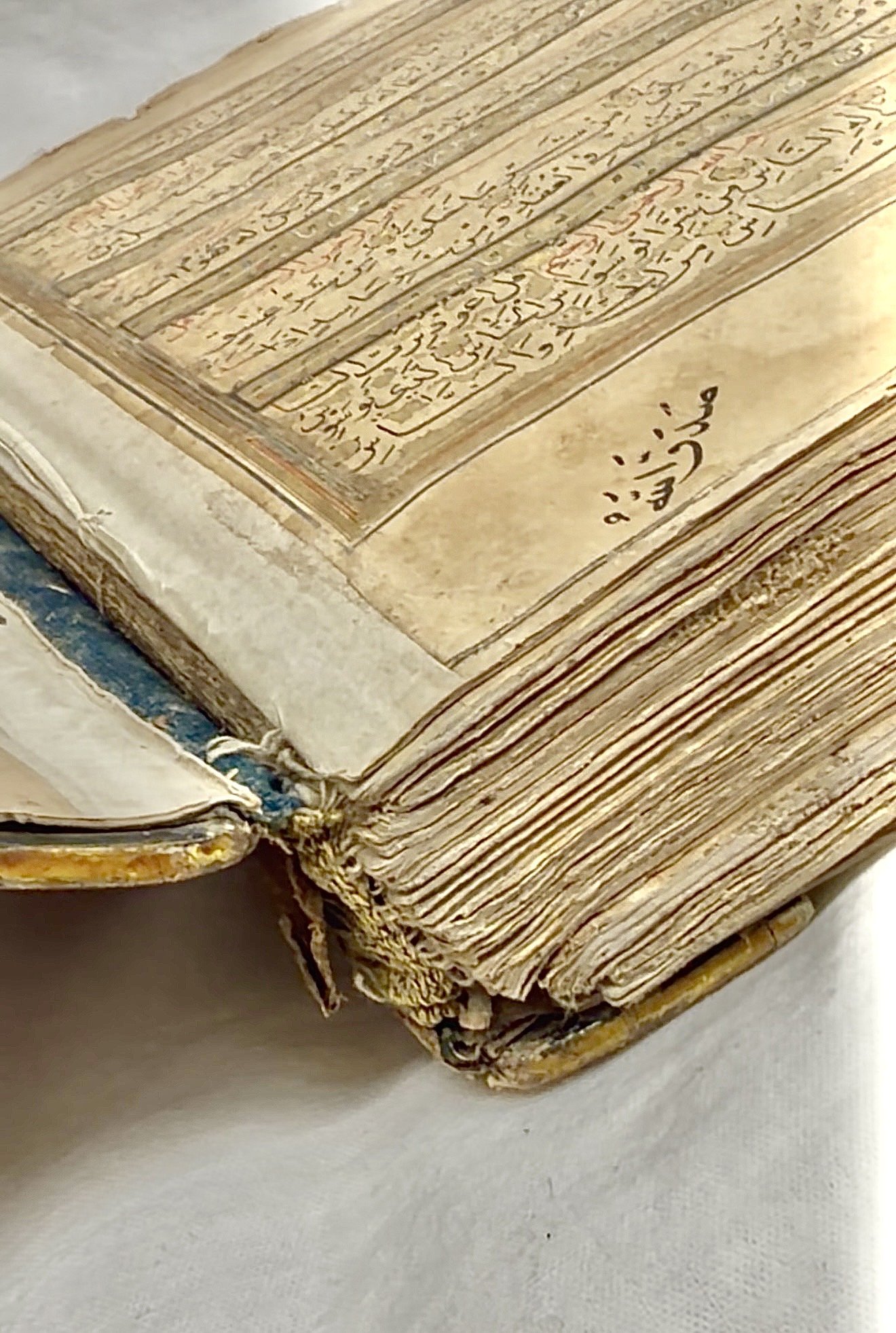
The Qur’an’s present condition reveals the long and active life of the manuscript as a handled and venerated object. During my visit, a conservation assessment identified a number of structural vulnerabilities that necessitate careful intervention. The codex requires extensive stabilization. Several folios have weakened along stress points and will need to be reinforced, and the original binding, still extant, has loosened to a degree that compromises the integrity of the text block. Of particular concern are the leaves and sectional inserts, likely corresponding to what codicologists describe as guarded or tipped-in folios, which were introduced during the original production process. These elements, now partially detached, will require precise consolidation to ensure their physical stability and their relationship to the manuscript’s original structure.
This conservation effort will be undertaken by the Library’s specialist team, including conservator Dominique Moussou, whose work will involve a combination of material analysis, stabilization, and sensitive rebinding. Such interventions must balance the preservation of the manuscript’s historical integrity with the need to secure its long-term survival, retaining as much of the original fabric as possible while addressing accumulated damage.
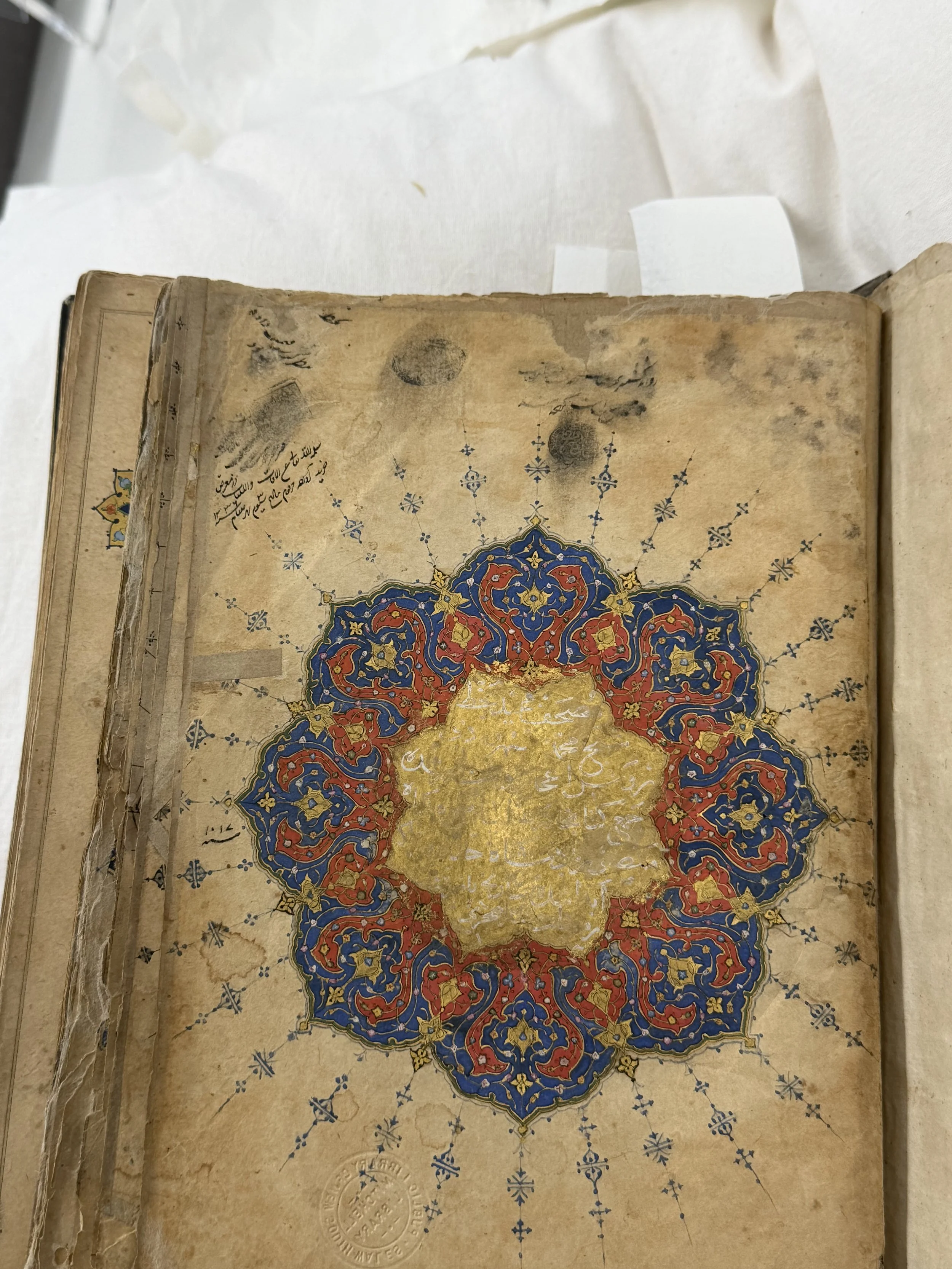
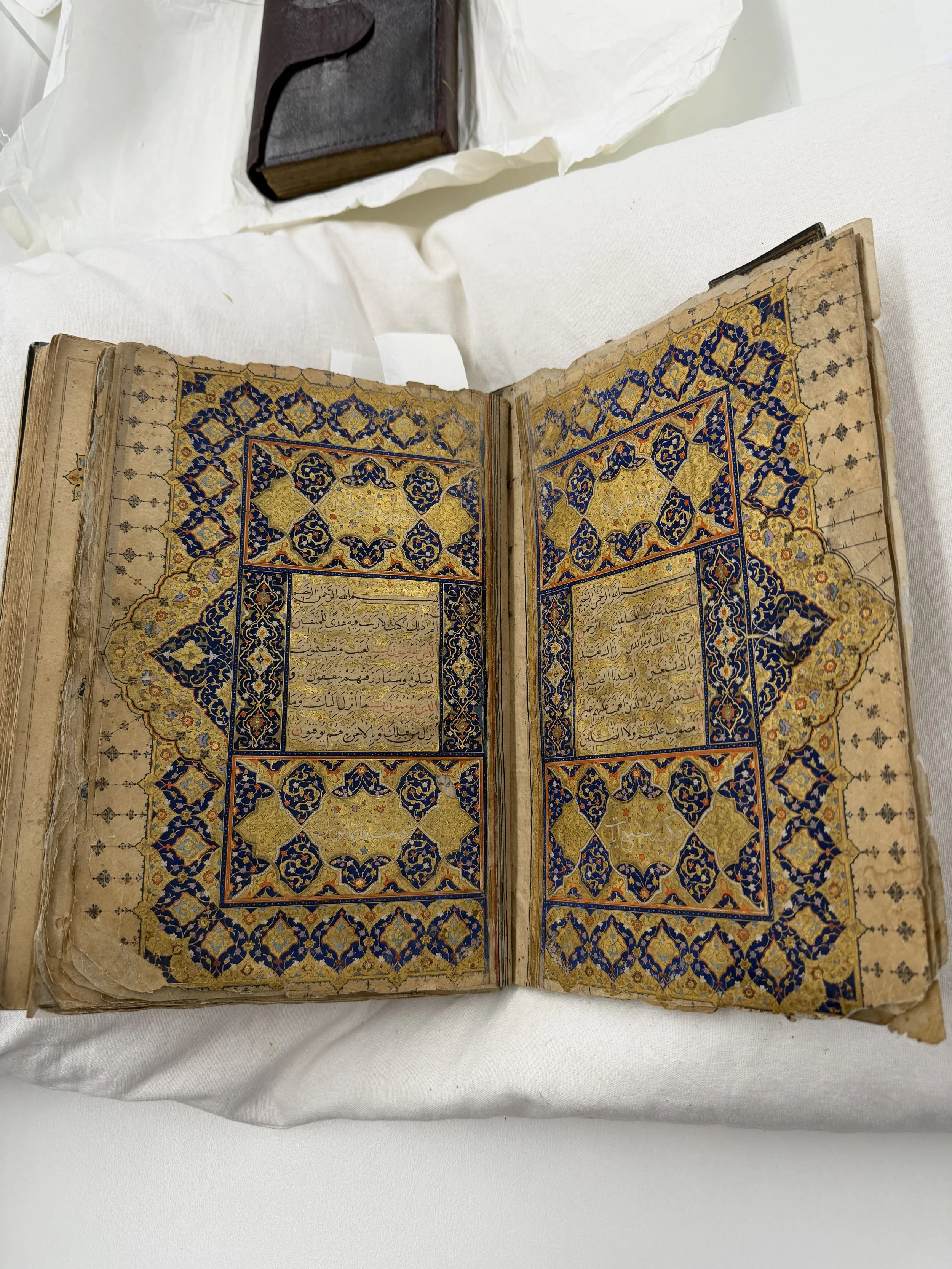
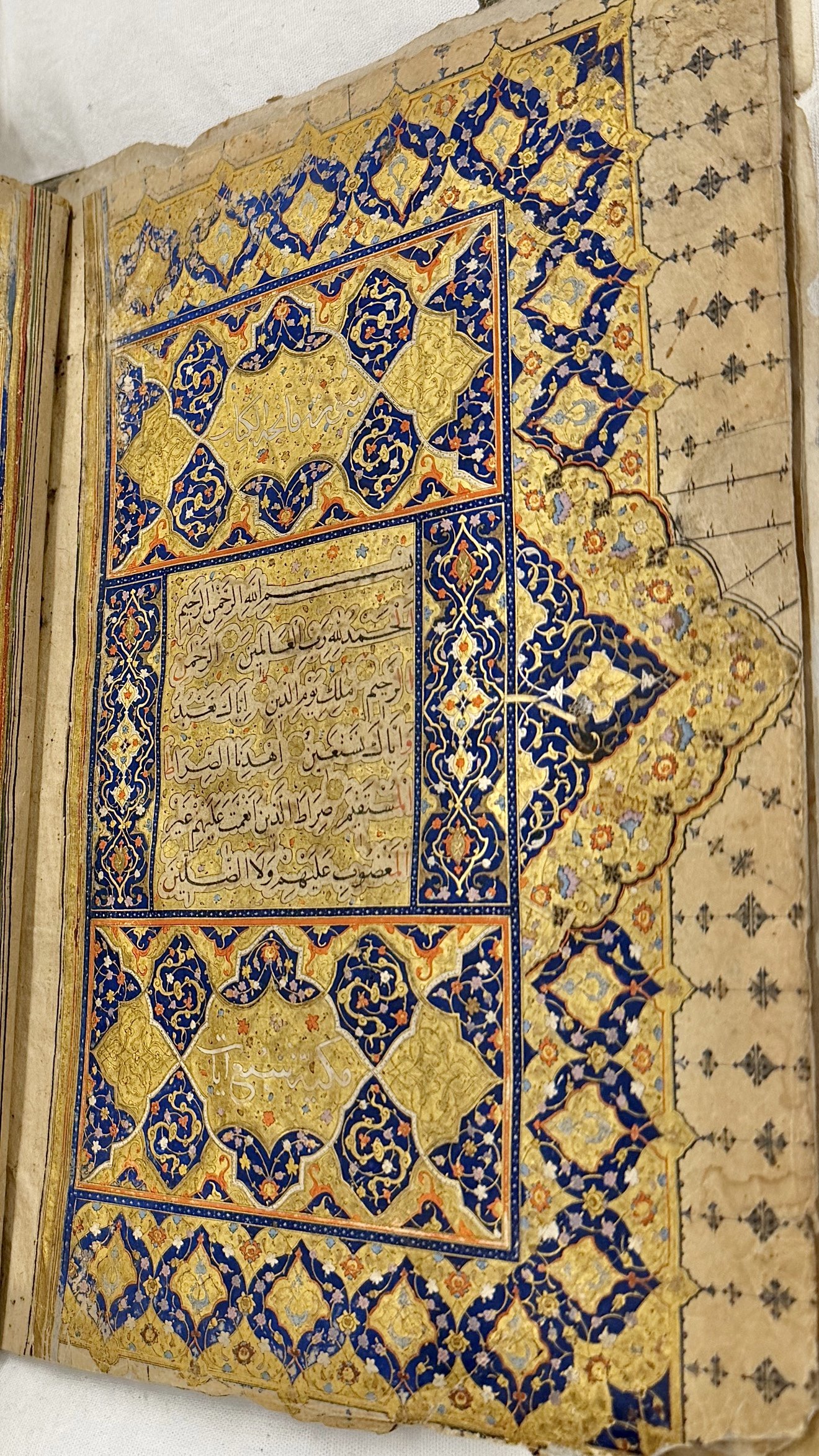
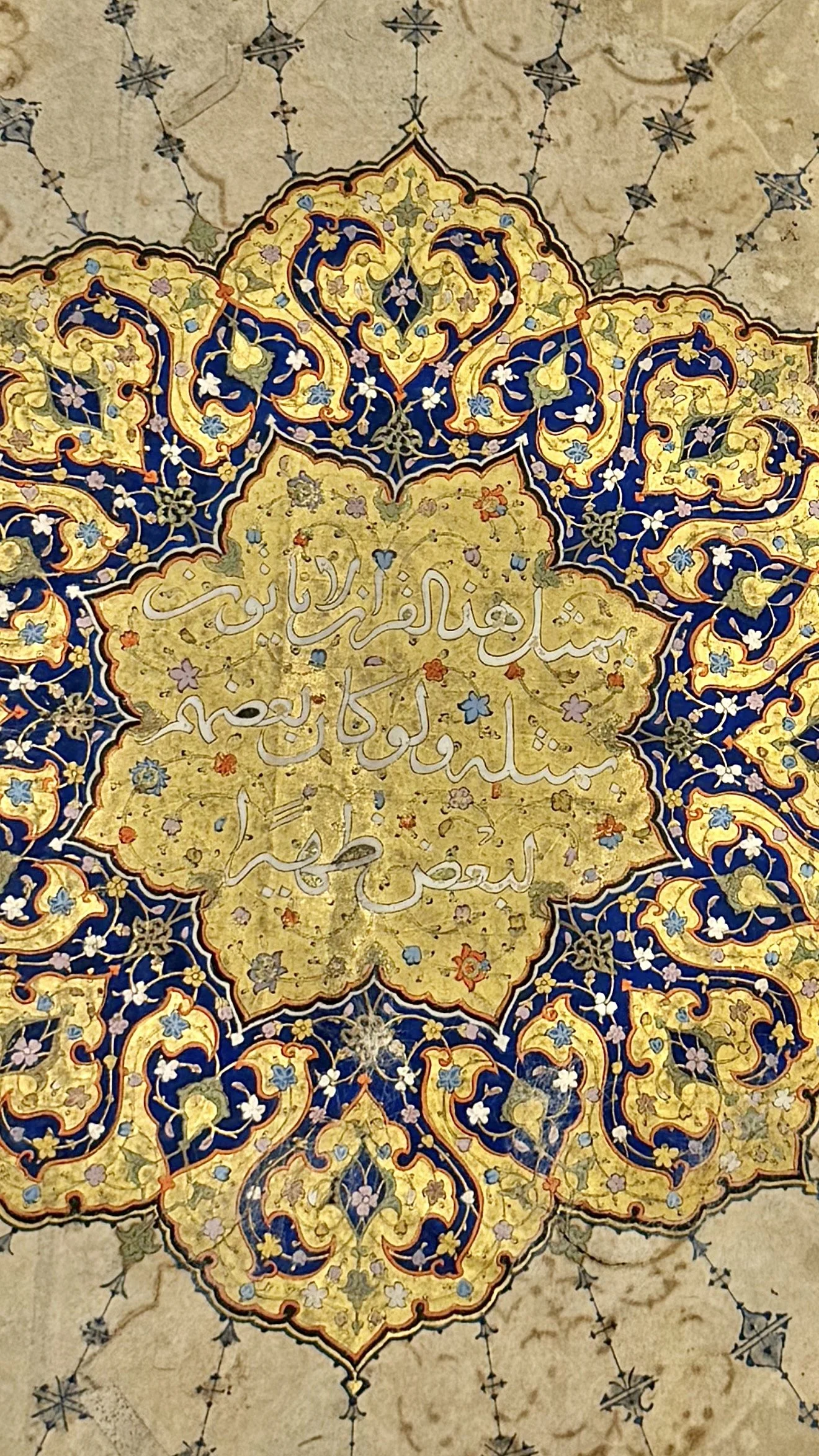
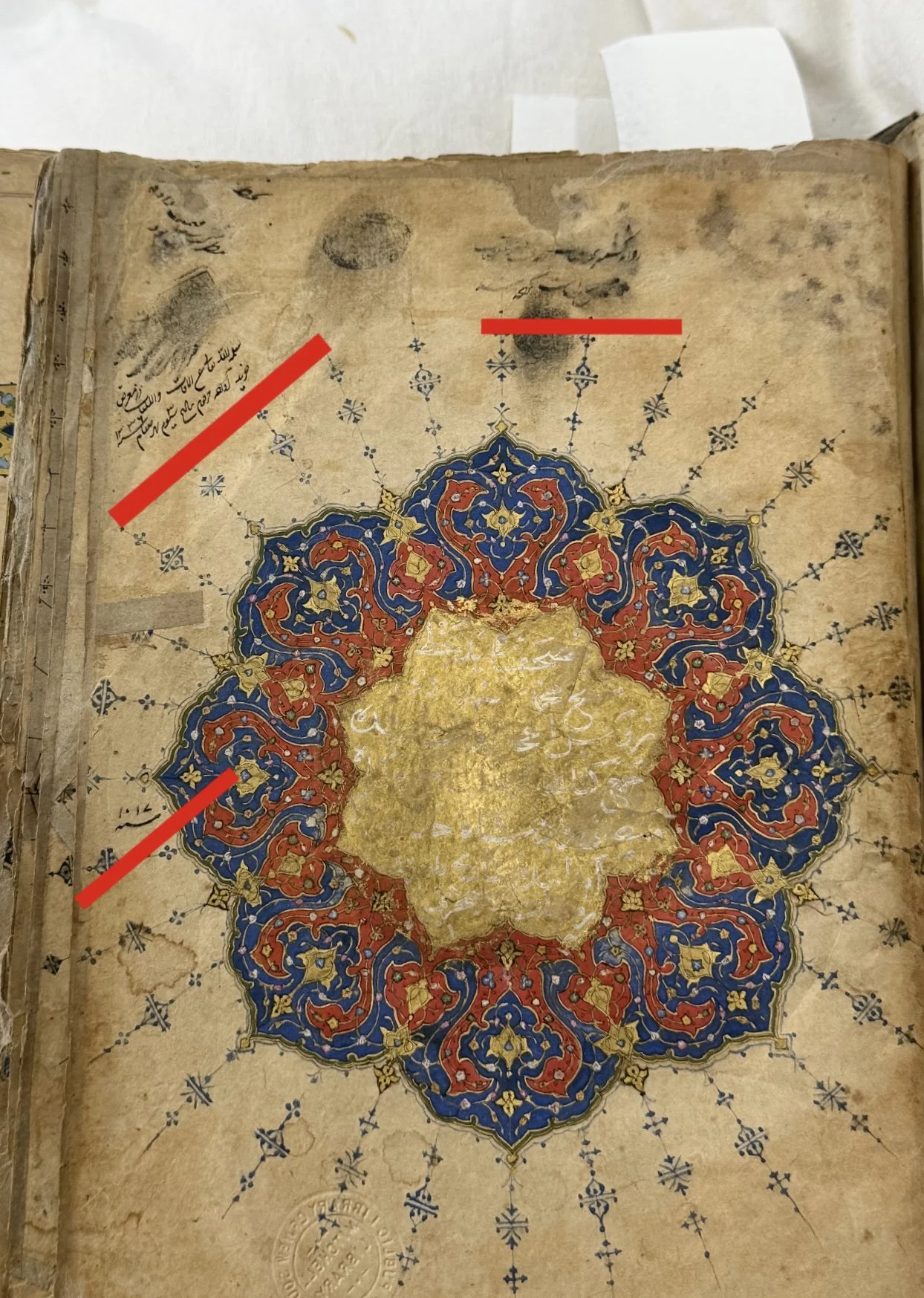
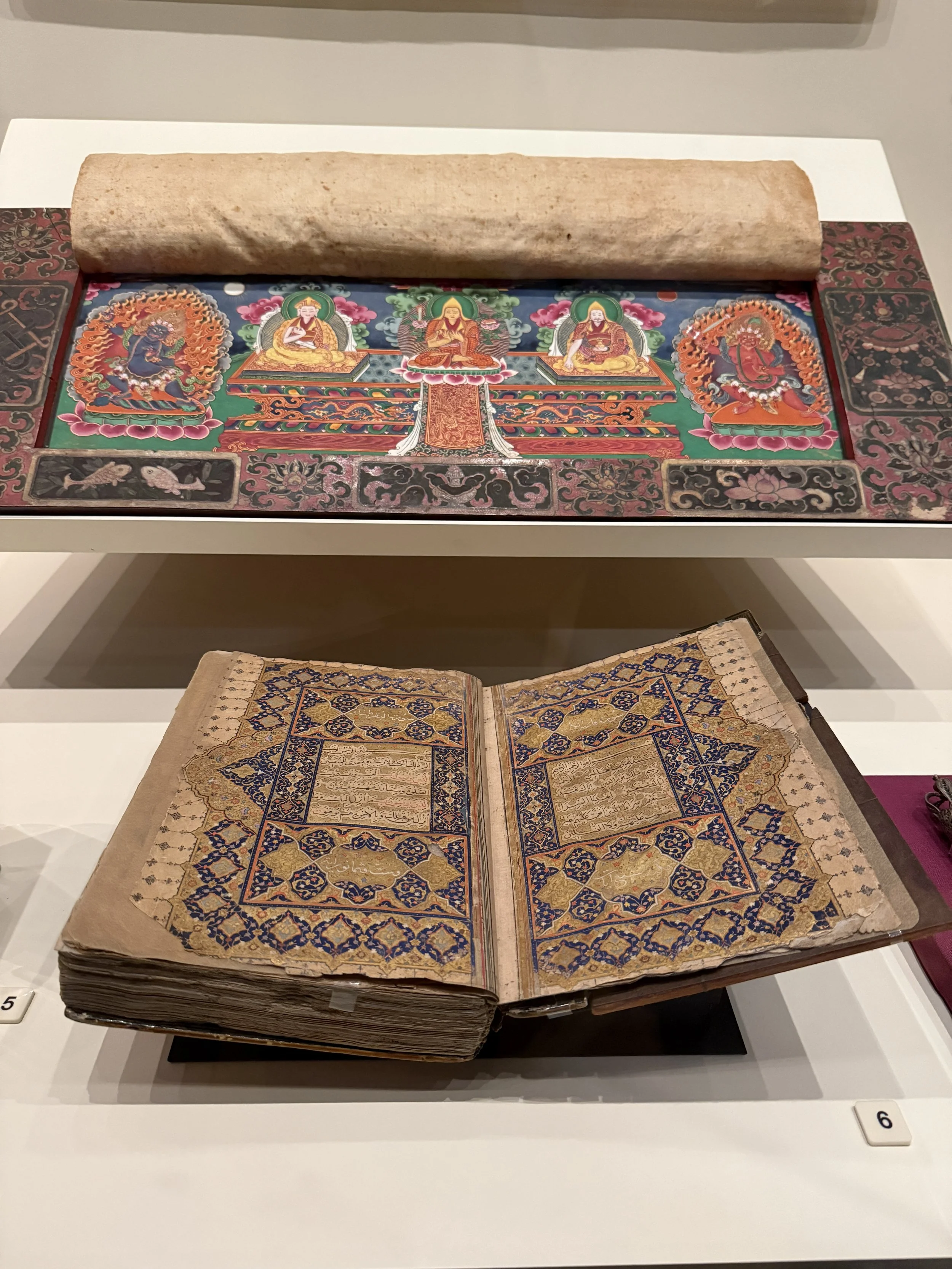
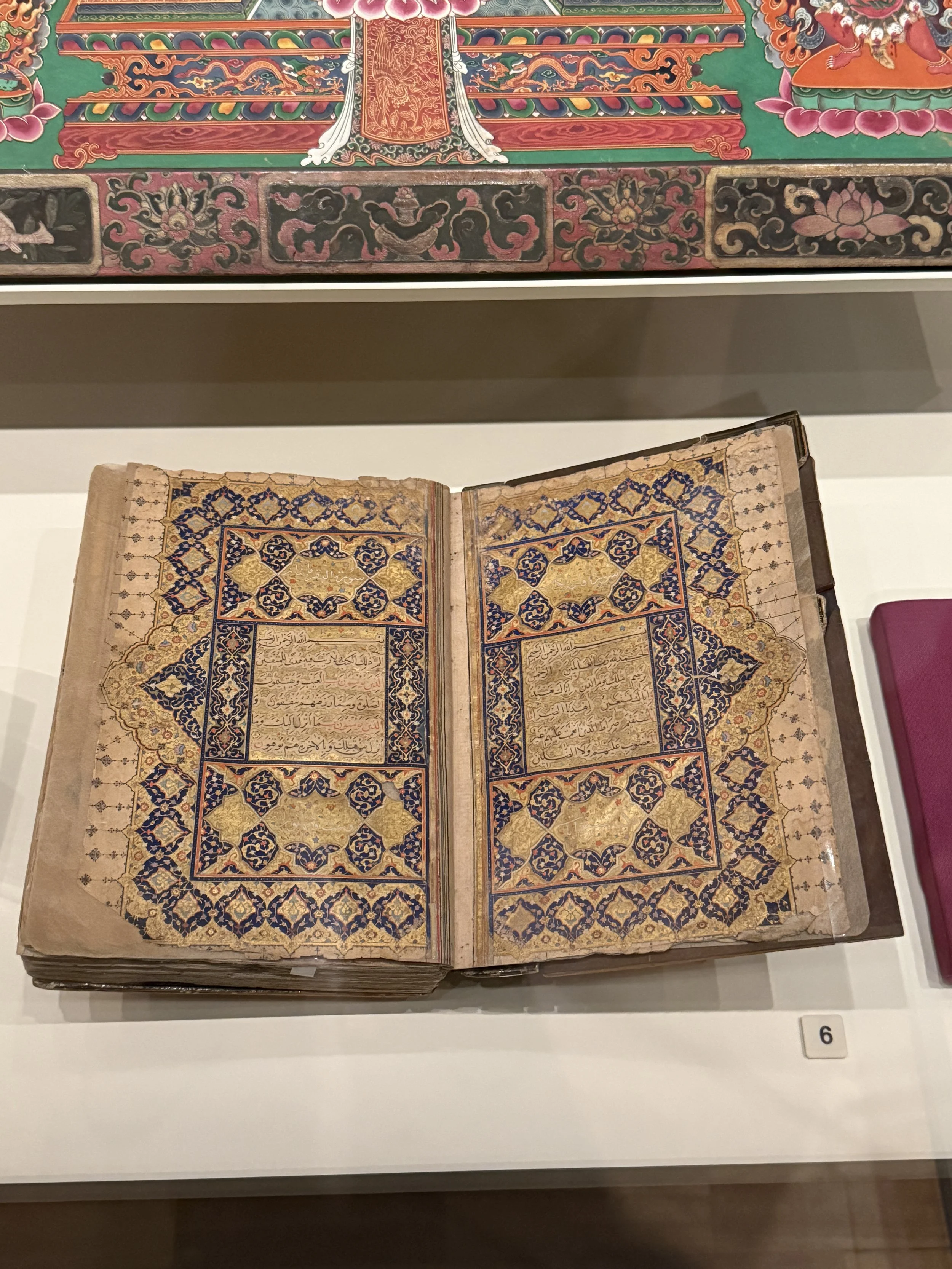
Among the manuscript’s most striking features is its illuminated shamsa frontispiece, executed as a double-page composition of considerable refinement. This opening medallion, which serves as an ornamental and symbolic threshold to the sacred text, contains multiple ownership stamps. At present, these seals are difficult to decipher due to abrasion and pigment loss. Their presence suggests a history of circulation among elite patrons. With the application of advanced imaging technologies such as multispectral or hyperspectral imaging, it may become possible to recover otherwise illegible inscriptions. Such analysis could identify former owners or establish a connection to Mughal courtly circles, offering insight into the manuscript’s provenance.
Codicological and aesthetic evidence indicates that this Qur’an was produced as a luxury commission. The consistency and elegance of its calligraphy, the richness of its illumination, and the presence of fully vocalized text with carefully executed diacritical and recitation marks point to a manuscript designed for private devotion and precise oral recitation. The inclusion of these vocalization systems reflects a concern for correct pronunciation (tajwīd) and underscores its role in devotional practice.
Taken together, these features suggest that the Qur’an was originally created for a wealthy and discerning patron within a milieu closely connected to the artistic and intellectual networks of the Mughal court. Over time, it appears to have passed through multiple hands, leaving material traces in the form of stamps, wear, and repairs before entering the Library’s collection. The forthcoming conservation process will stabilize the manuscript and open new avenues for research, allowing its layered history to be more fully understood through physical and digital means.
Codicology and Script
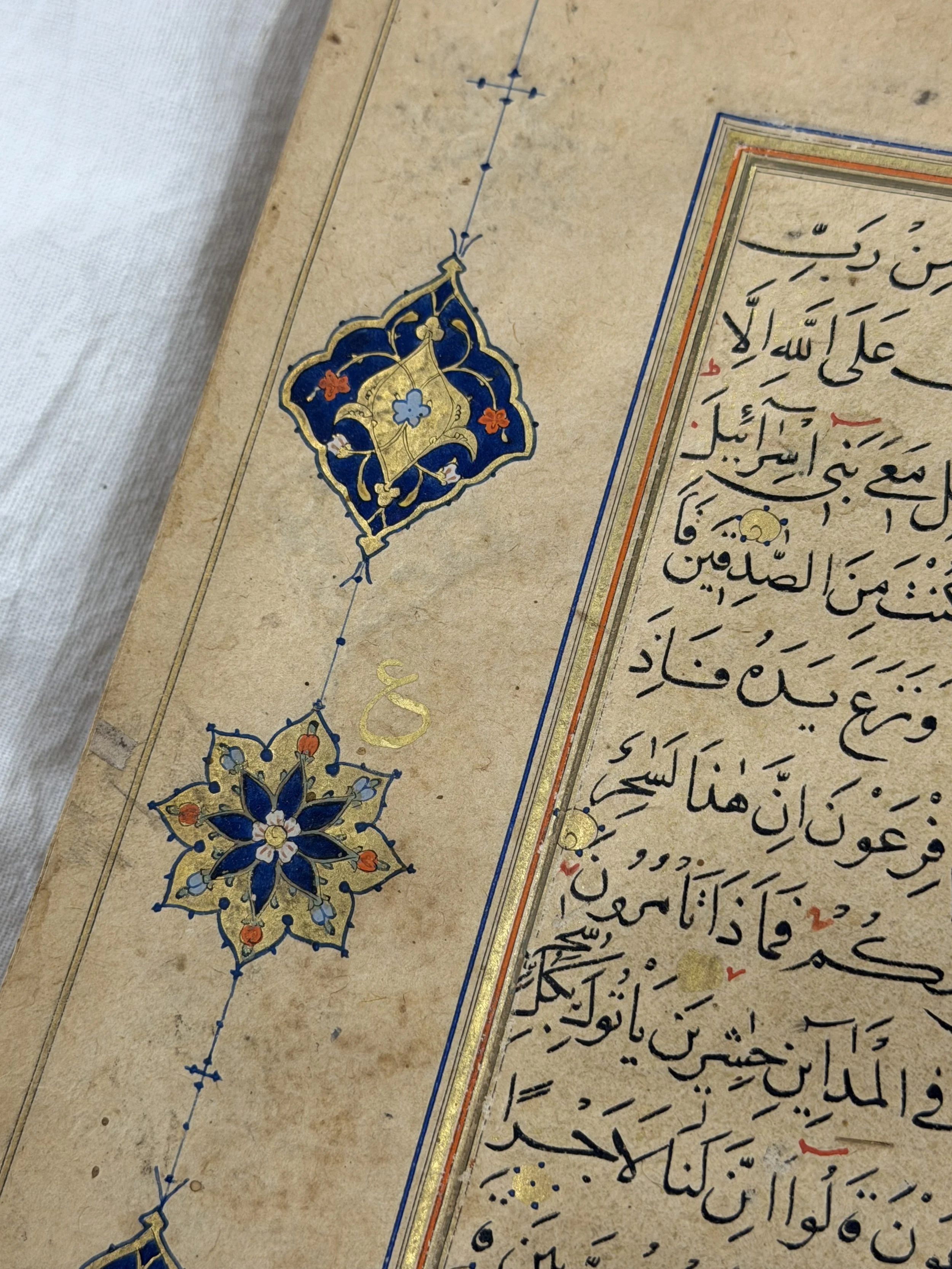
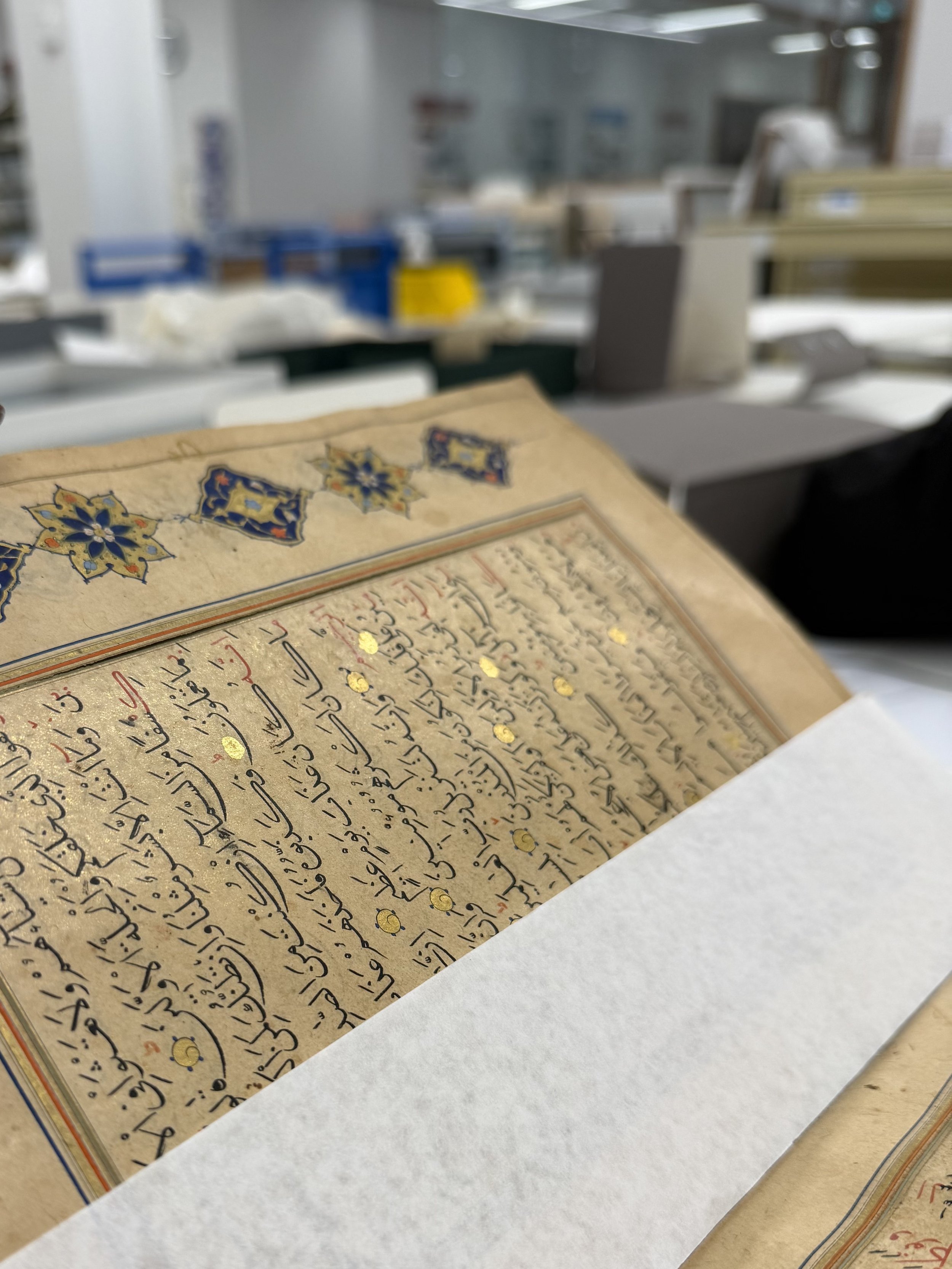
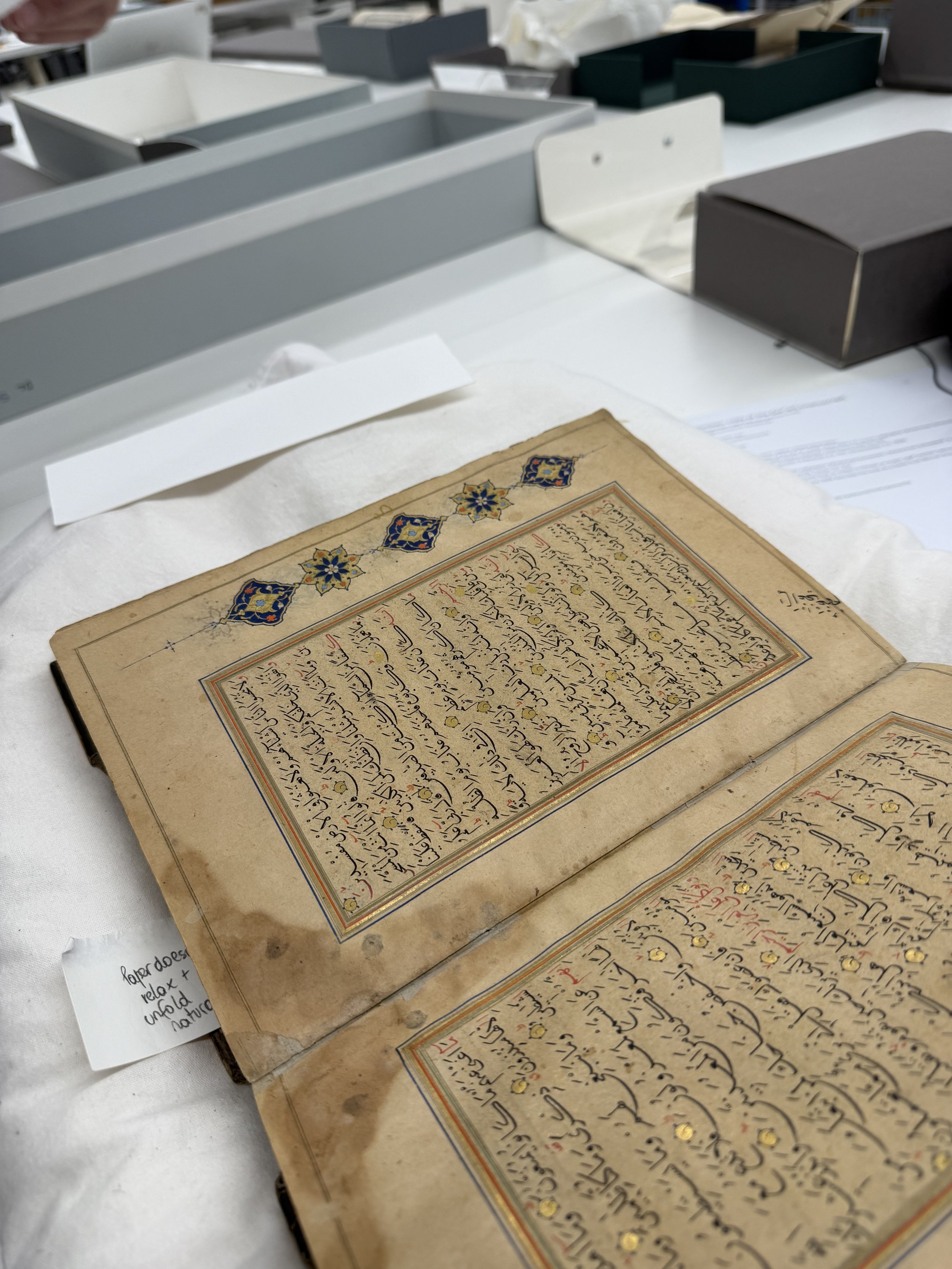
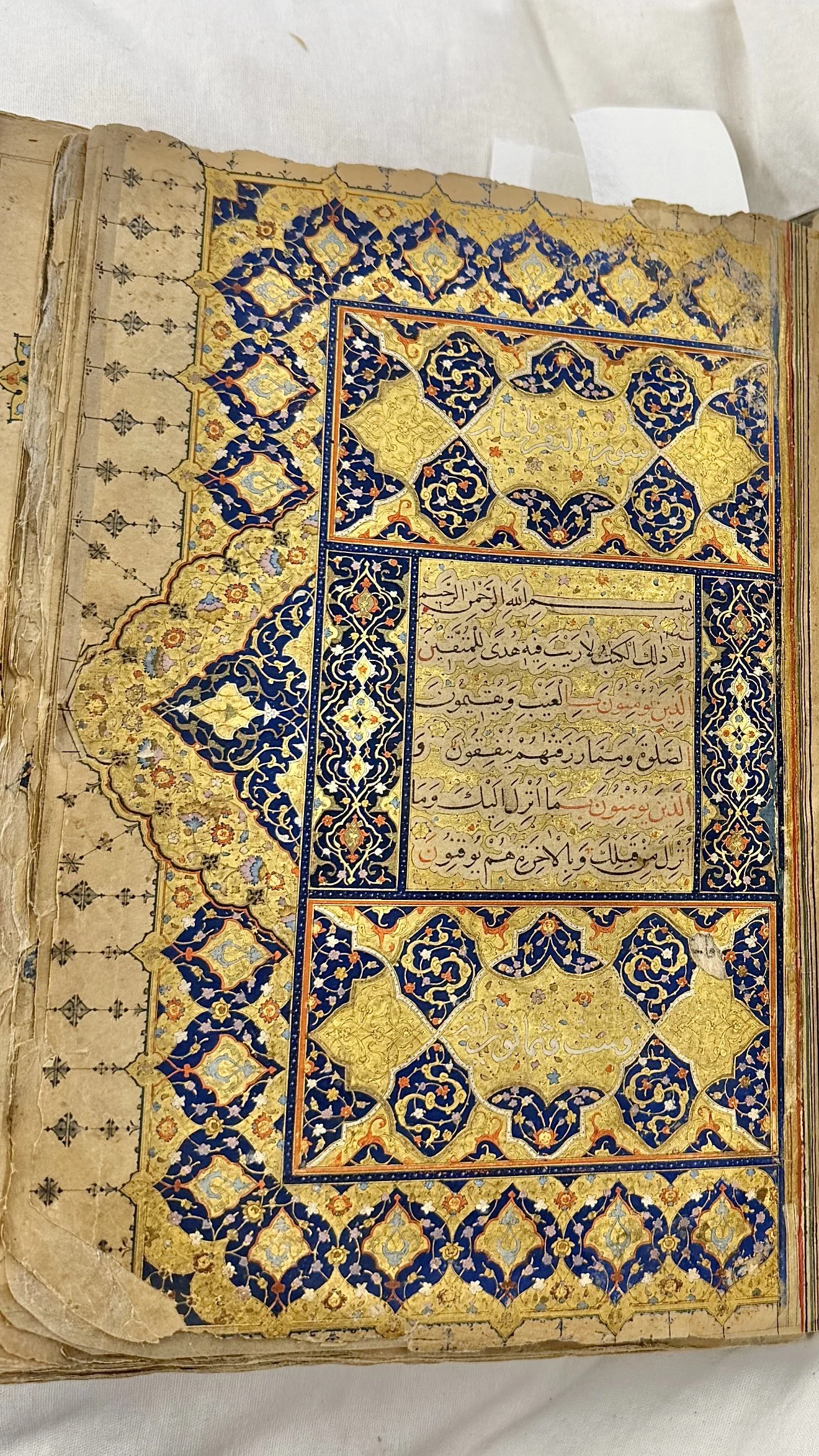
Further insight into the manuscript’s refinement is provided by its codicological and decorative program. The Qur’an is complete and copied in Arabic on cream paper, each folio comprising 14 to 15 lines executed in a refined black naskh script, carefully framed within gold and black ruling. The preference for naskh reflects its status by the early seventeenth century as the dominant script for Qur’anic transmission across the Persianate world, valued for its legibility and proportional clarity. Its canonization is often associated with earlier calligraphic reformers such as Ibn al-Bawwab and later systematized traditions that shaped manuscript production from the Timurid into the Mughal period.
The black ink used for the main text was typically carbon-based, prized for its stability and deep tonal quality, while the gold employed in ruling, roundels, and illumination would have been prepared from finely ground gold leaf suspended in a binding medium, then burnished to achieve its characteristic luminosity. Verse divisions are marked by gold roundels outlined in black and articulated with polychrome dots, creating a measured visual rhythm that supports recitation. Sūrah headings appear in white thuluth script set within gold and polychrome cartouches, reflecting a deliberate hierarchy of script and ornament. The use of thuluth for headings follows a long-established convention in Qur’anic manuscripts, where its larger, more expansive forms serve to distinguish structural divisions within the text.
Marginal markers in gold and polychrome indicate the divisions of juzʾ and ḥizb, reinforcing the manuscript’s role in structured reading and devotional practice. These divisions were integral to the liturgical life of the Qur’an, facilitating recitation cycles across fixed intervals, particularly during communal observances. The precision of these markers suggests careful planning at the design stage, often involving collaboration between scribe and illuminator.
The borders of the folios are enriched with floral decorative patterns that range from highly detailed vegetal compositions to more restrained motifs, with each page receiving some degree of embellishment. Such ornament draws on a shared visual vocabulary that developed across Safavid and Mughal ateliers, characterized by stylized vegetal scrolls, palmettes, and occasionally naturalistic floral forms that became increasingly prominent in the reign of Jahangir. The consistency of illumination across every folio reflects the level of patronage involved, as the density and intricacy of decoration were closely tied to the resources and expectations of the commissioner. Manuscripts of this caliber required coordinated labor, including paper preparation, ruling, calligraphy, illumination, and binding, often carried out within workshop settings associated with courtly or elite sponsorship. The result is a highly integrated object in which material, script, and ornament operate together to articulate both the sacred authority of the text and the cultural prestige of its production.
Inscriptions and Provenance
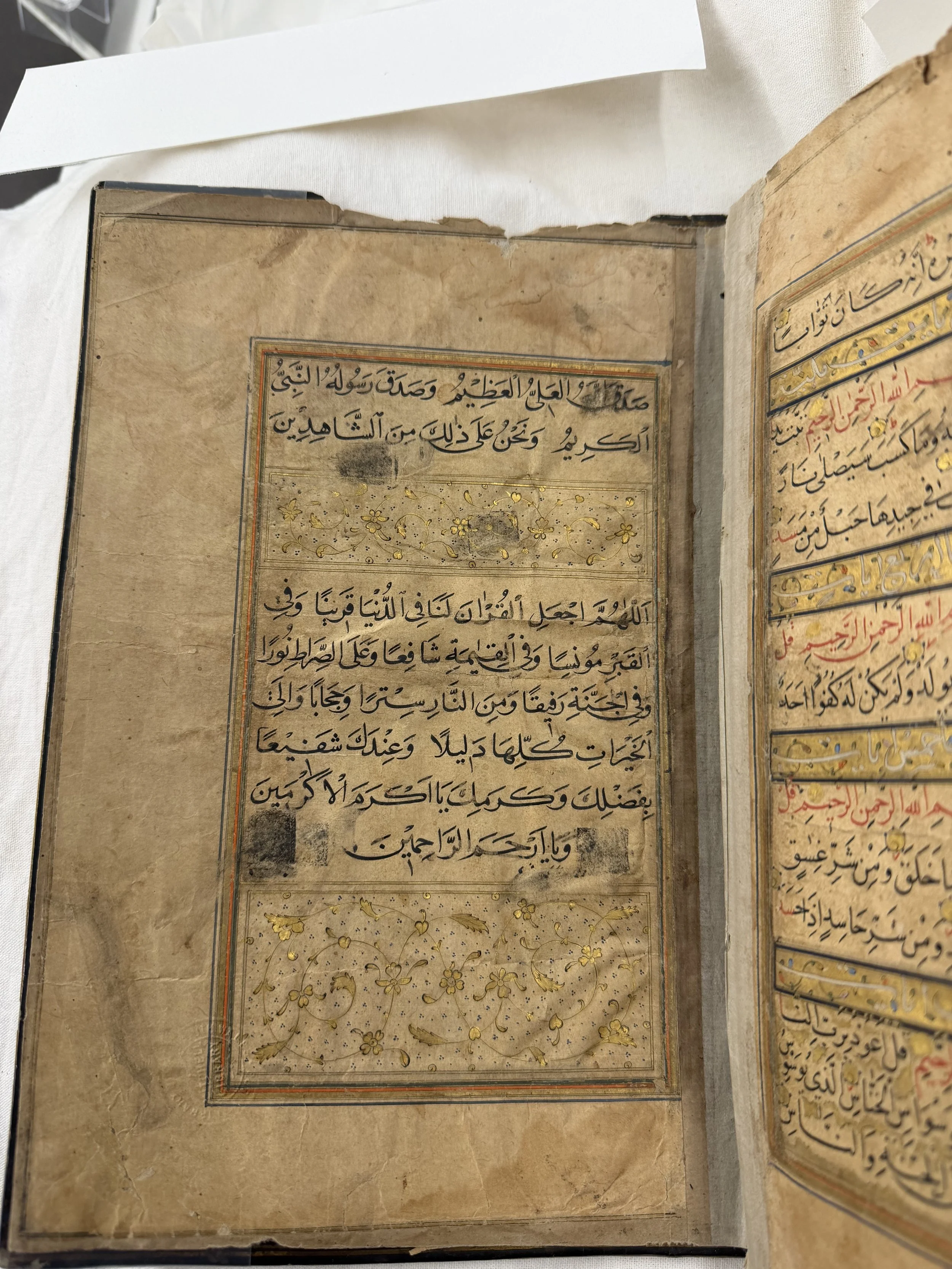
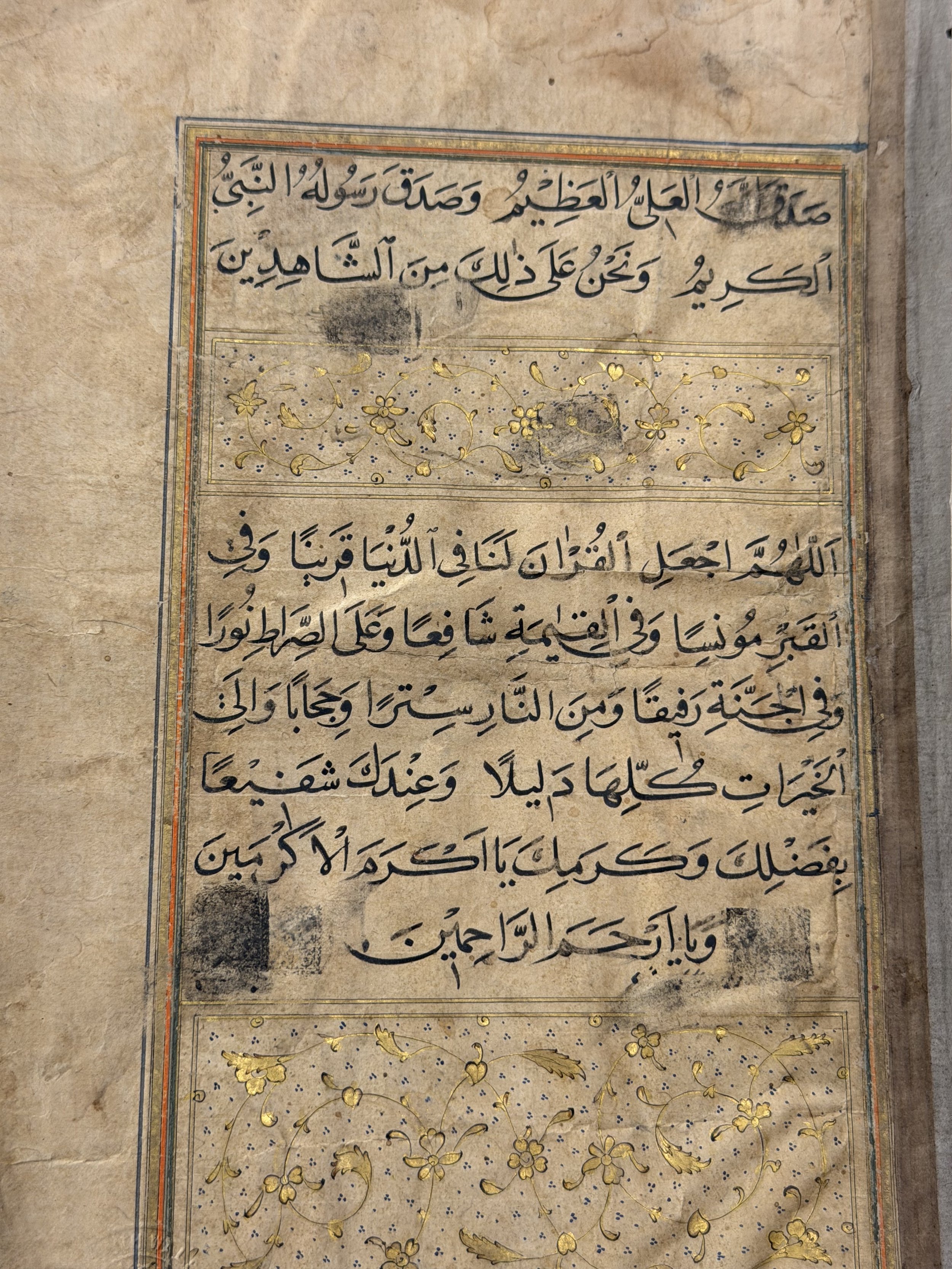
On one of the shamsa pages, several discrete annotations in different hands are preserved (underlined in red above), and on the basis of translation they can be read as a composite paratextual record accompanying the manuscript. These marginal notes function as documentation of attribution, production, and custodial history. One entry states: “The Noble Qur’an written in script (مصحف مجید بخط) in the handwriting of Muhammad Suhrawardi (نسخ محمد سهروردی).” This identifies the codex as a Qur’anic manuscript executed in naskh script and attributes its transcription to Muhammad Suhrawardi, indicating the presence of a named calligrapher within the manuscript’s production history.
Further annotations provide chronological and provenance data that situate the object within a documented sequence of ownership and collection. A dated reference appears as “Year 1017 (سنه ۱۰۱۷),” which may correspond to the date of copying or an early recorded point in the manuscript’s history. Another note records: “Purchased, the late Malik Seyom, for the fasting month of the year 1336 (خرید آزاده مرحوم مالک سیوم بهر صیام سنه ۱۳۳۶),” indicating a later phase of acquisition or formal registration within a collecting context. The final inscription reads: “Collected in the library of Sultan Mansur (جمعی کتابخانه منصور پادشاه),” suggesting incorporation into a royal or institutional library. These annotations form a cumulative archival record that documents production, attribution, and collection history. I would like to thank Mahdi Dolatyari for his assistance with the translations.
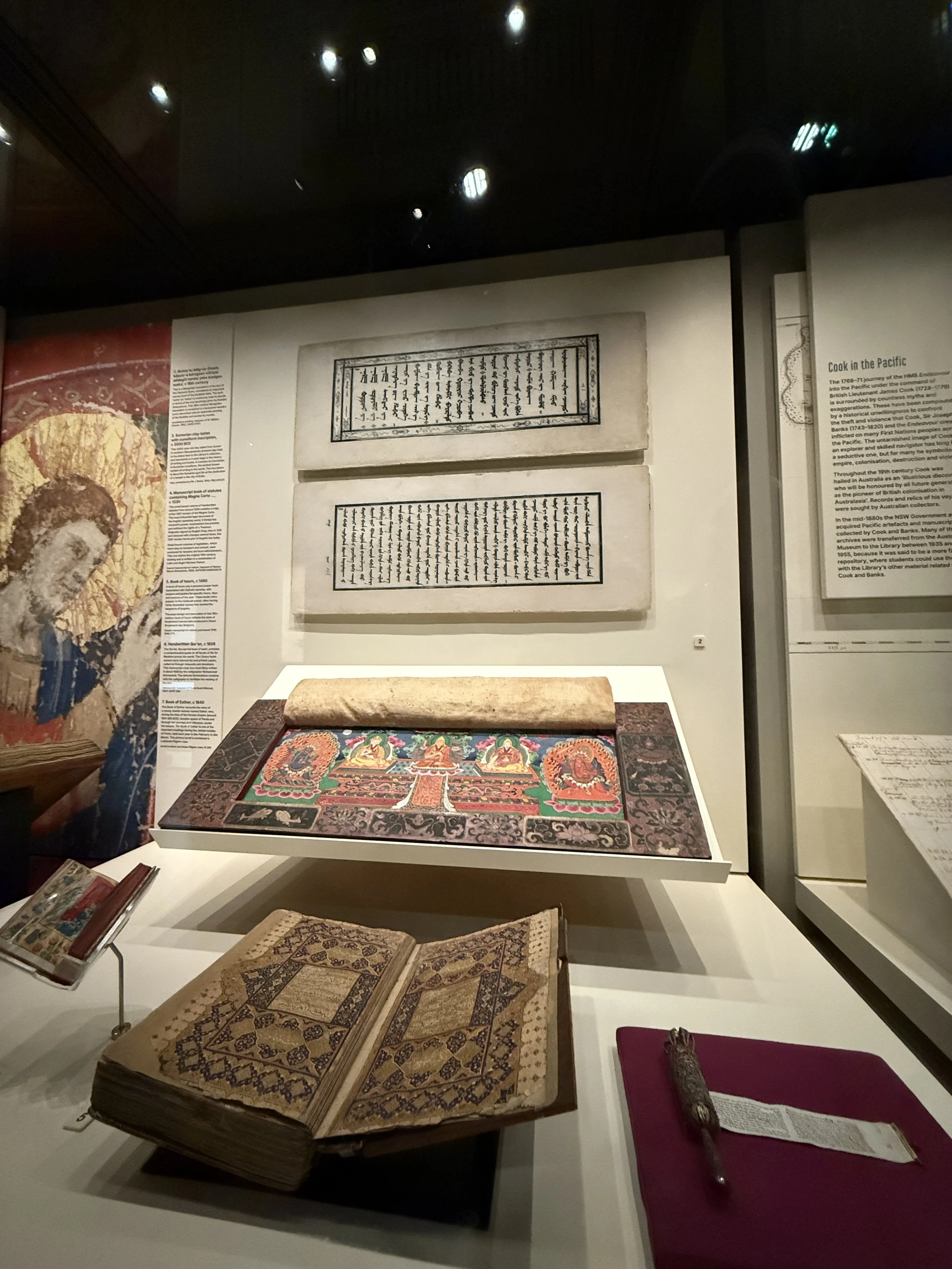
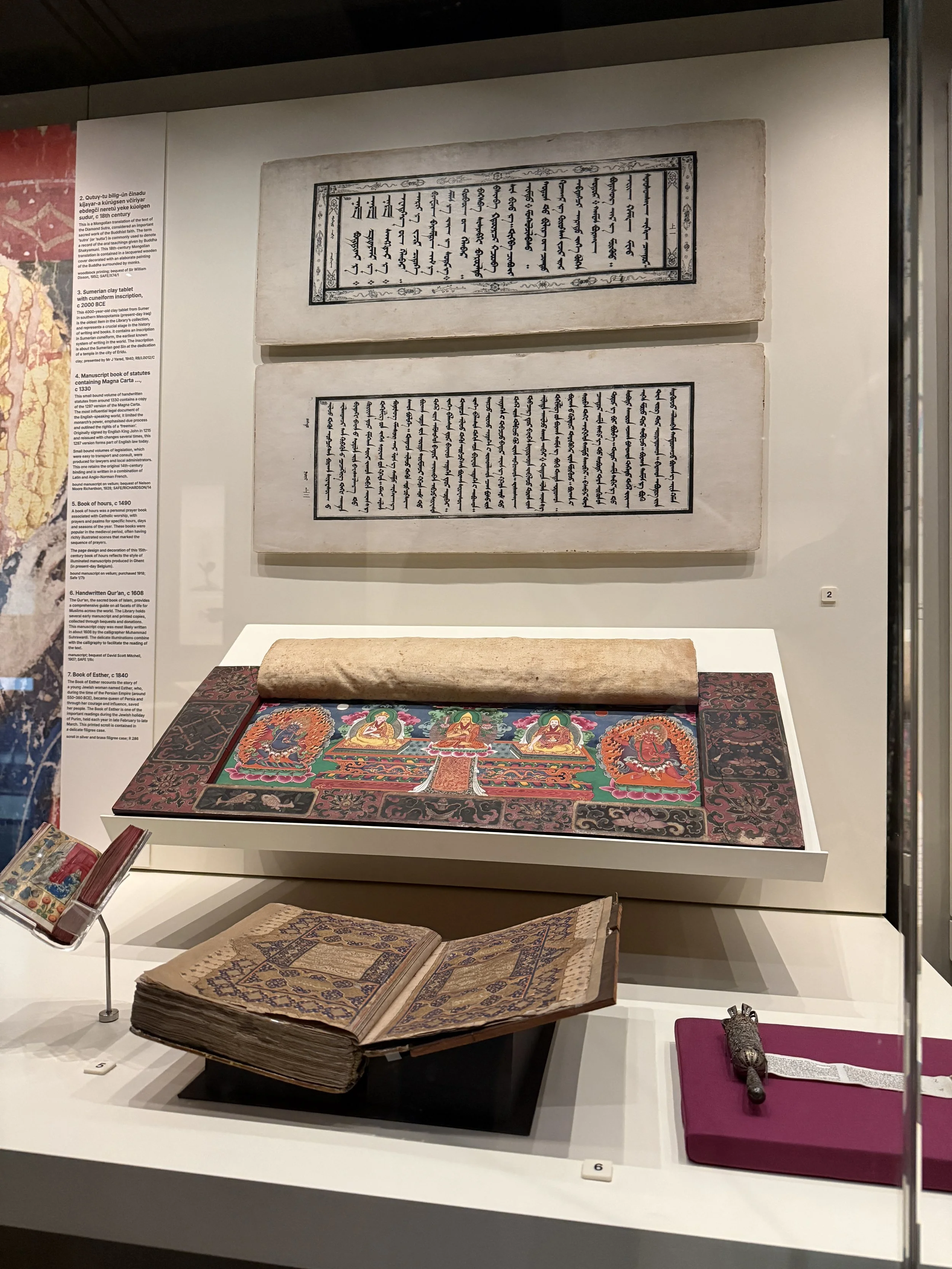
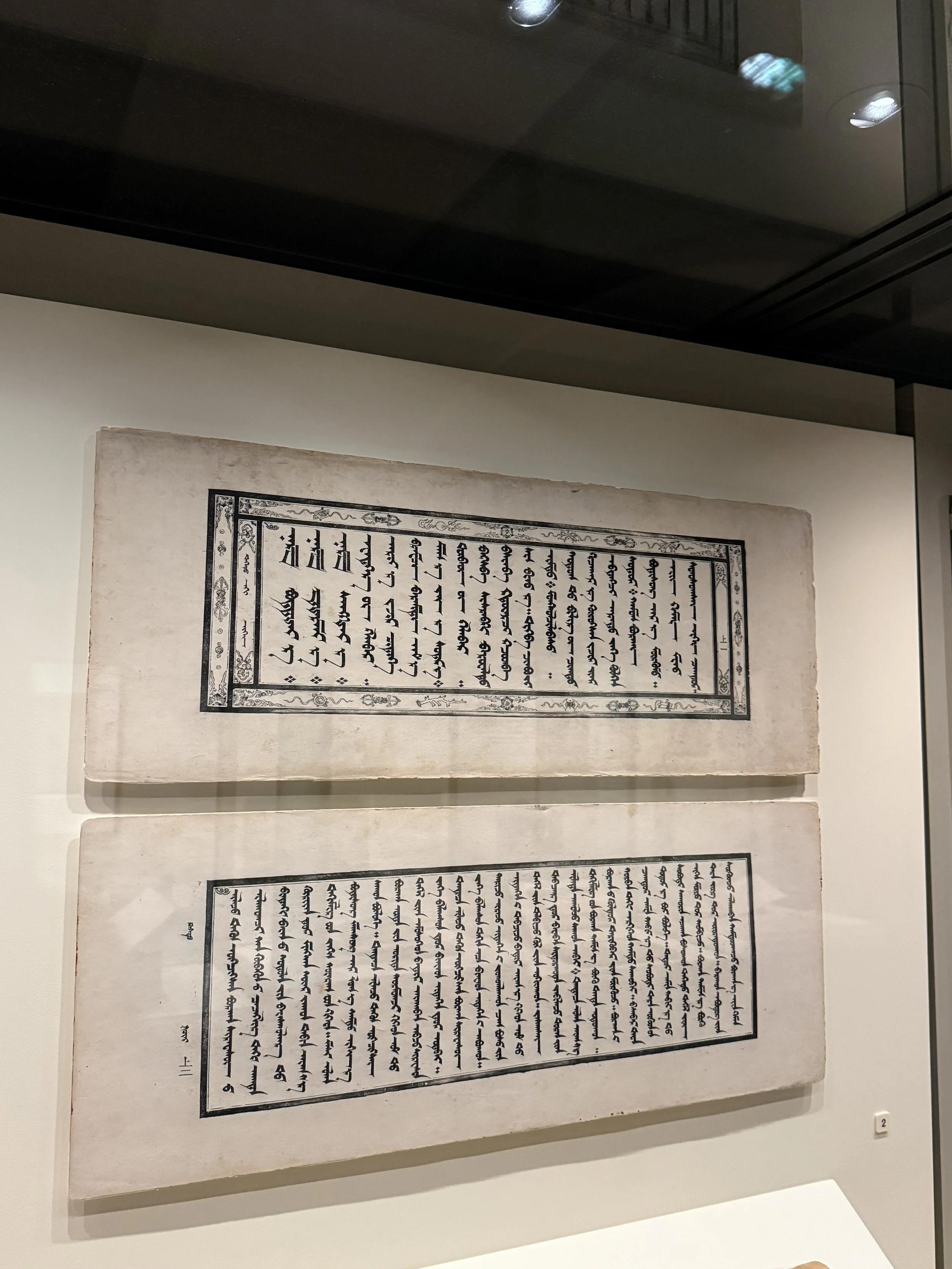
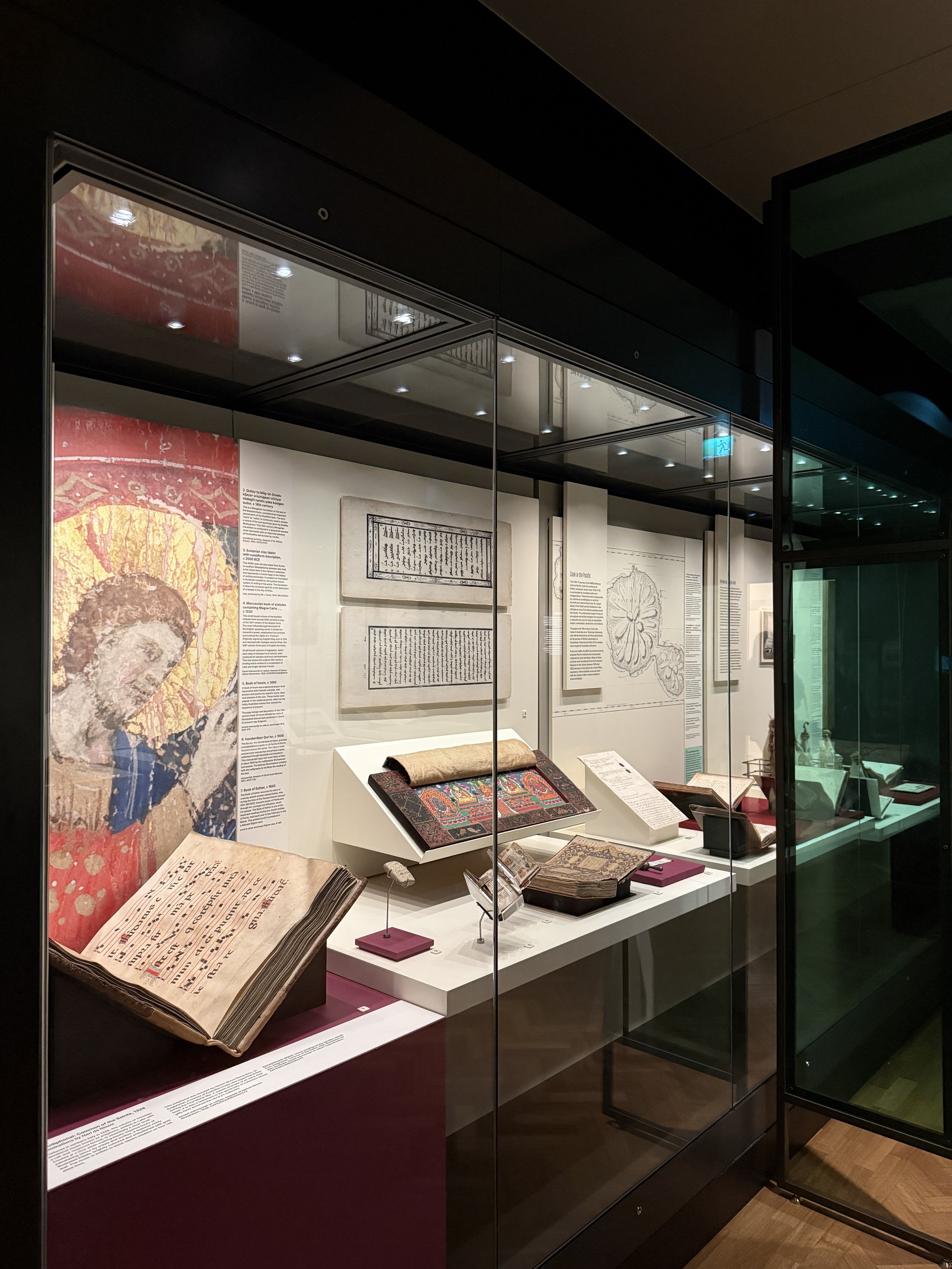
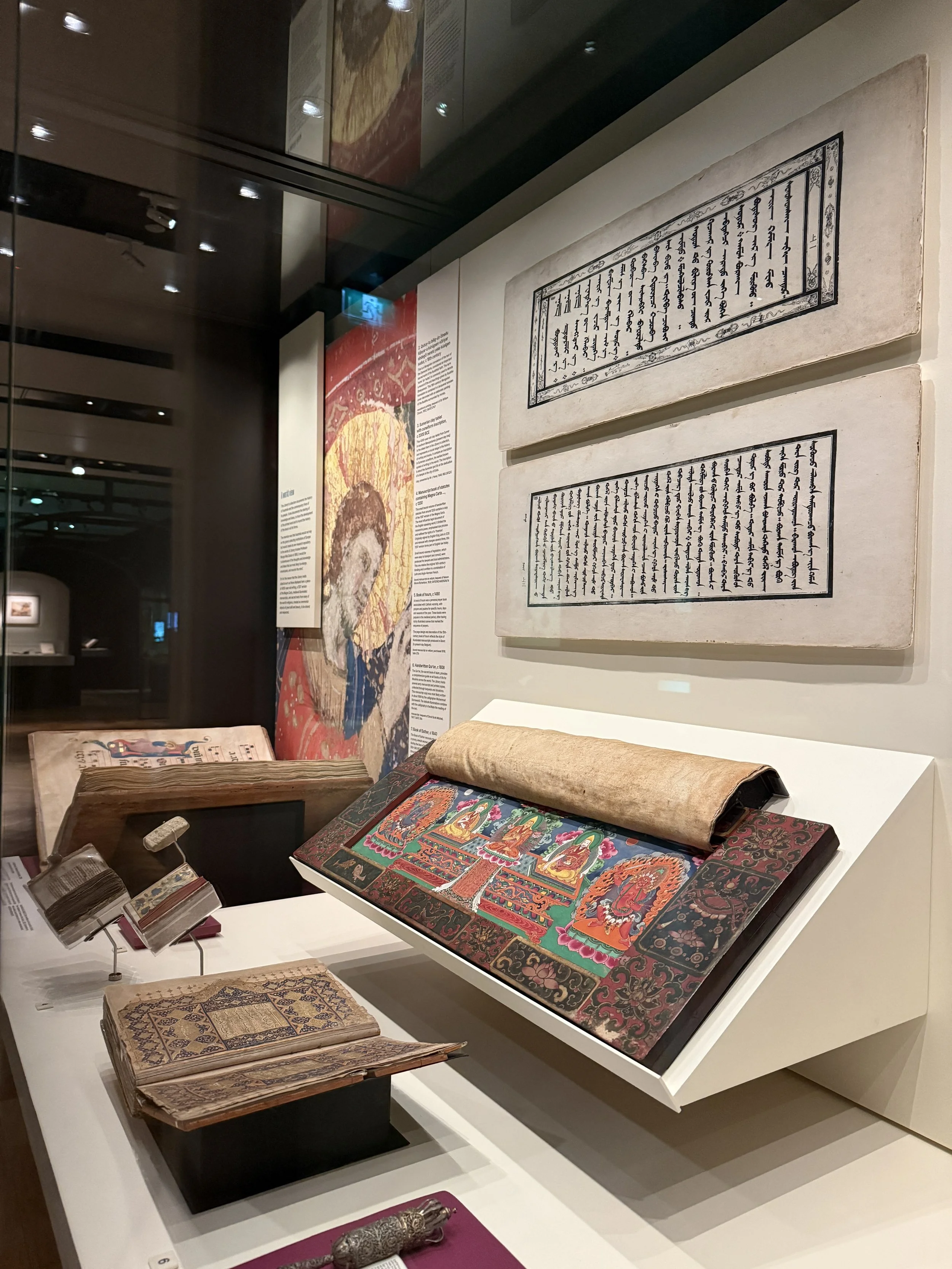
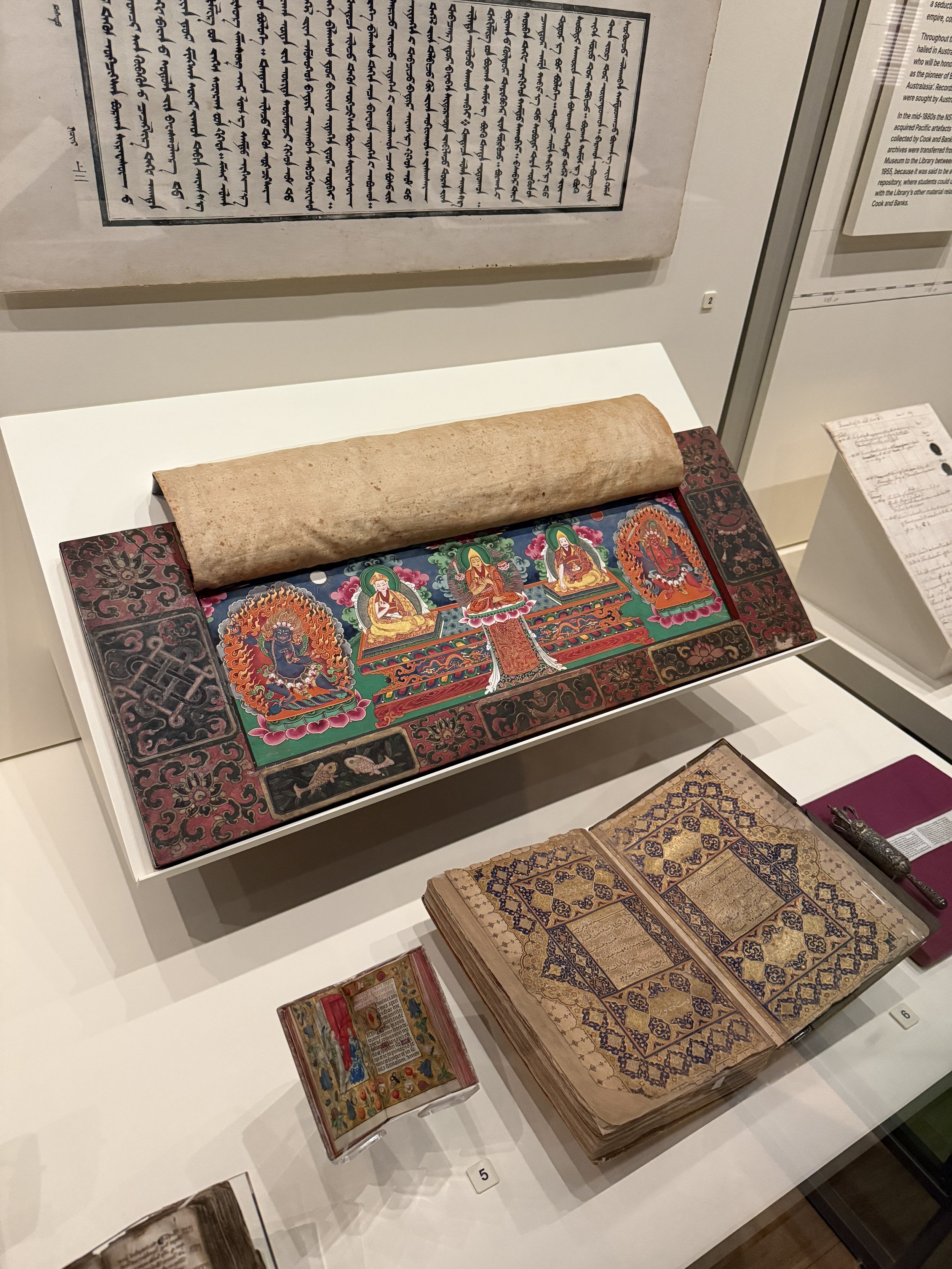
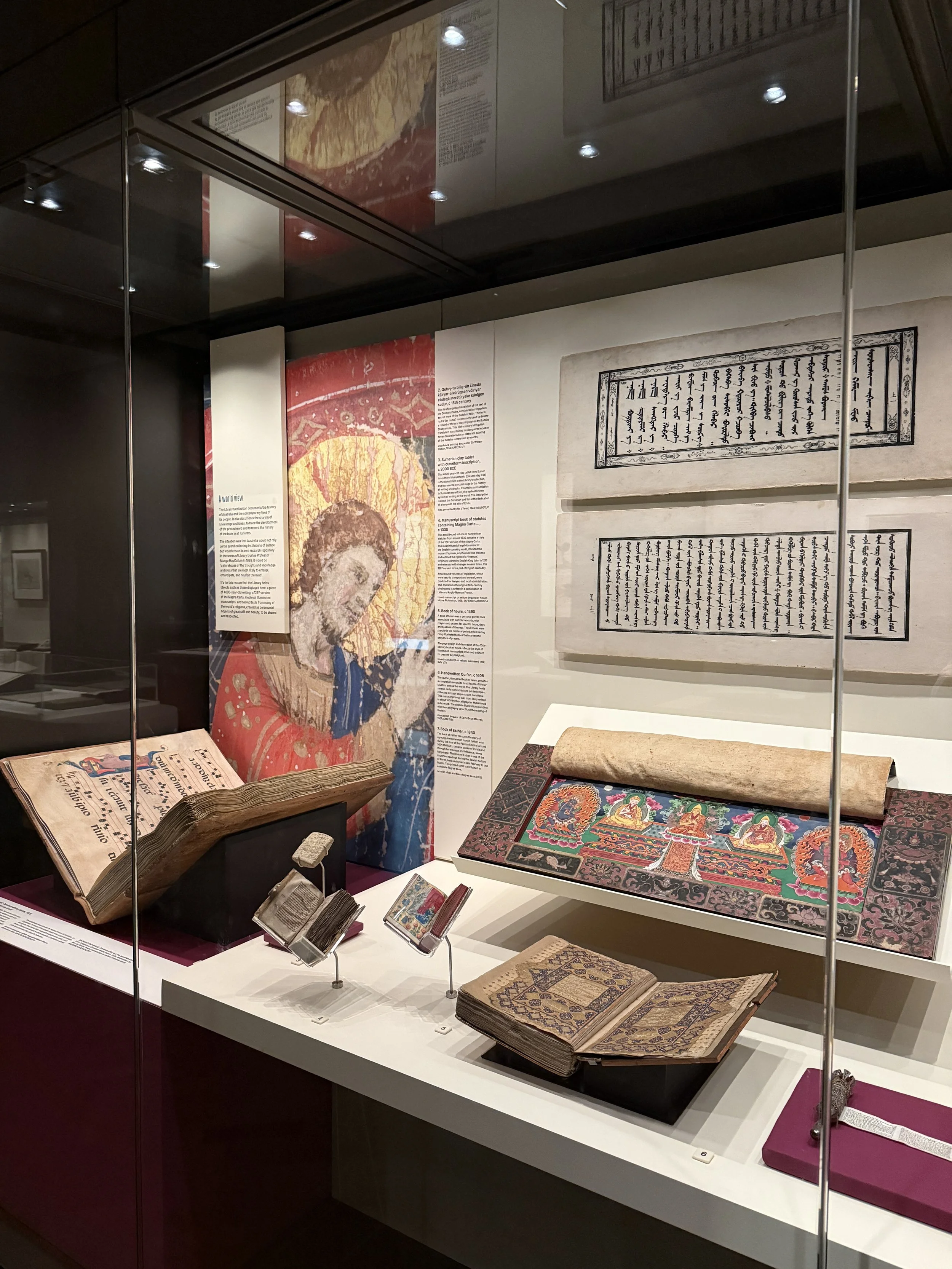
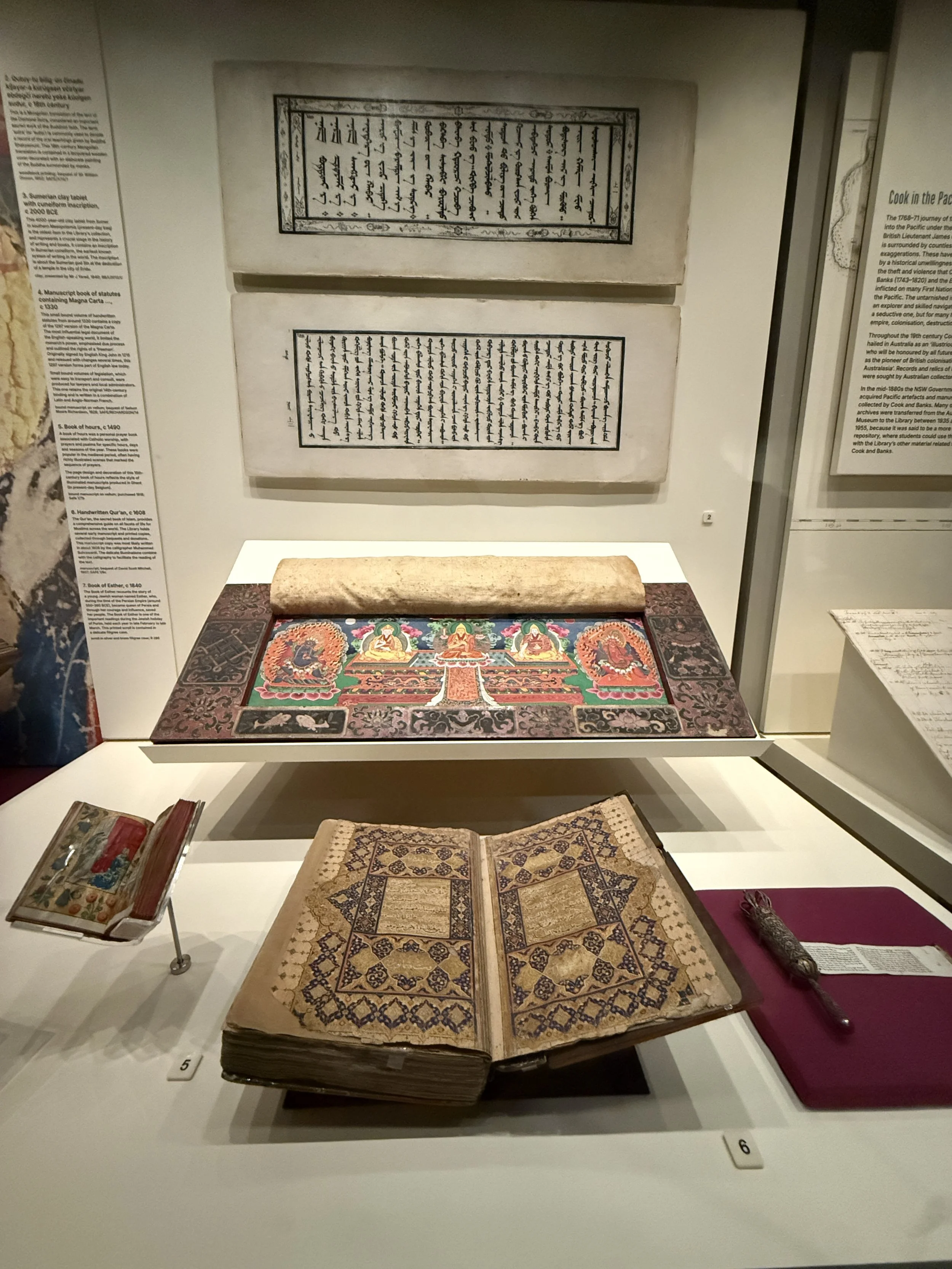
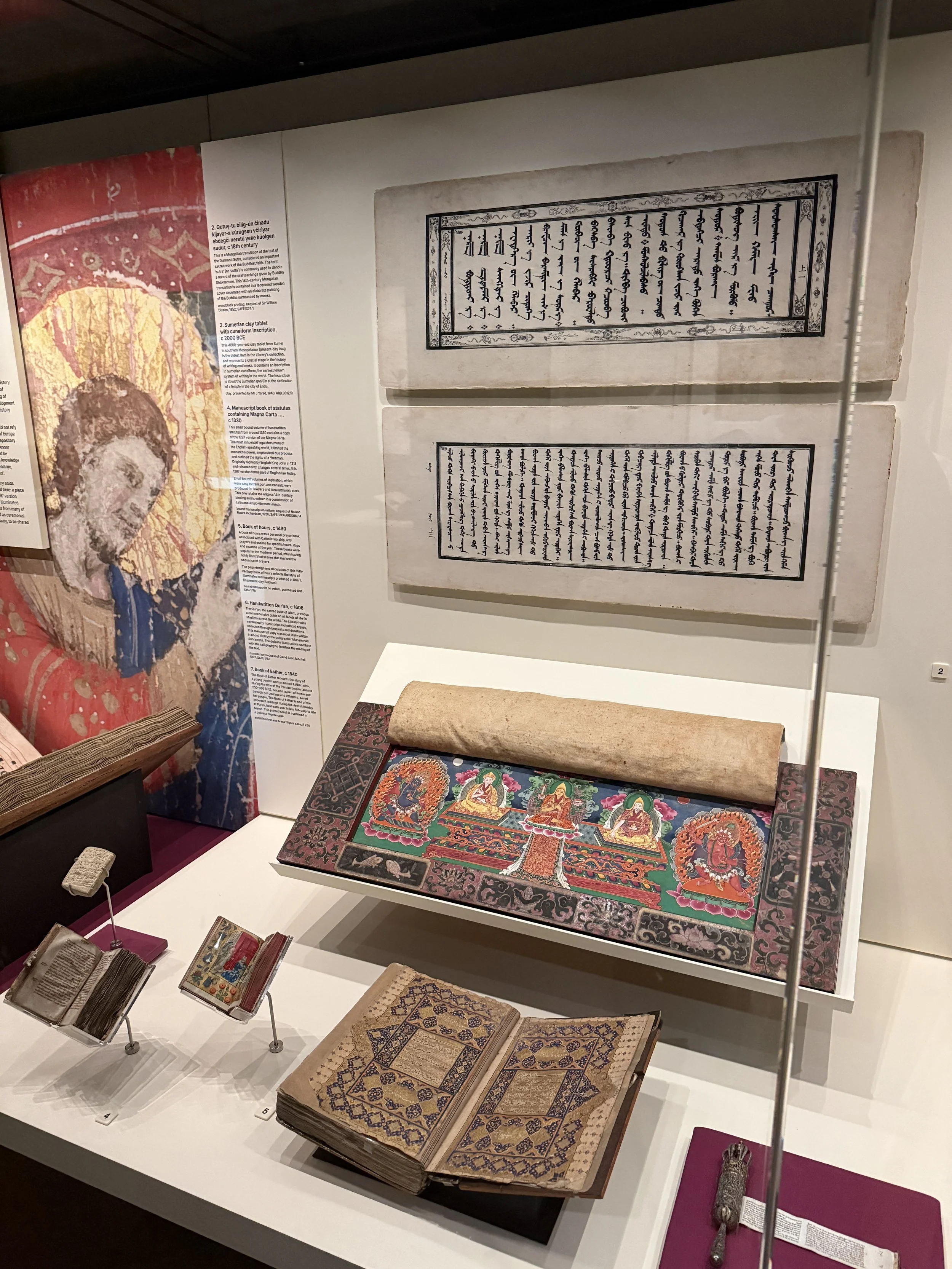
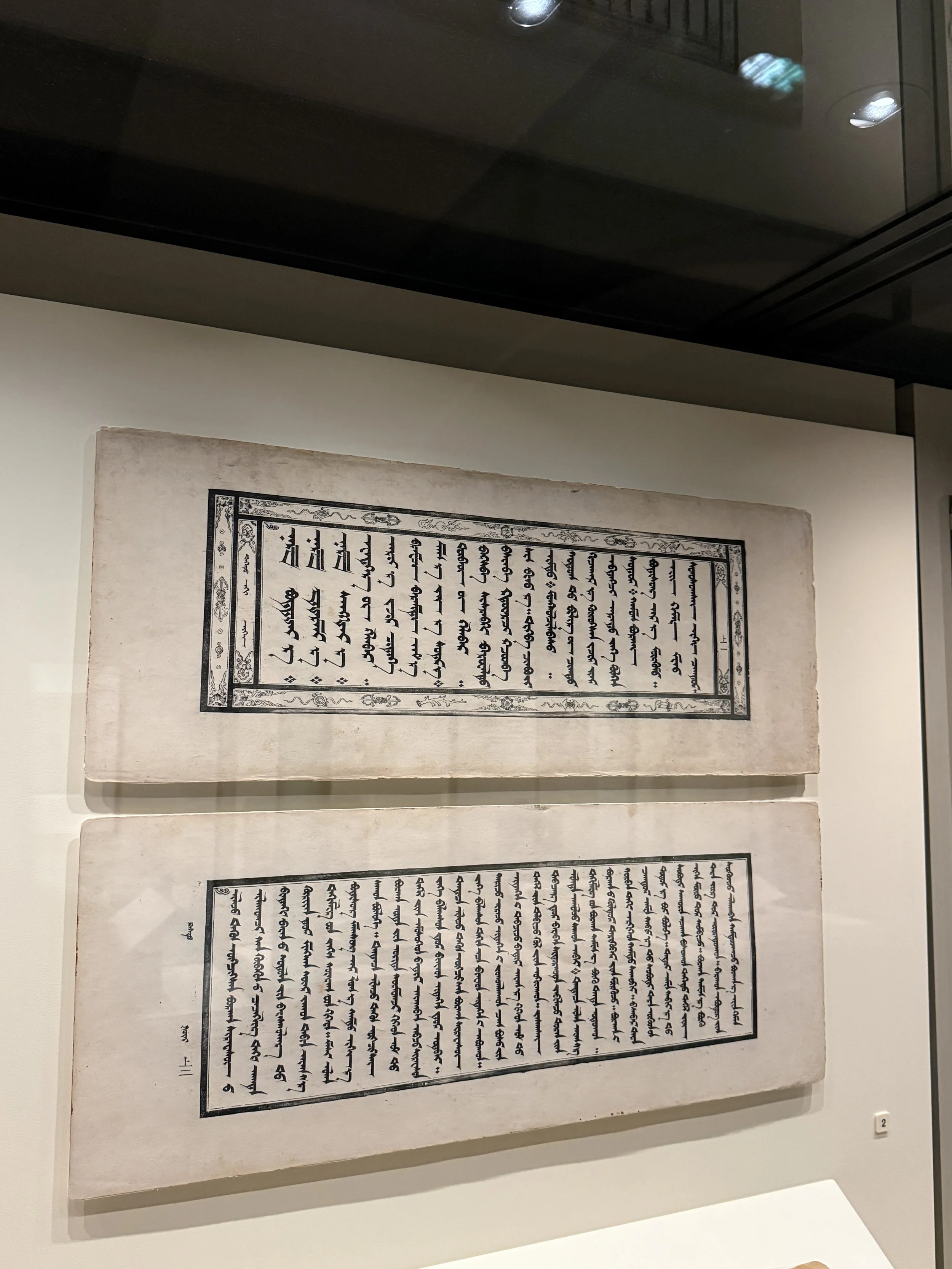
The second manuscript, an eighteenth-century Mongolian translation of the Diamond Sutra, belongs to a long tradition of textual transmission. The Diamond Sutra (Skt. Vajracchedikā Prajñāpāramitā Sūtra) is one of the most influential works within the Mahāyāna Buddhist corpus, articulating the doctrine of emptiness (śūnyatā) and non-attachment to conceptual forms. Its translation into Mongolian reflects the close relationship between Tibetan Buddhist scholasticism and Mongolian political and cultural life from the sixteenth century onward, when Mongol elites adopted Tibetan Buddhism.
The manuscript is written in classical Mongolian script, a vertical writing system derived from the Uyghur adaptation of the Sogdian alphabet. By the eighteenth century, this script had become a key medium for the translation of Buddhist texts, often through Tibetan intermediaries. Translation required sustained negotiation of philosophical vocabulary across Sanskrit, Tibetan, and Mongolian intellectual traditions. Within monastic contexts, such manuscripts were used for study, recitation, and ritual practice, and formed part of the broader transmission of doctrine across Inner Asia.
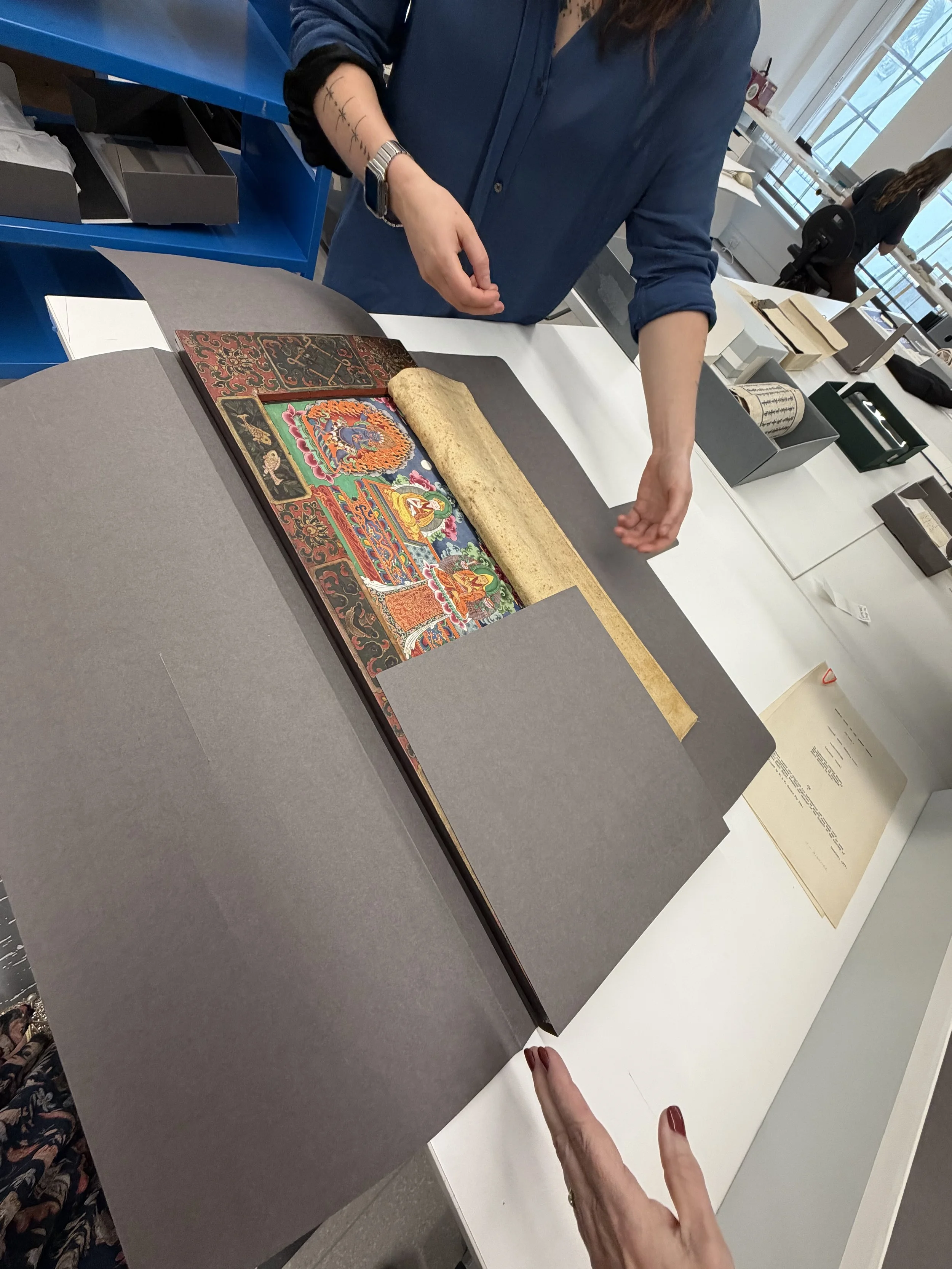
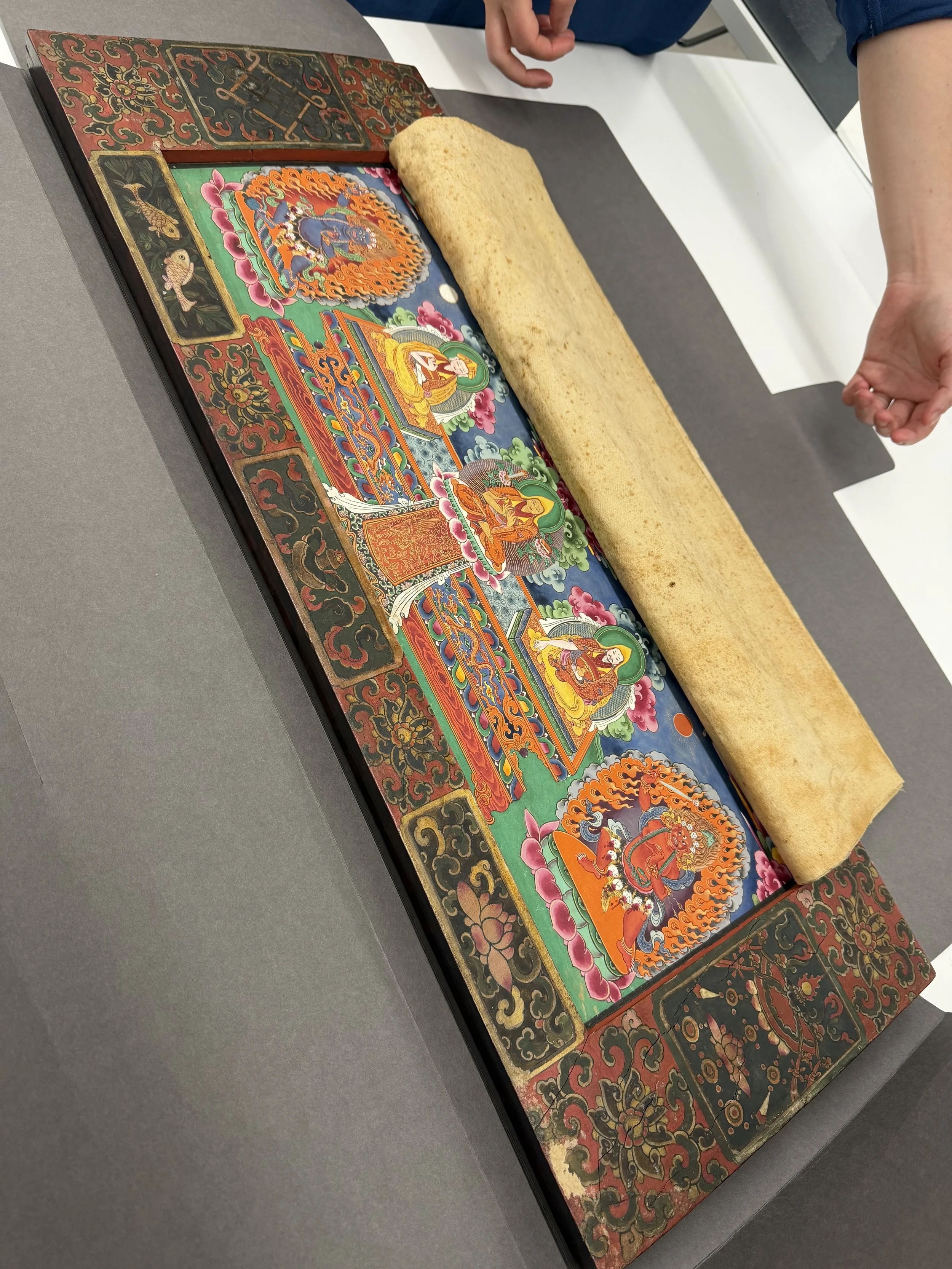
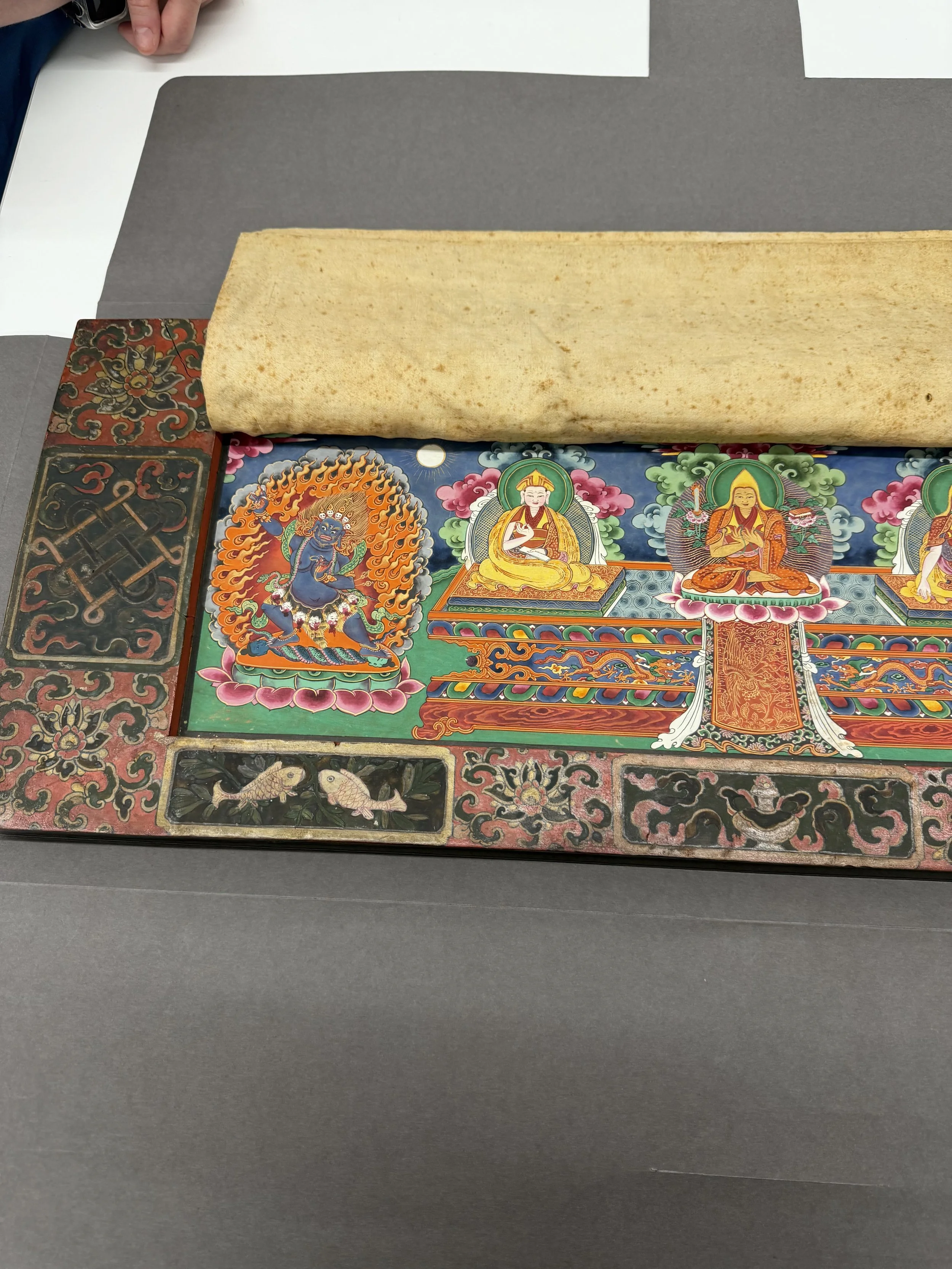
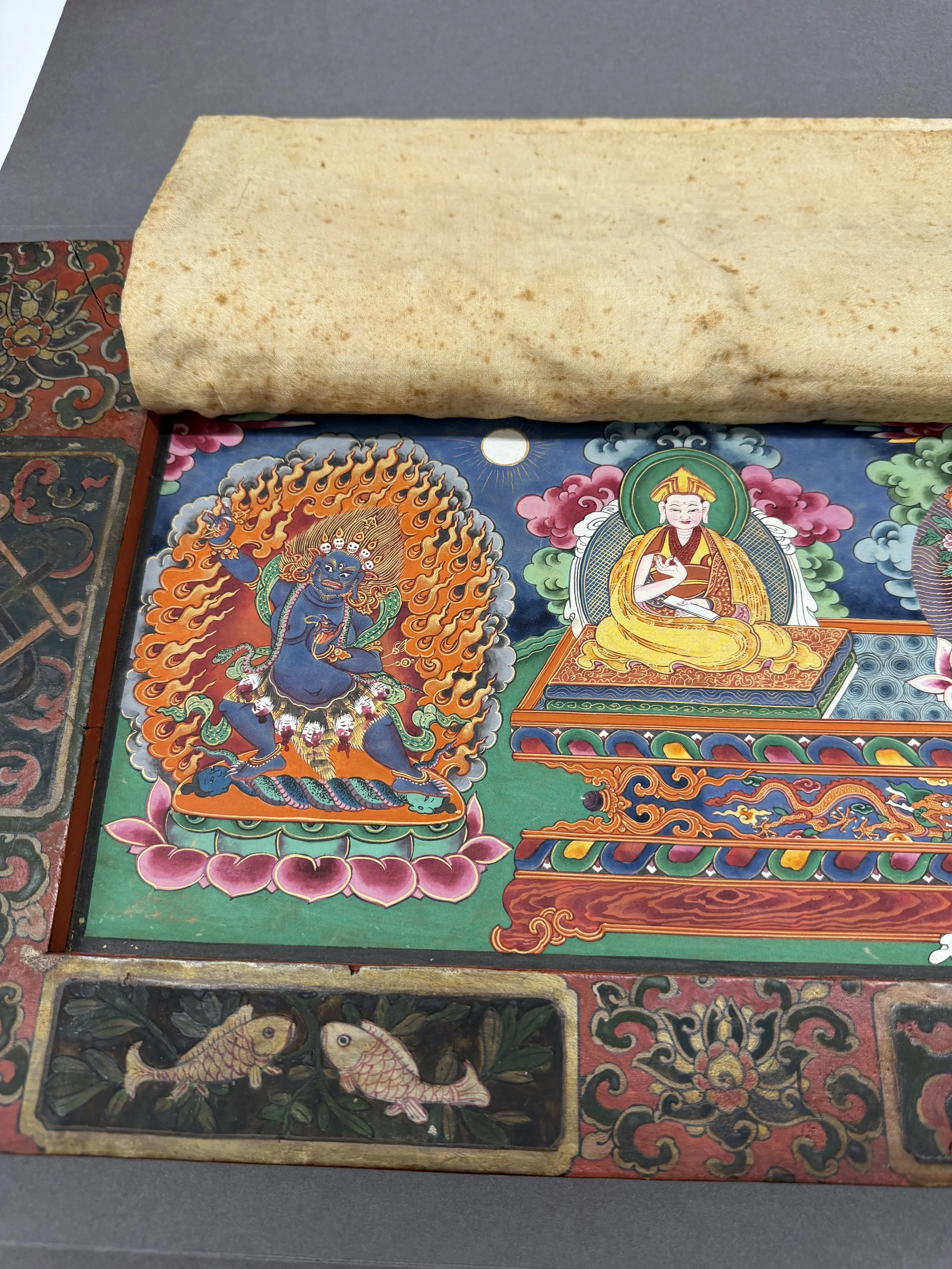
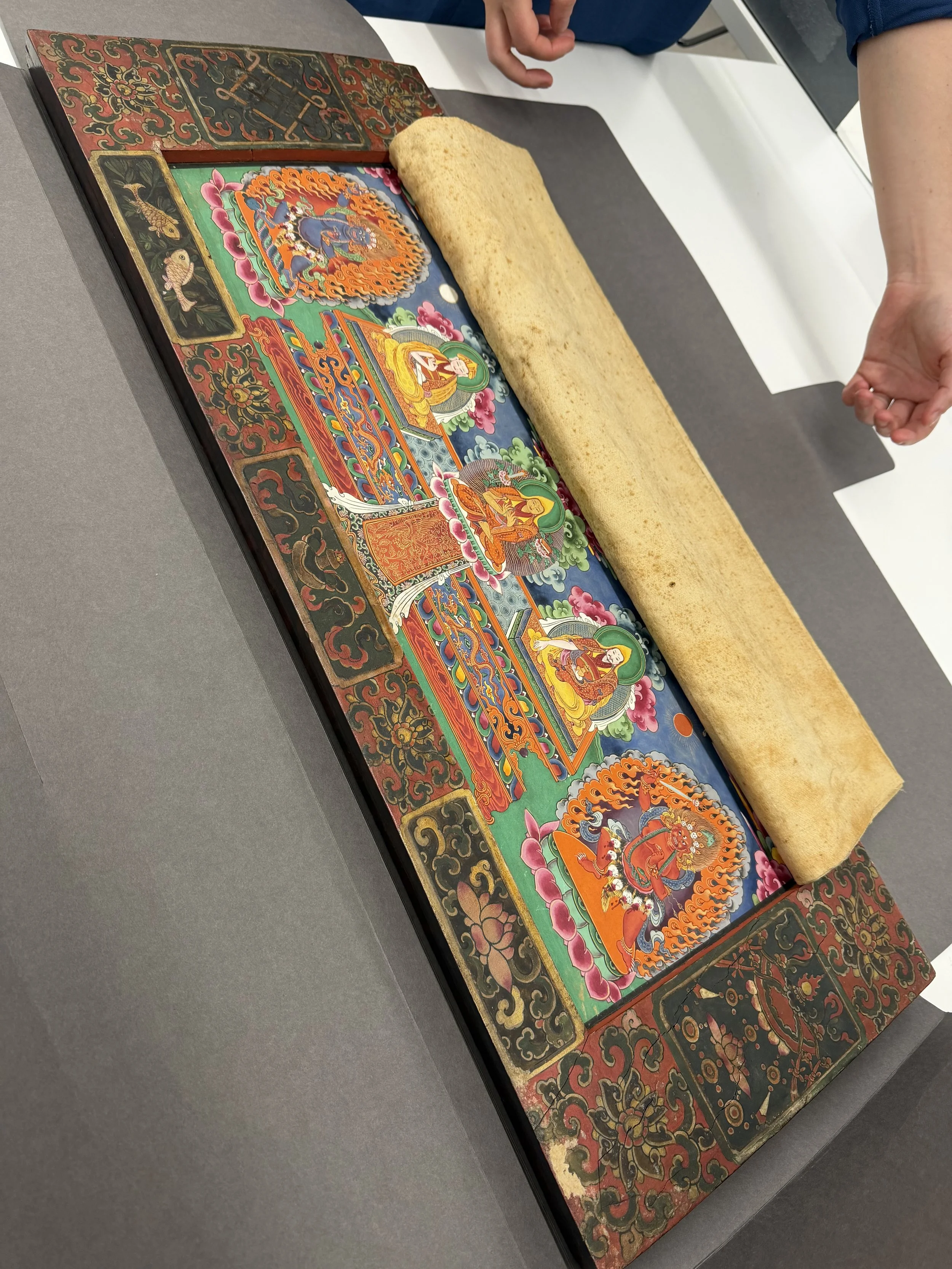
Of particular note is the manuscript’s lacquered wooden cover, decorated with a painted image of the Buddha surrounded by monks. This places the text within a visual and devotional framework consistent with Buddhist book arts, where the material form of the manuscript carries religious significance. The lacquered cover, typically associated with high-status commissions, indicates the importance of the text and suggests use in a monastic or elite setting. The combination of painting, calligraphy, and craftsmanship reflects an integrated understanding of the manuscript as both devotional object and artefact.
Taken together, these two manuscripts illuminate connected histories of textual production across a vast region extending from Mughal India to Inner Asia. Each demonstrates how sacred texts were preserved, transmitted, and materially shaped through local artistic practices, intellectual traditions, and devotional contexts. Their inclusion in the Library’s bicentenary exhibition highlights the circulation of ideas, the movement of artistic forms, and the continued significance of the manuscript as a medium of cultural expression.
Their presence within an Australian collection also speaks to the global scope of such holdings and the ways in which manuscripts from Asia are preserved and studied beyond their regions of origin. Bringing them into public view allows audiences to engage directly with these material histories and broadens understanding of the intellectual, religious, and artistic networks that connected different parts of the world. The exhibition is now open to the public, and I was pleased to have contributed to it as part of the Library’s bicentenary program.