The Sacred in Miniature: An Ottoman Qur’an of 1304 AH / 1887 CE in the Beinecke Library at Yale University
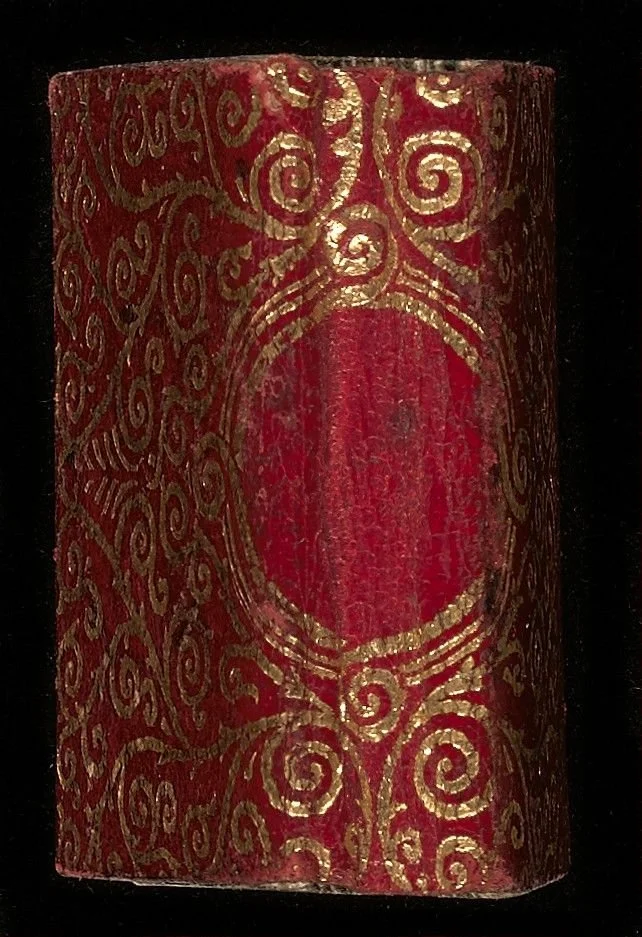
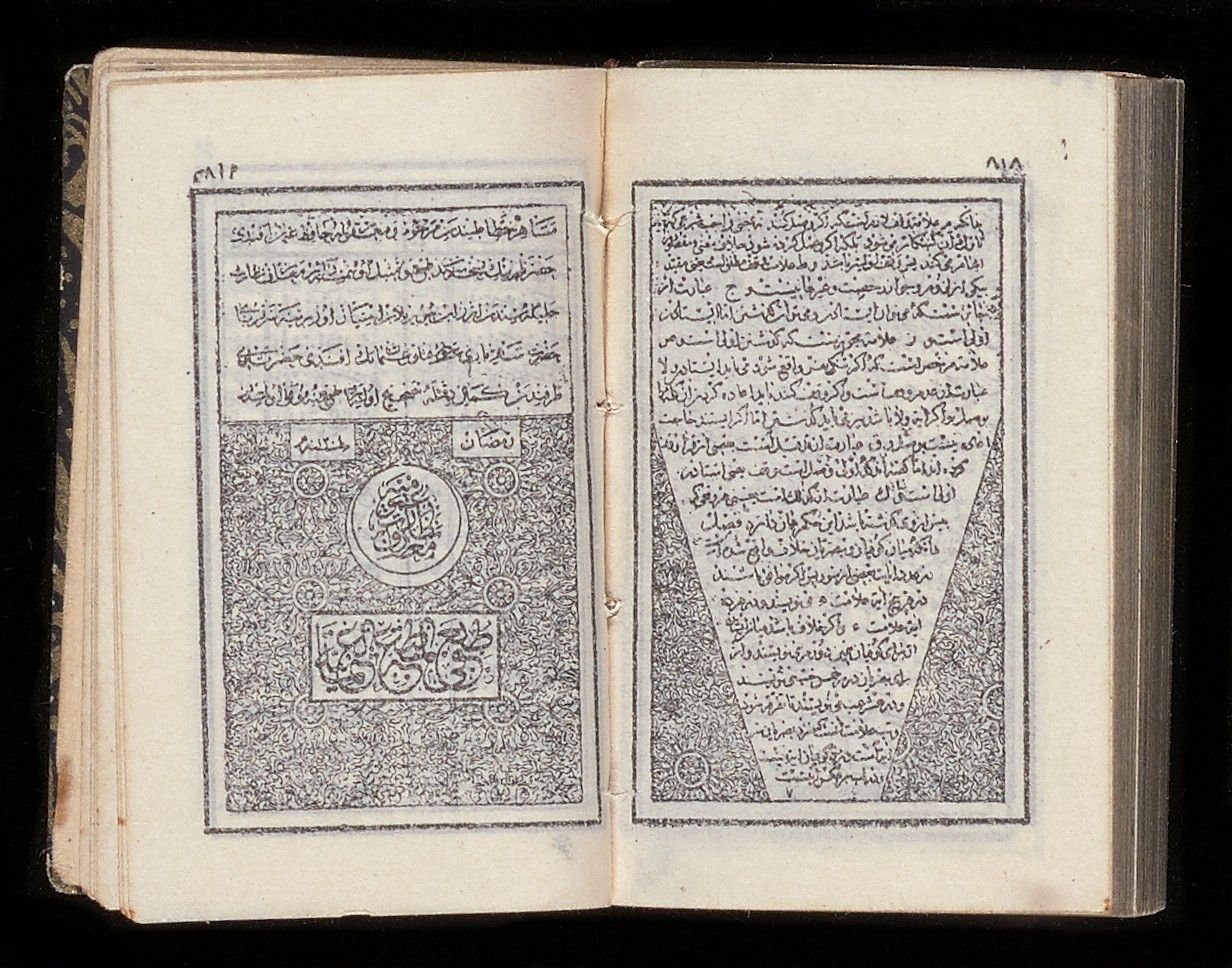
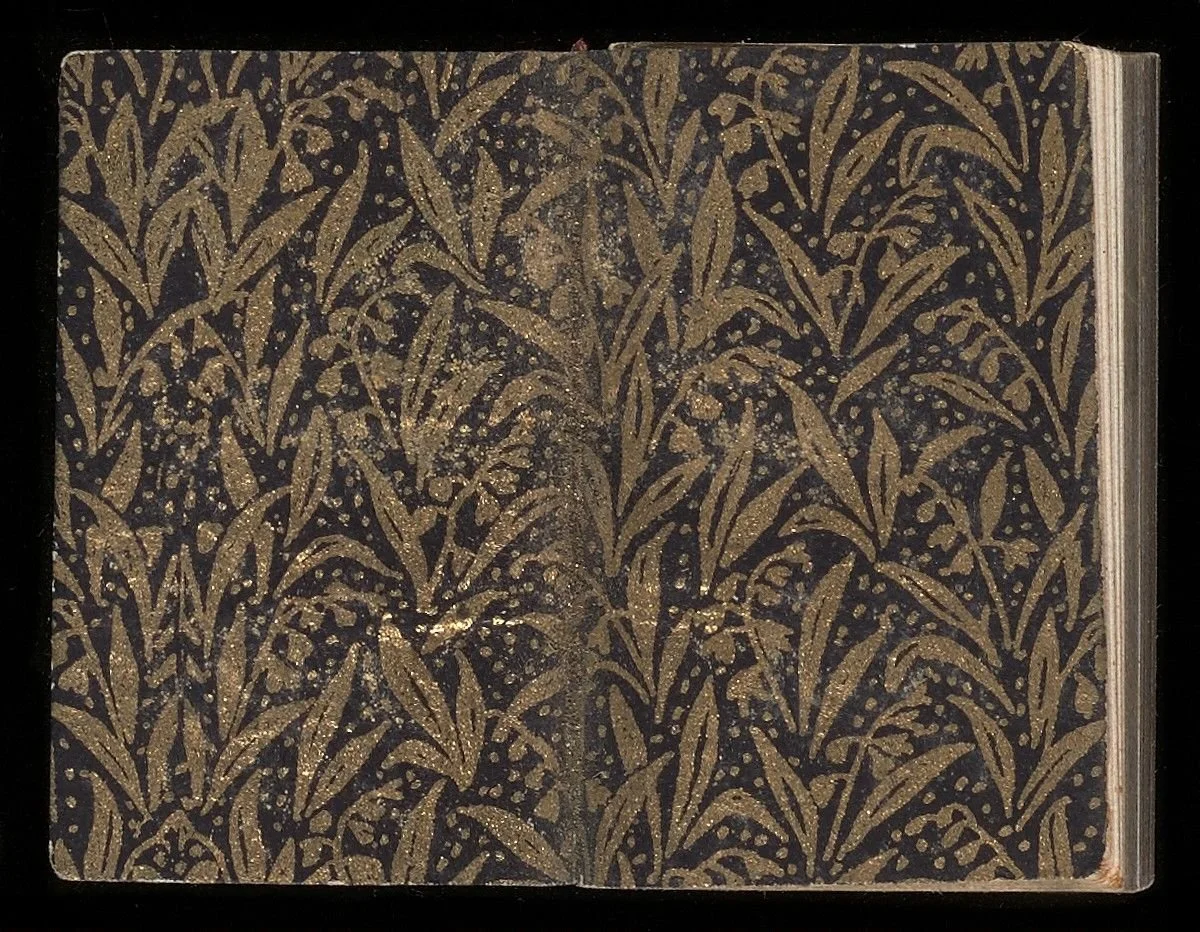
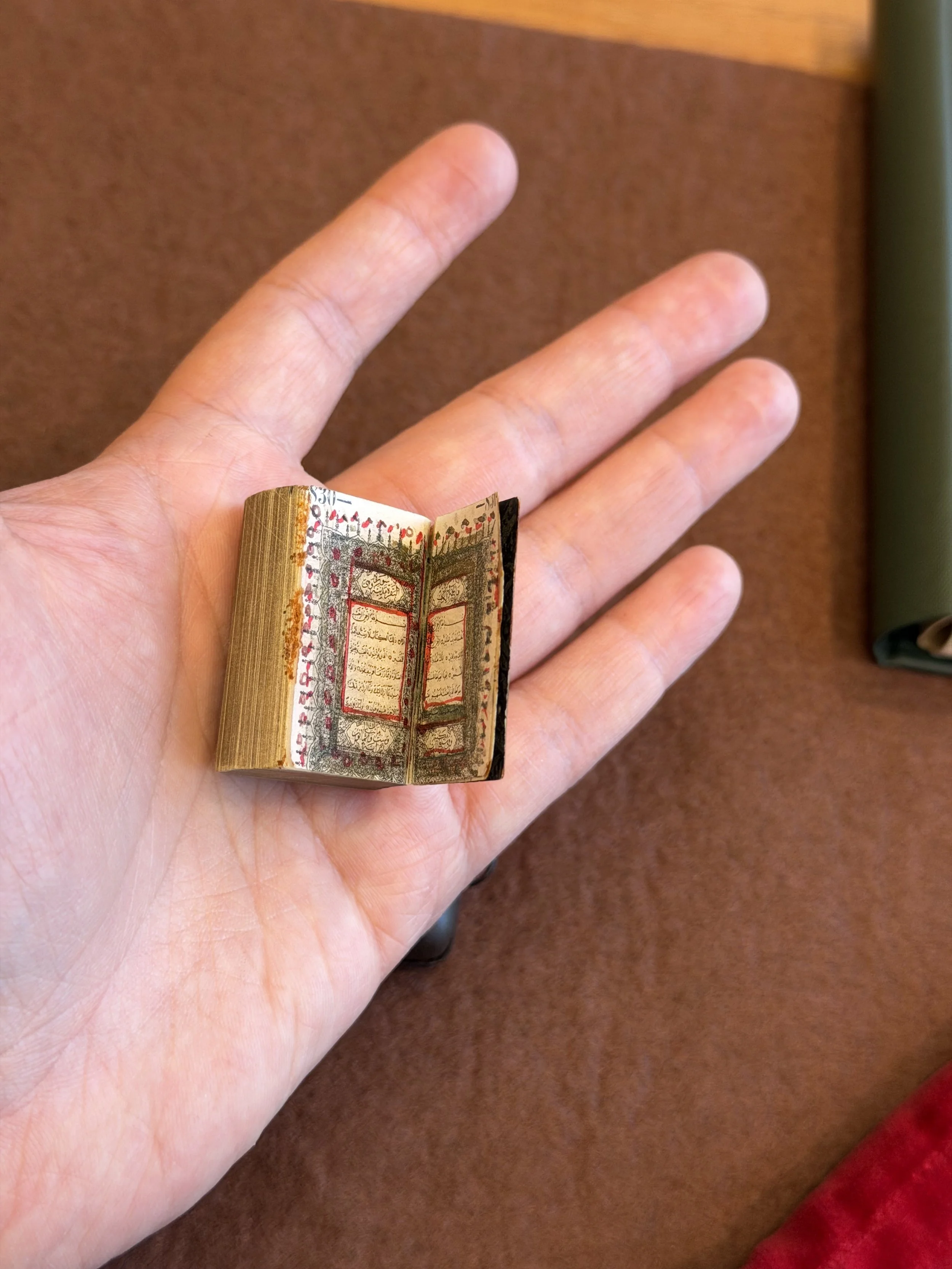
During my period of research at Yale University, I had occasion to examine a remarkable miniature Ottoman Qur’an (ZM K84) preserved within the Arabic holdings of the Beinecke Rare Book & Manuscript Library. Produced in Constantinople in 1304 AH / 1887 CE by the Ottoman Imperial Press, المطبعة العثمانية, the volume represents a notable example of late nineteenth century Ottoman Qur’anic printing. The volume, measuring approximately four centimeters in height and comprising 823 pages, belongs to a long tradition of diminutive Qur’anic codices produced throughout the Islamic world for purposes devotional, portable, and occasionally talismanic.
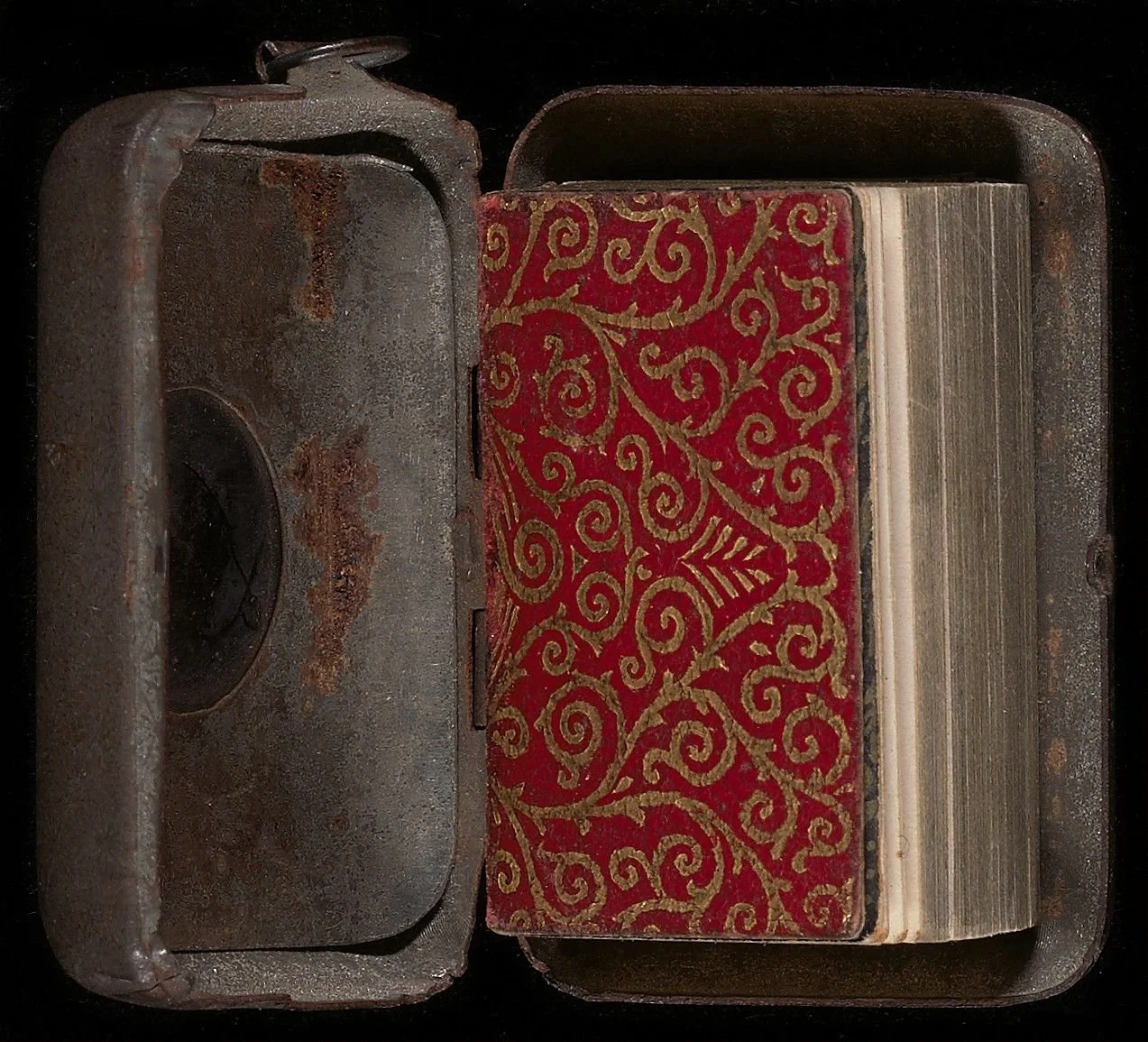
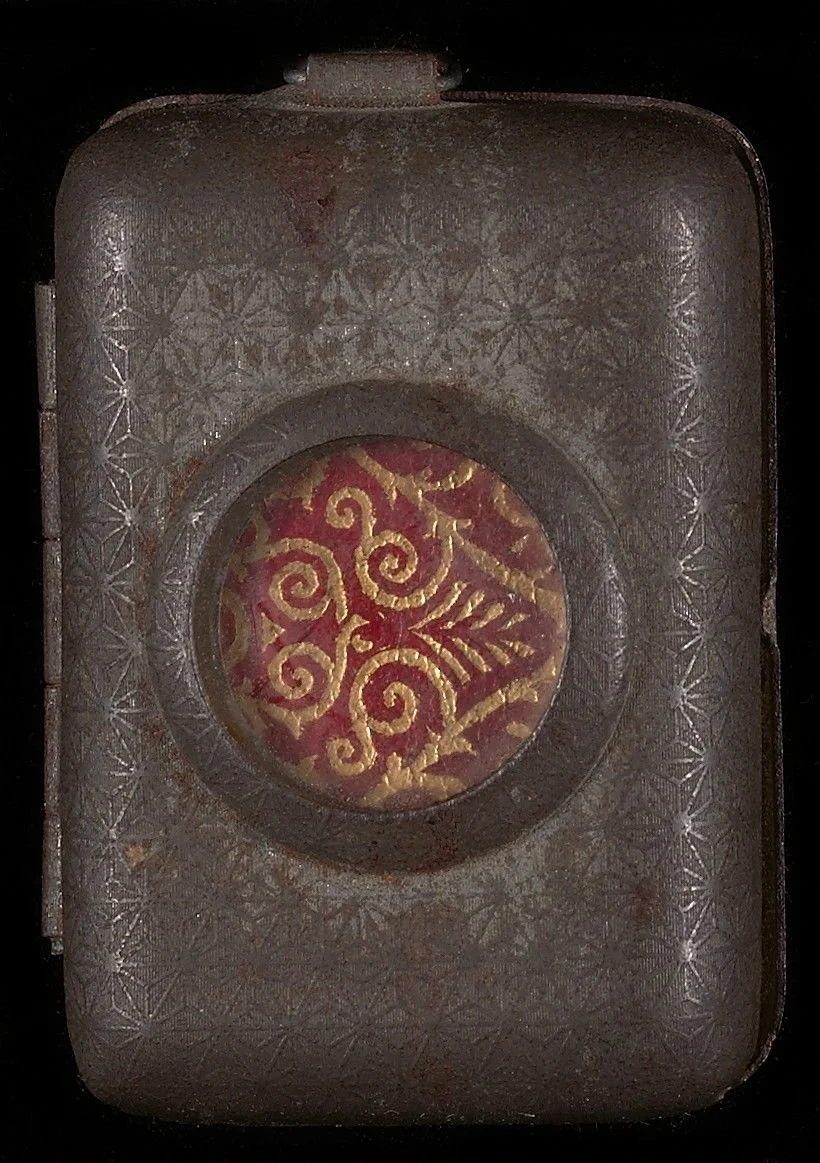
The copy is housed within a metal case fitted with a magnifying lens inserted into the upper cover and a ring intended to receive a chain or cord. The construction suggests that the object was designed to be carried upon the person, perhaps suspended beneath garments or attached to personal effects during travel. Such miniature Qur’ans were widespread across Ottoman lands during the nineteenth century and frequently occupied an intermediate position between book and amulet. Their presence reflected a broader Islamic understanding of the Qur’an as both recited revelation and materially protective text.

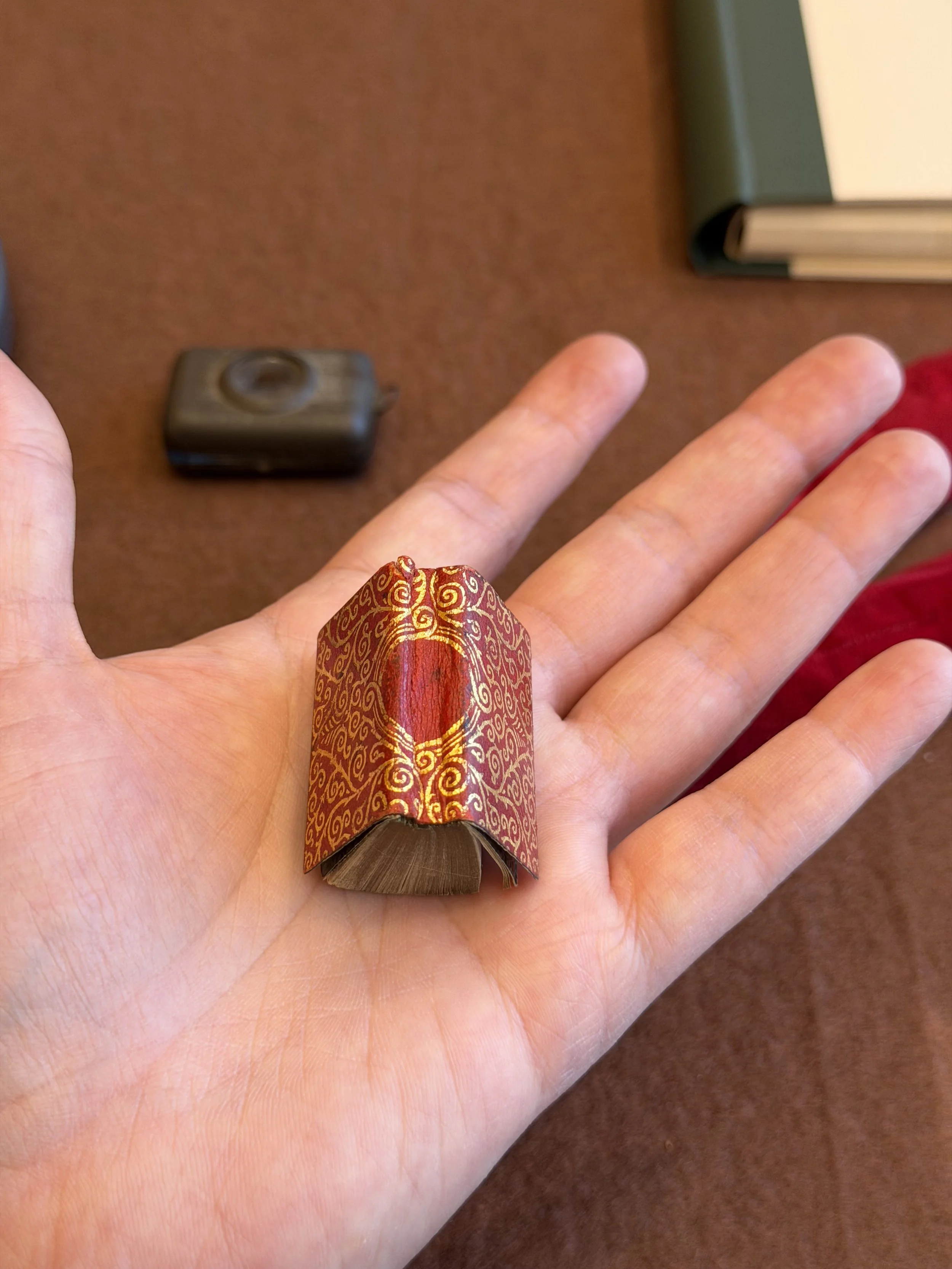
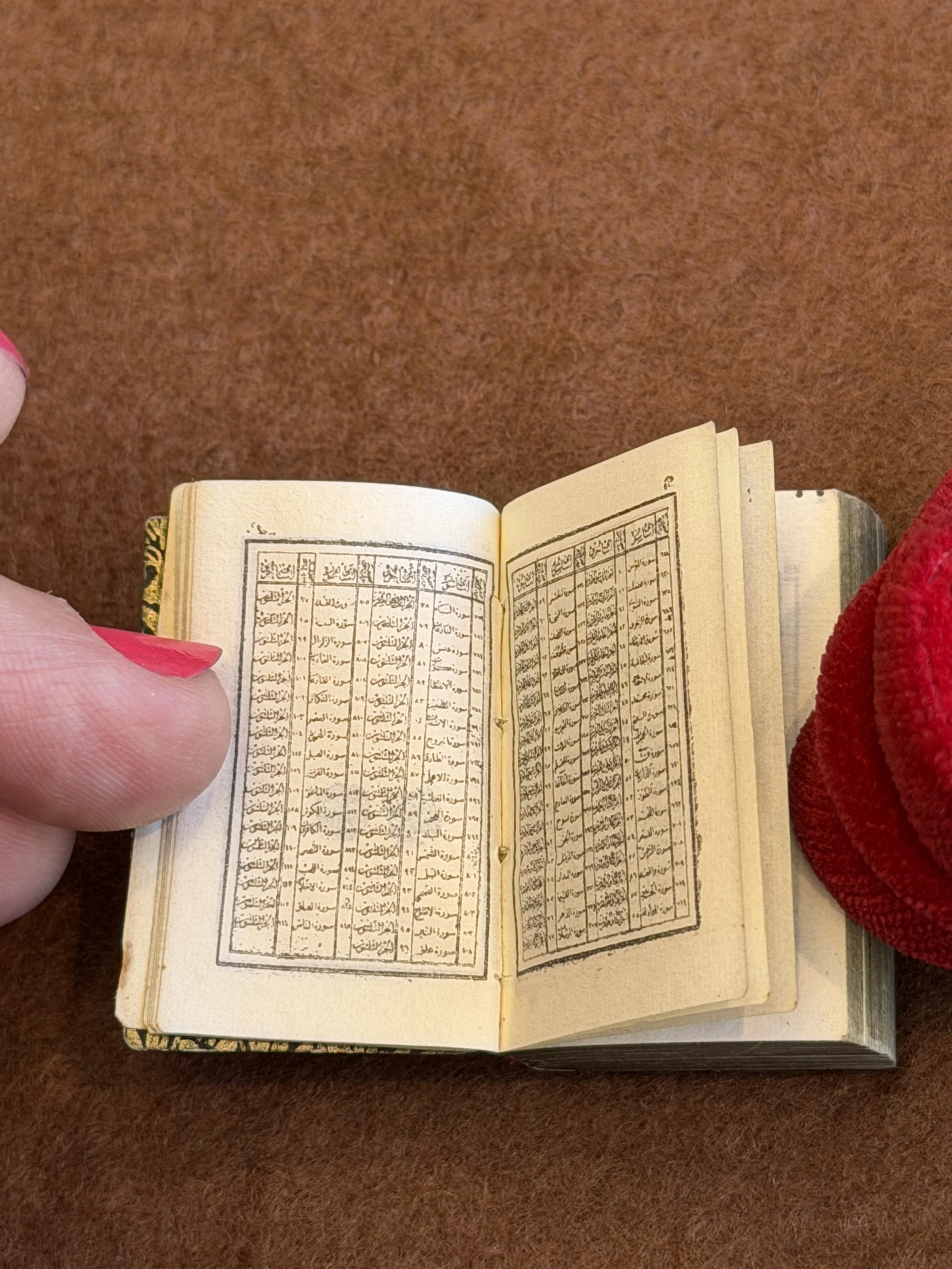

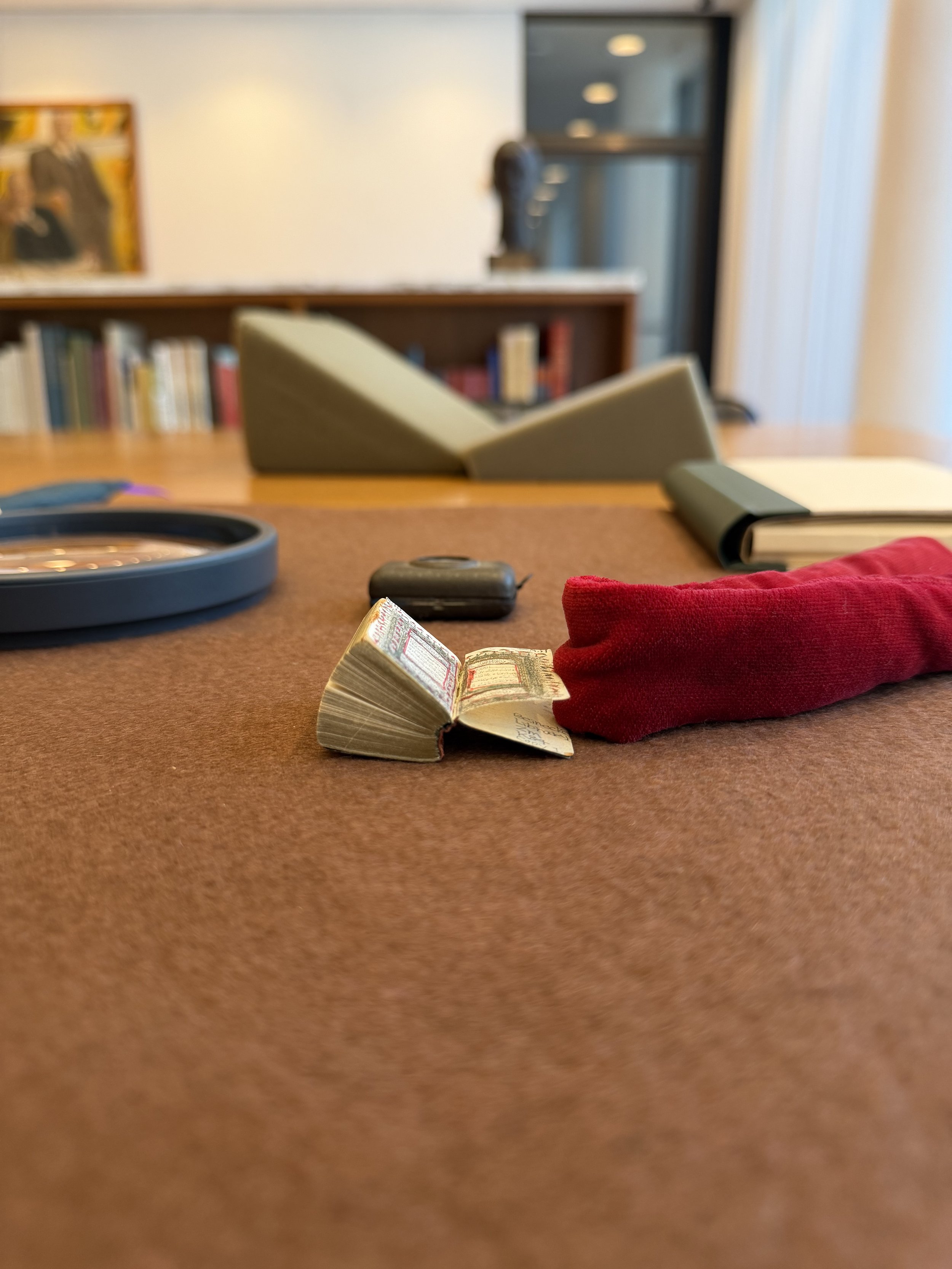
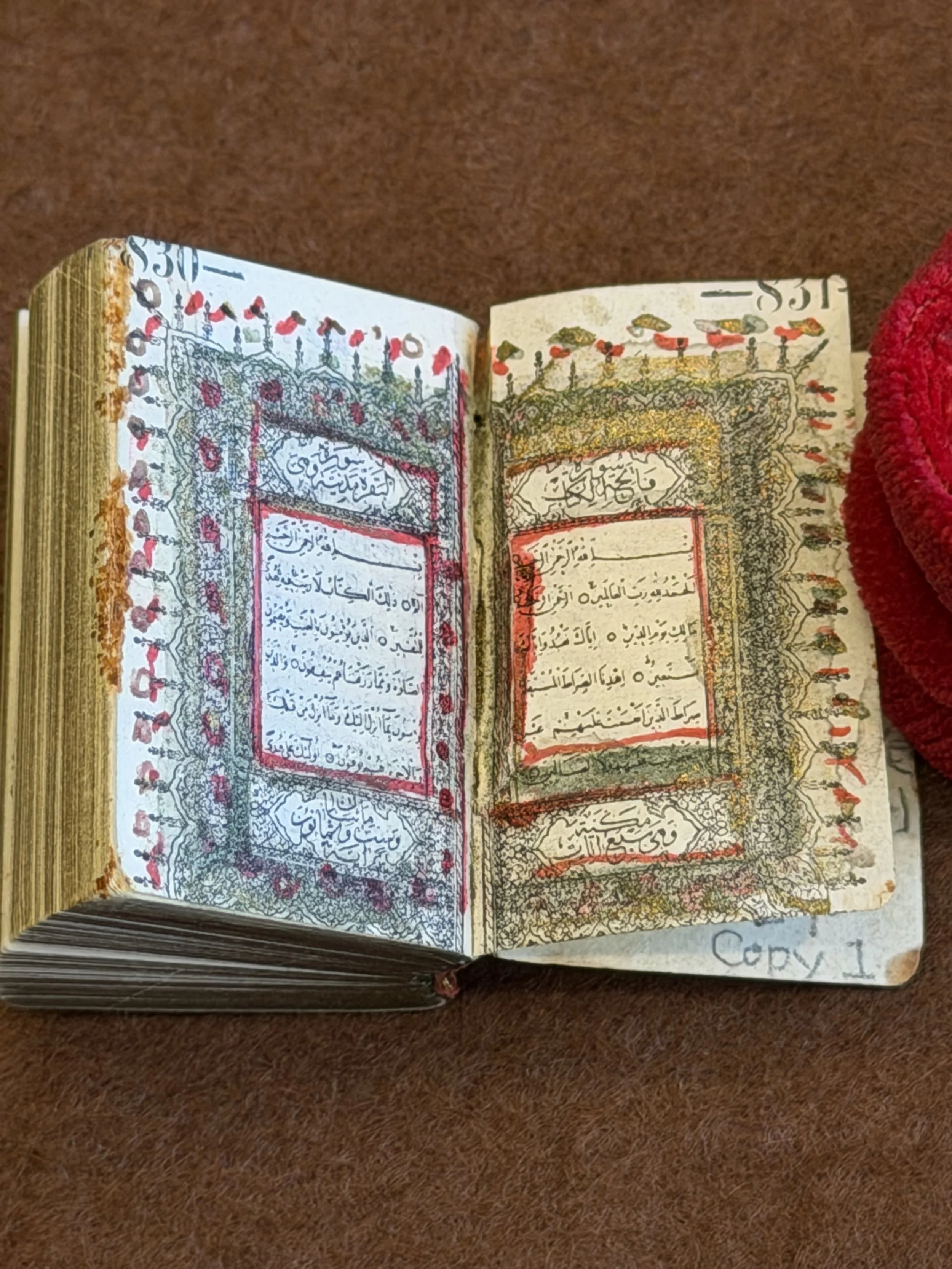
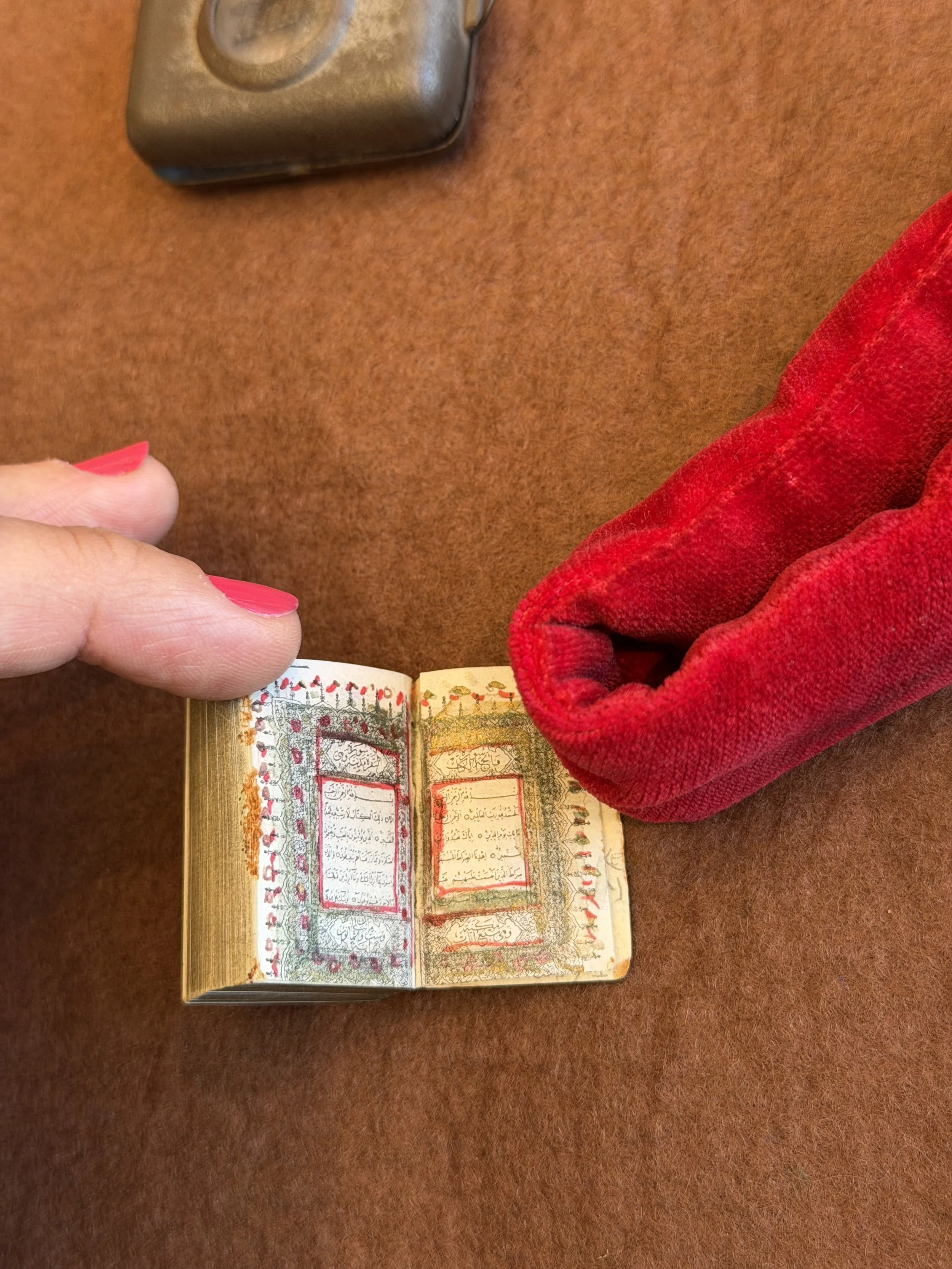
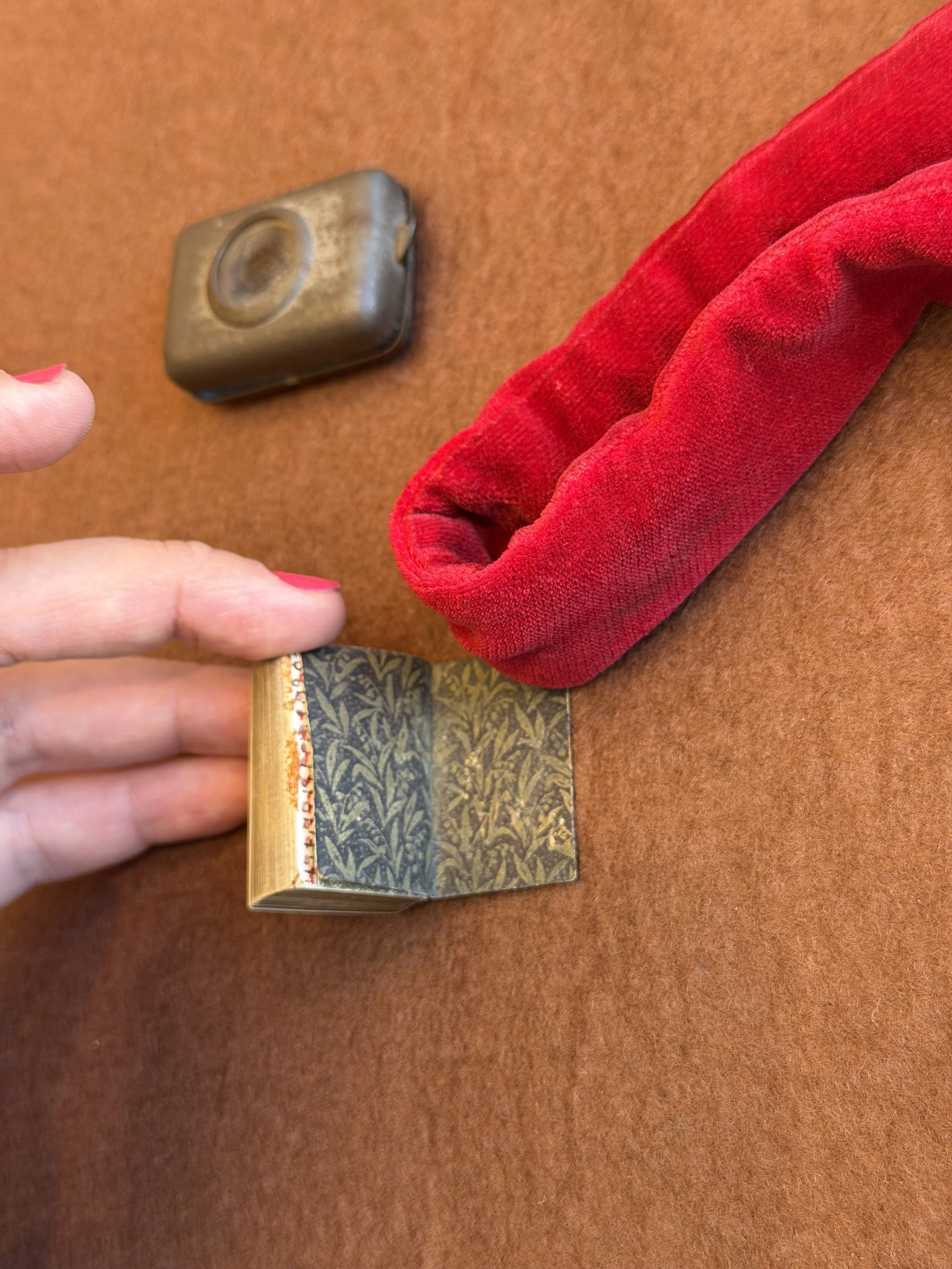
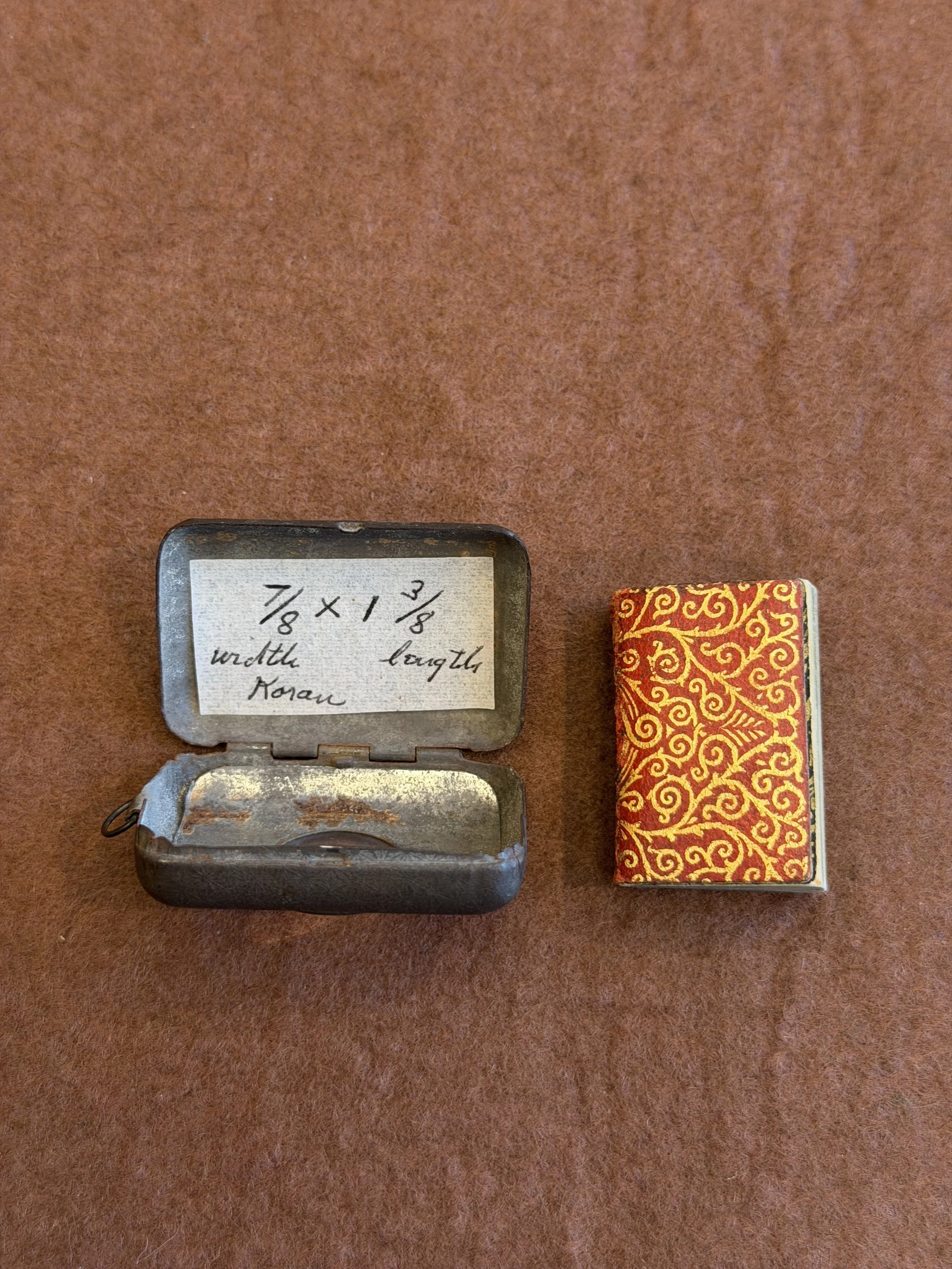
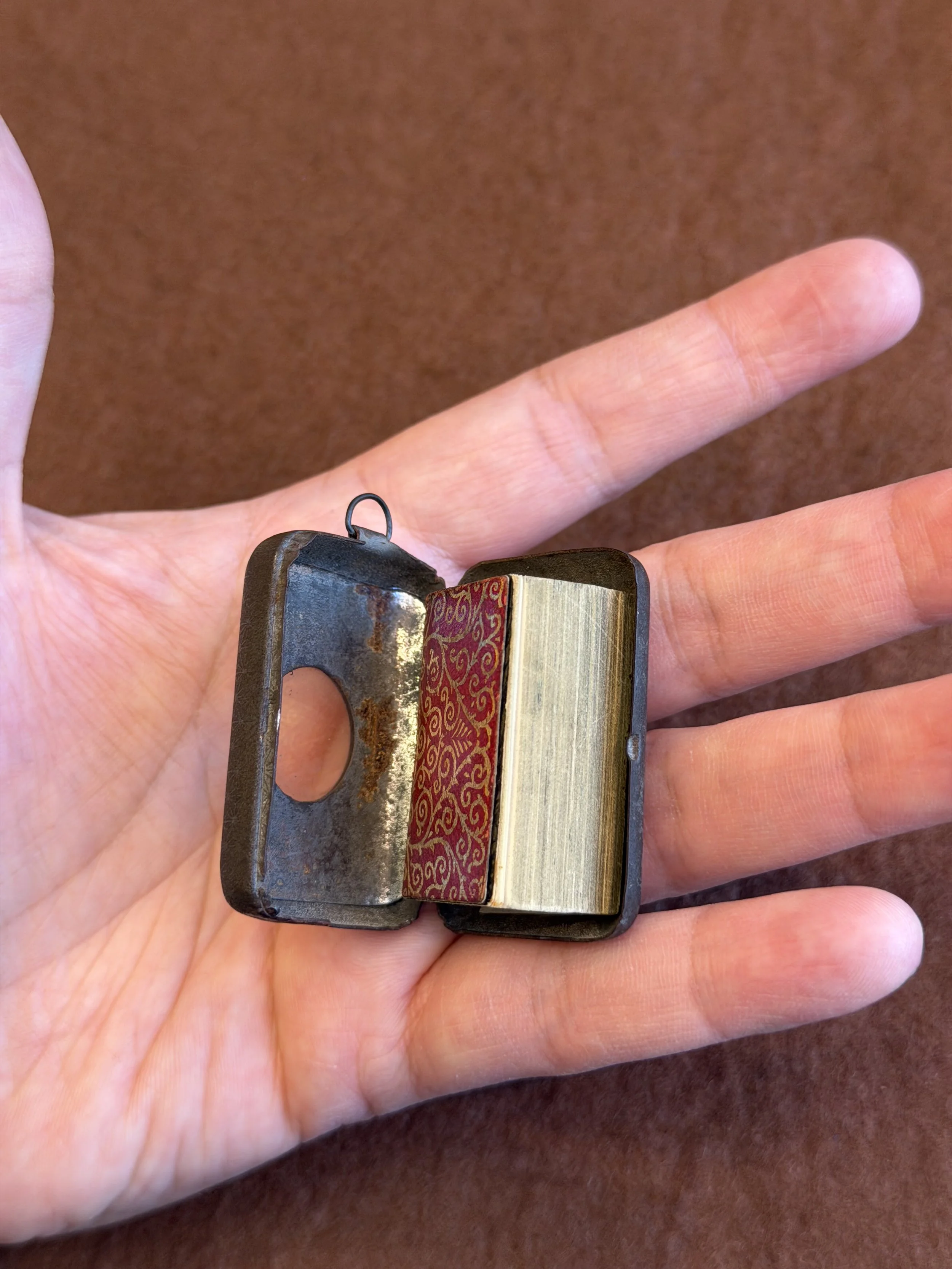
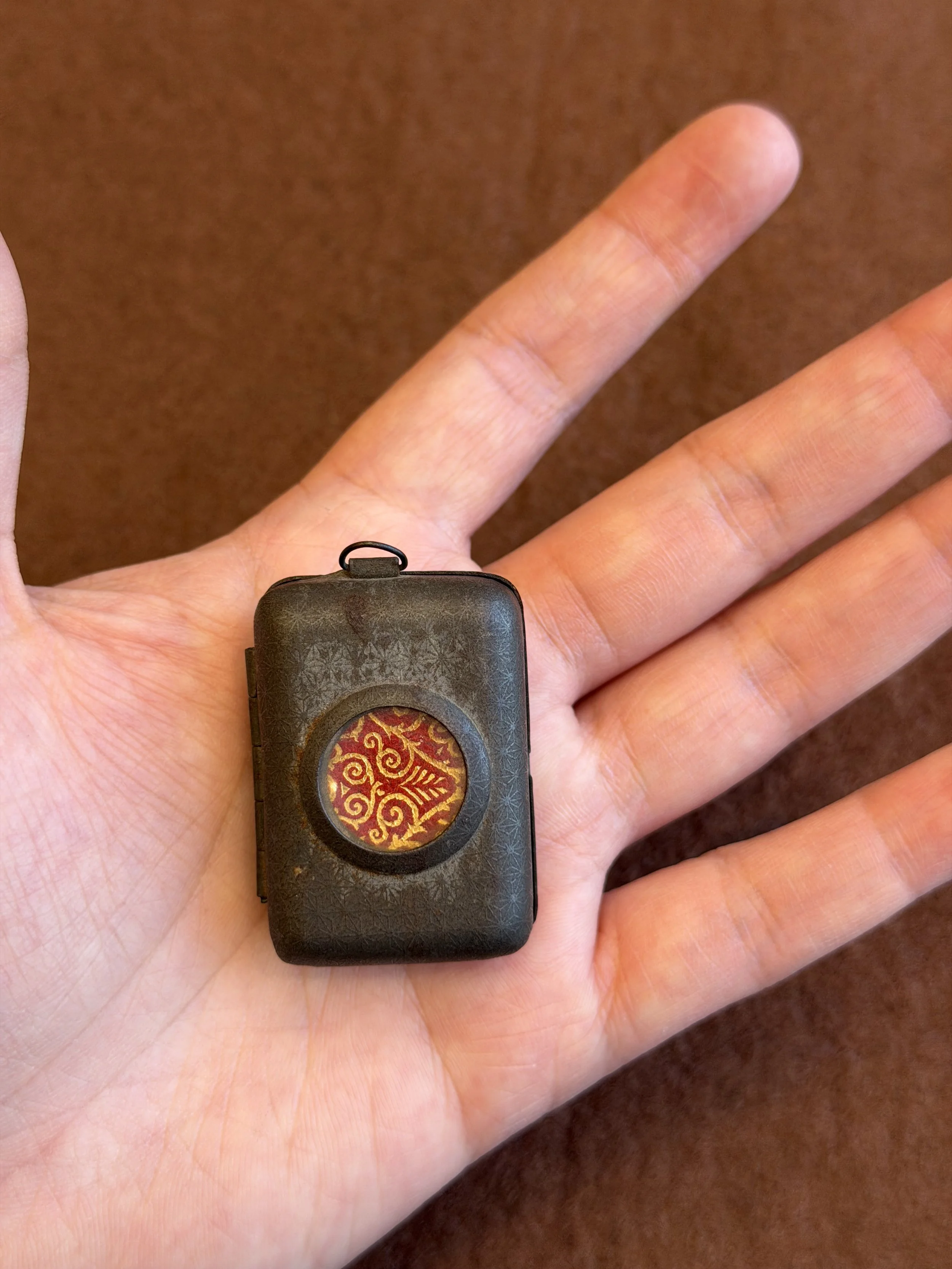
The metal casing is ornamented with geometric star patterns reminiscent of those employed in Ottoman architectural decoration, particularly in mosque interiors, wooden minbars, and tile revetments. Such decorative motifs place the object firmly within the visual vocabulary of Ottoman religious art and lend the small container an architectural character suggestive of the sacred spaces with which the Qur’an itself was associated.
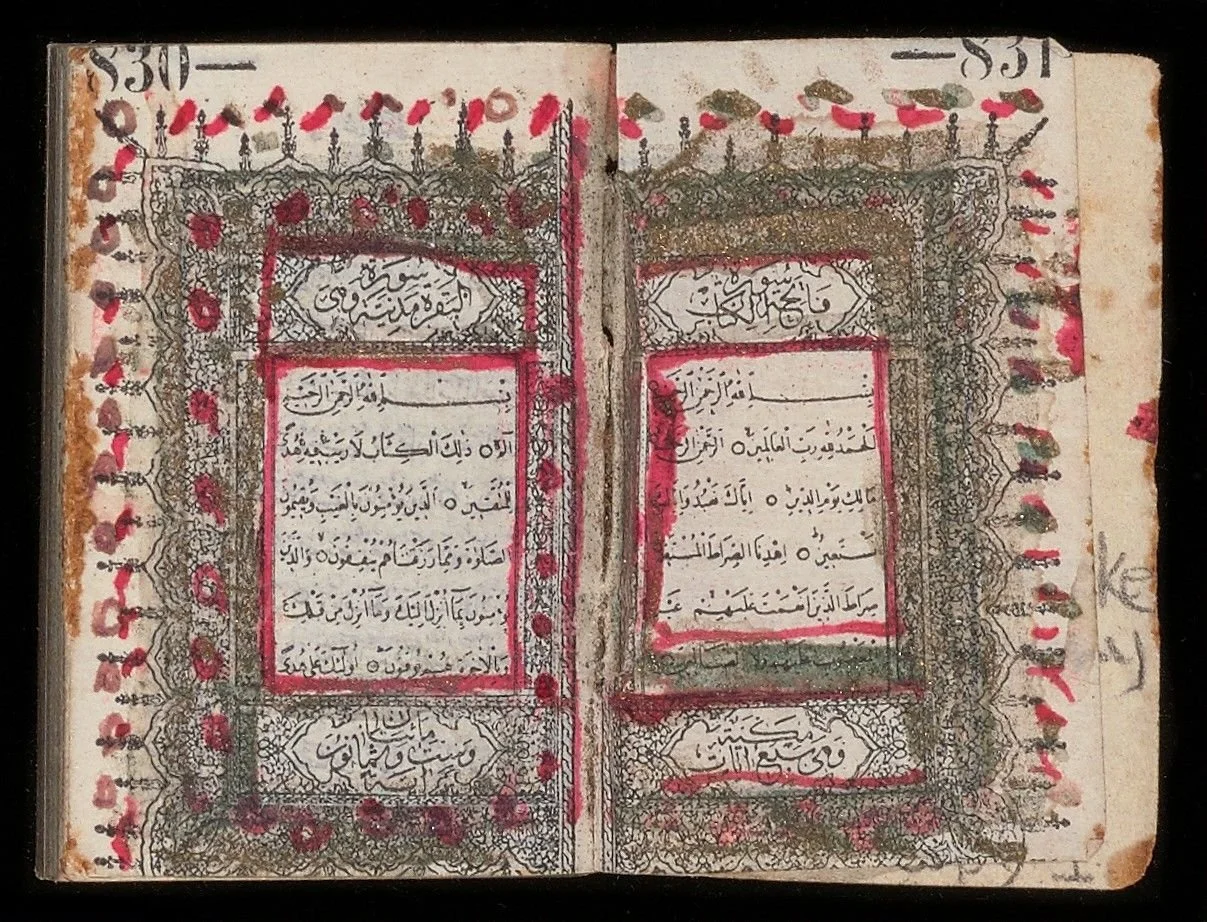
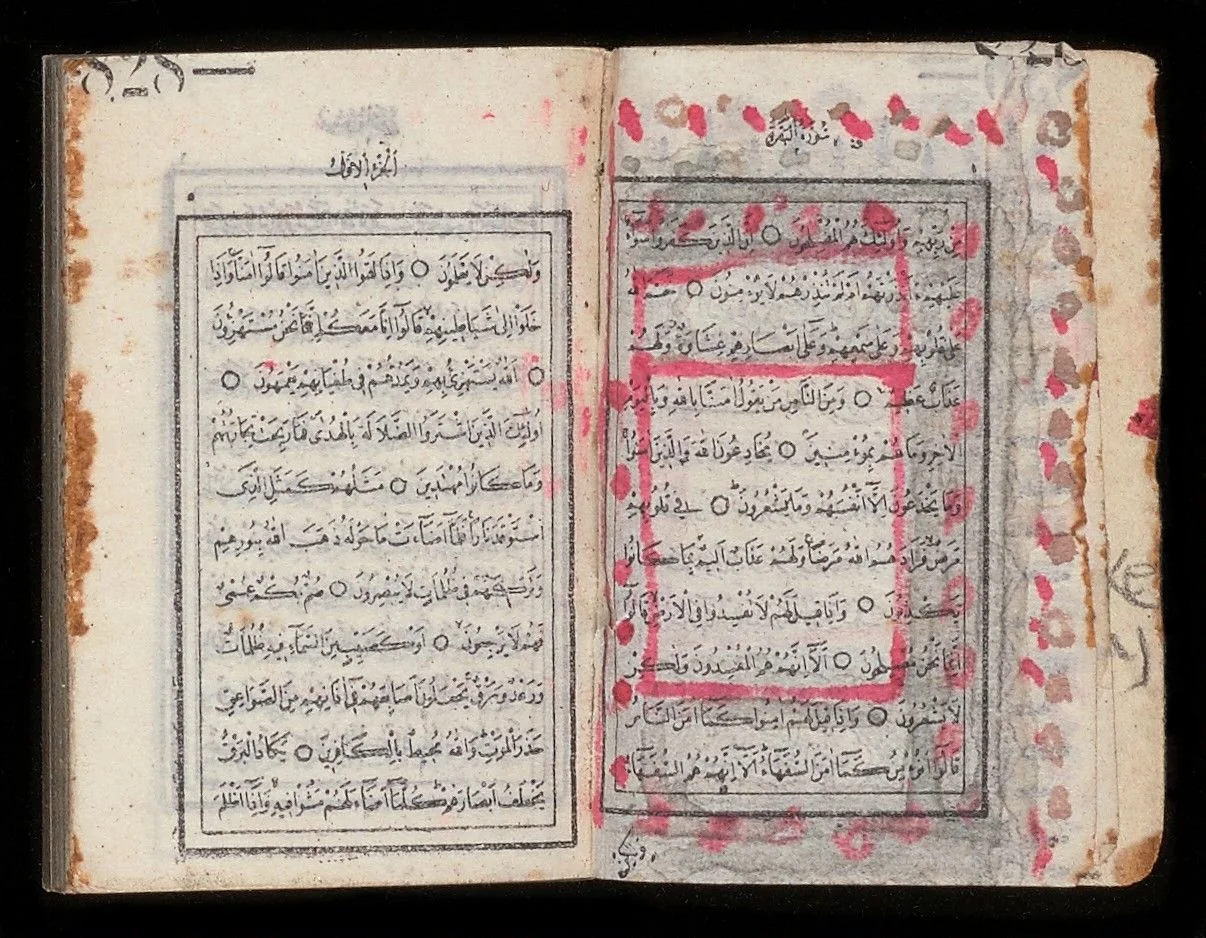
Our Beinecke Qur’an was printed from the calligraphic exemplar of Ḥāfiẓ ʿUthmān Efendi, the distinguished Ottoman calligrapher whose recension of the Qur’anic text acquired near canonical authority within Ottoman scribal culture. Hafiz Uthman, active during the late seventeenth century, refined the proportional system of the naskh script inherited from earlier masters and established a style characterized by clarity, balance, and exceptional legibility. His manuscripts became authoritative models for generations of Ottoman copyists and later served as the basis for lithographic and typographic reproductions in the nineteenth century.
The production of Qur’ans through mechanical printing represented a significant development in the history of Islamic bookmaking. Although manuscript transmission retained immense prestige throughout the Ottoman period, advances in lithographic reproduction permitted printers to preserve the visual integrity of established calligraphic traditions with increasing fidelity. Ottoman printers proved especially attentive to this matter. The printed Qur’an was expected to maintain the aesthetic conventions of manuscript culture, including the proportional arrangement of the page, the form of verse markers, and the disciplined regularity of script associated with trained calligraphers.
Miniature Qur’ans possess a history extending several centuries prior to this nineteenth century example. Manuscripts copied in minute ghubārī script are known from the Mamluk, Safavid, and Ottoman periods. Such copies were often enclosed in metal containers and carried by soldiers, pilgrims, merchants, and travelers. Examples survive attached to military standards, while others formed part of personal devotional assemblages. Their portability rendered them especially suited to an increasingly mobile imperial and commercial world extending from the Balkans to the Indian Ocean.
The Beinecke Qur’an belongs therefore to a mature phase in the Ottoman history of Qur’anic printing. By the late nineteenth century, Constantinople had emerged as one of the principal centers for the publication of Arabic religious texts. Imperial patronage encouraged increasingly refined methods of reproduction, particularly for editions intended for devotional use. The minute scale of this volume required the aid of magnification for practical reading, yet its small dimensions were themselves integral to its function. Such objects were intended less for sustained scholarly consultation than for possession, recitation, blessing, and personal attachment.
Particularly noteworthy is the relationship between scale and authority embodied in this copy. The reduction of the sacred text to miniature form did not diminish its formal dignity. On the contrary, Ottoman printers exerted considerable effort to retain the appearance of manuscript refinement even at a size scarcely larger than a pendant or seal case. The result reflects the enduring prestige of calligraphy within Islamic intellectual and artistic culture. Even within the sphere of industrial reproduction, the authority of the handwritten exemplar remained paramount.
The absence of a formal title page, noted in the catalogue description, likewise preserves an older manuscript convention. Bibliographic information appears instead in the colophon, following established Islamic scribal practice. In this respect the printed object consciously imitates the codicological habits of manuscript production rather than adopting fully European typographic arrangements.
This miniature Qur’an offers a concise illustration of several intersecting histories within the late Ottoman world: the persistence of calligraphic authority, the adaptation of mechanical printing to Islamic aesthetic standards, and the enduring circulation of portable devotional objects across the empire. Small in scale though considerable in historical significance, it stands as a representative example of nineteenth century Ottoman Qur’anic production and of the broader material culture surrounding the transmission of the sacred text.