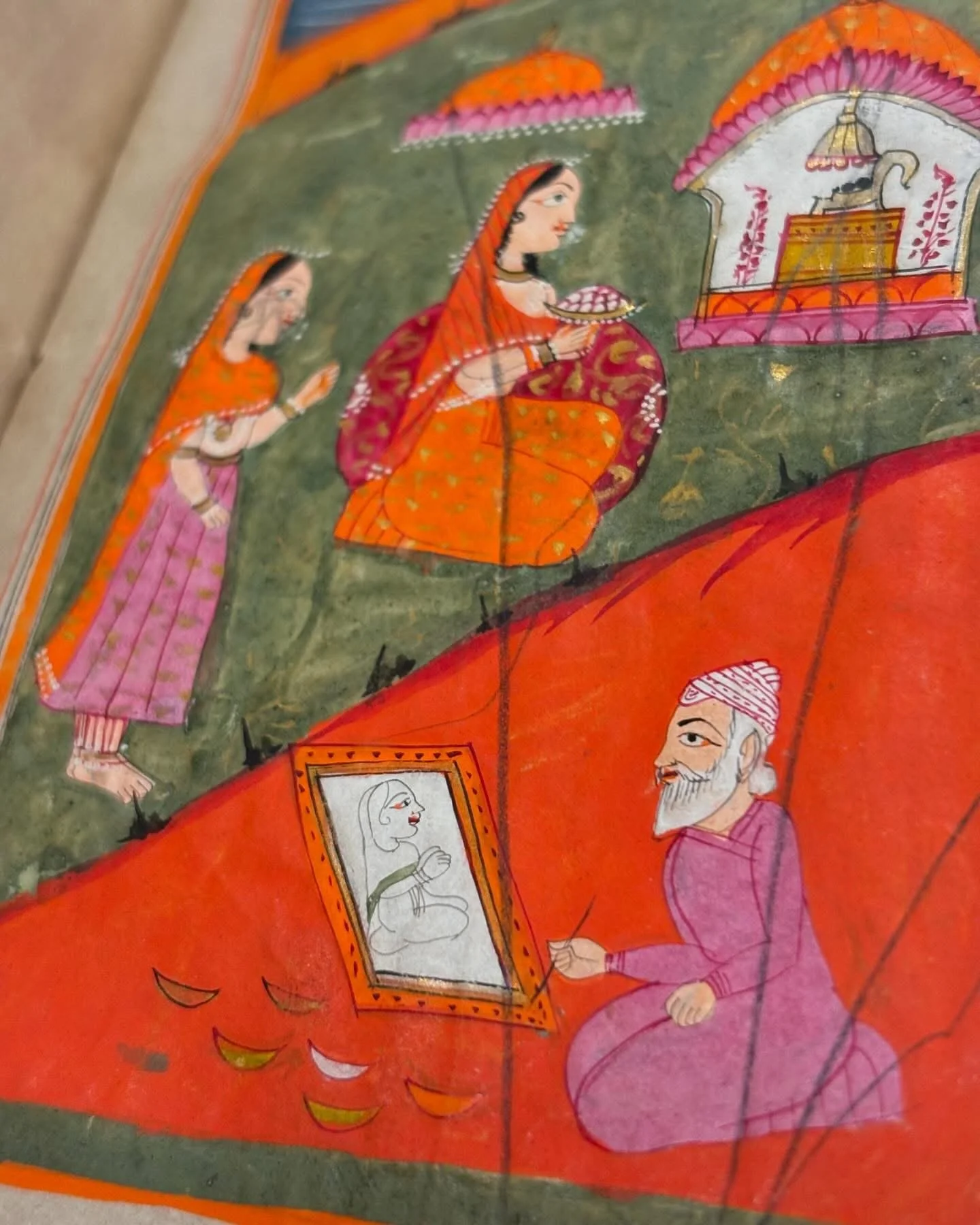
While spending a week conducting research in UCLA’s Special Collections, I came across a manuscript that immediately drew my attention for both its visual richness and literary importance, Qiṣṣah i Candar Badan. At the heart of the poem is the love story between Mahayār, a Muslim man, and Candar Badan, a Hindu woman. While the narrative follows the conventions of romantic storytelling, its deeper meaning lies in its exploration of spiritual love and unity. Like many masnavis influenced by Sufi thought, the relationship between the two lovers can be read symbolically, suggesting the soul’s longing for the divine. What makes this work especially compelling is how it presents love across religious boundaries, emphasizing shared humanity rather than difference. This theme would have been controversial in its own time and remains sensitive even today, as relationships between Muslims and Hindus continue to carry social and political weight.
When compared to other Indo Persian and Urdu masnavis such as Yusuf o Zulaikha or later Urdu romantic epics, Qiṣṣah i Candar Badan stands out for its early use of Urdu and its distinctly Indian setting. Unlike Persian masnavis that often draw on biblical or Quranic figures, this poem is rooted in local culture, language, and social realities. Although the manuscript is preserved, it also bears signs of a complicated history. Several pencil marks appear over the illustrations, almost childlike in nature, making it unclear who handled the manuscript and whether it was always treated as a precious object. At the same time, the colors remain strikingly vibrant, with orange and red dominating the visual palette and giving the manuscript a sense of energy and immediacy.
Historically, the manuscript speaks to a time when literary production in South Asia was deeply interconnected with religious, linguistic, and artistic exchange. The fact that this work is preserved and studied at UCLA today highlights its ongoing relevance not only as a literary artifact, but also as evidence of a shared cultural past in which stories crossed boundaries of faith and language. Qiṣṣah i Candar Badan reminds us that early Urdu literature was shaped by dialogue, hybridity, and a sustained engagement with questions of love, devotion, and coexistence.
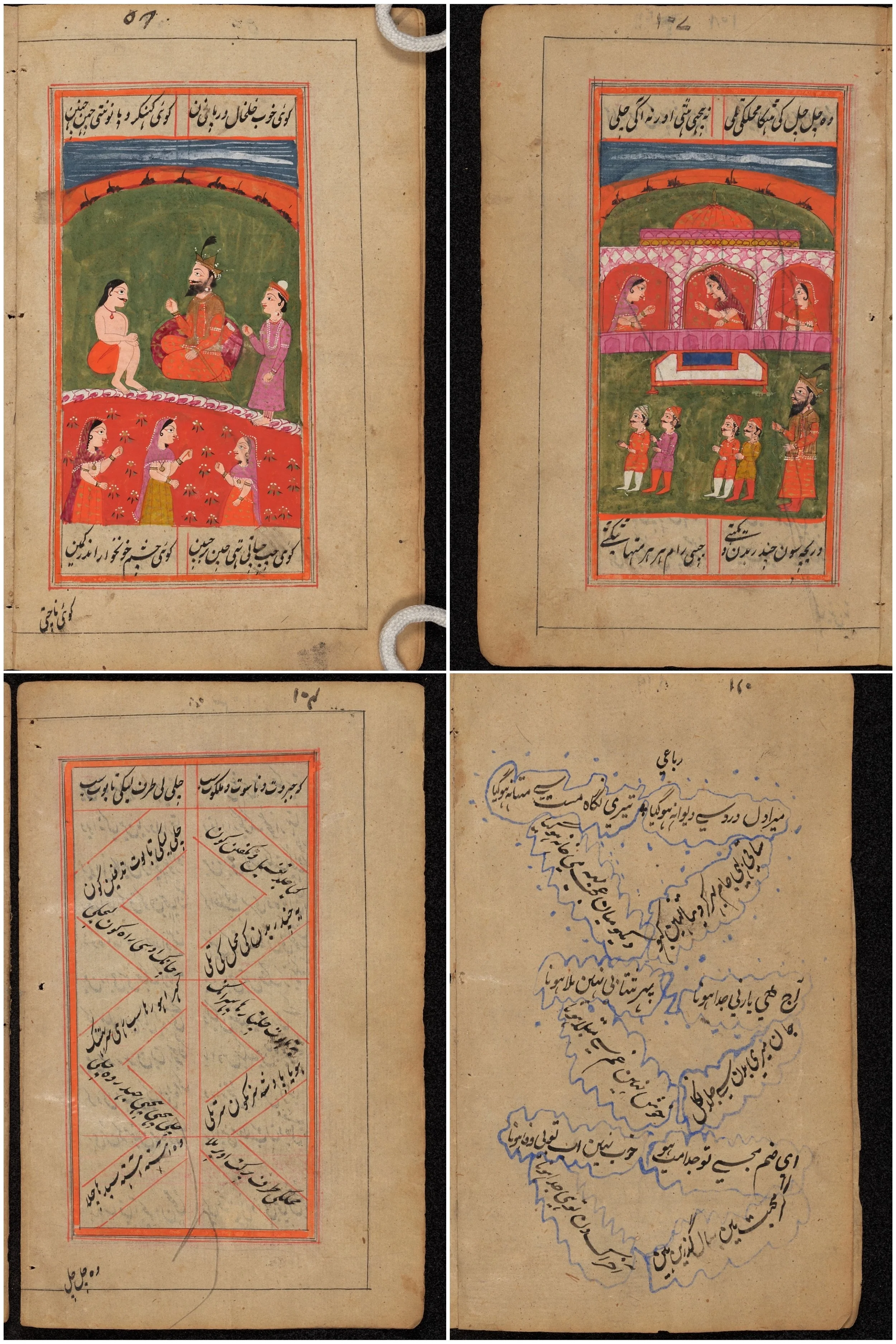
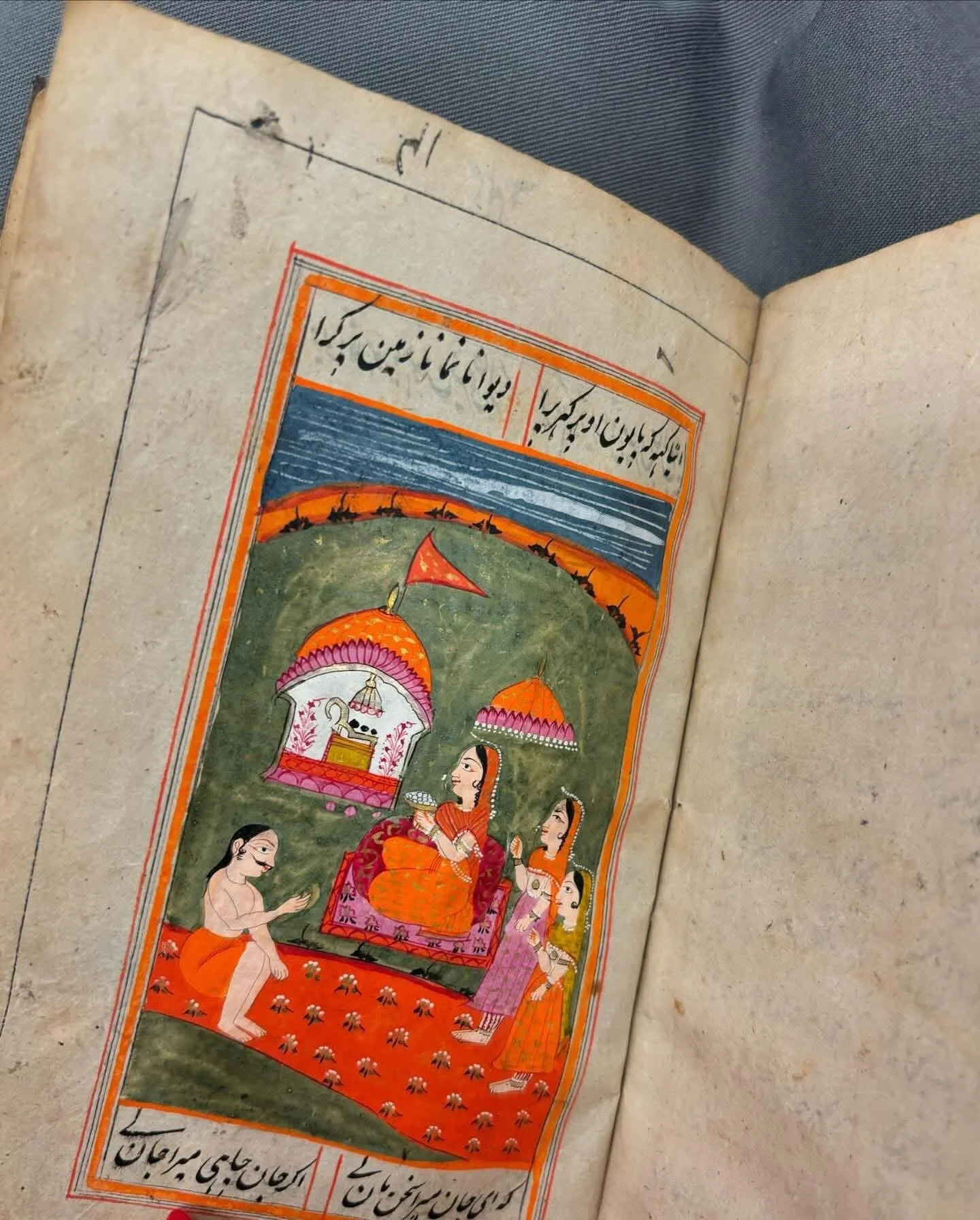
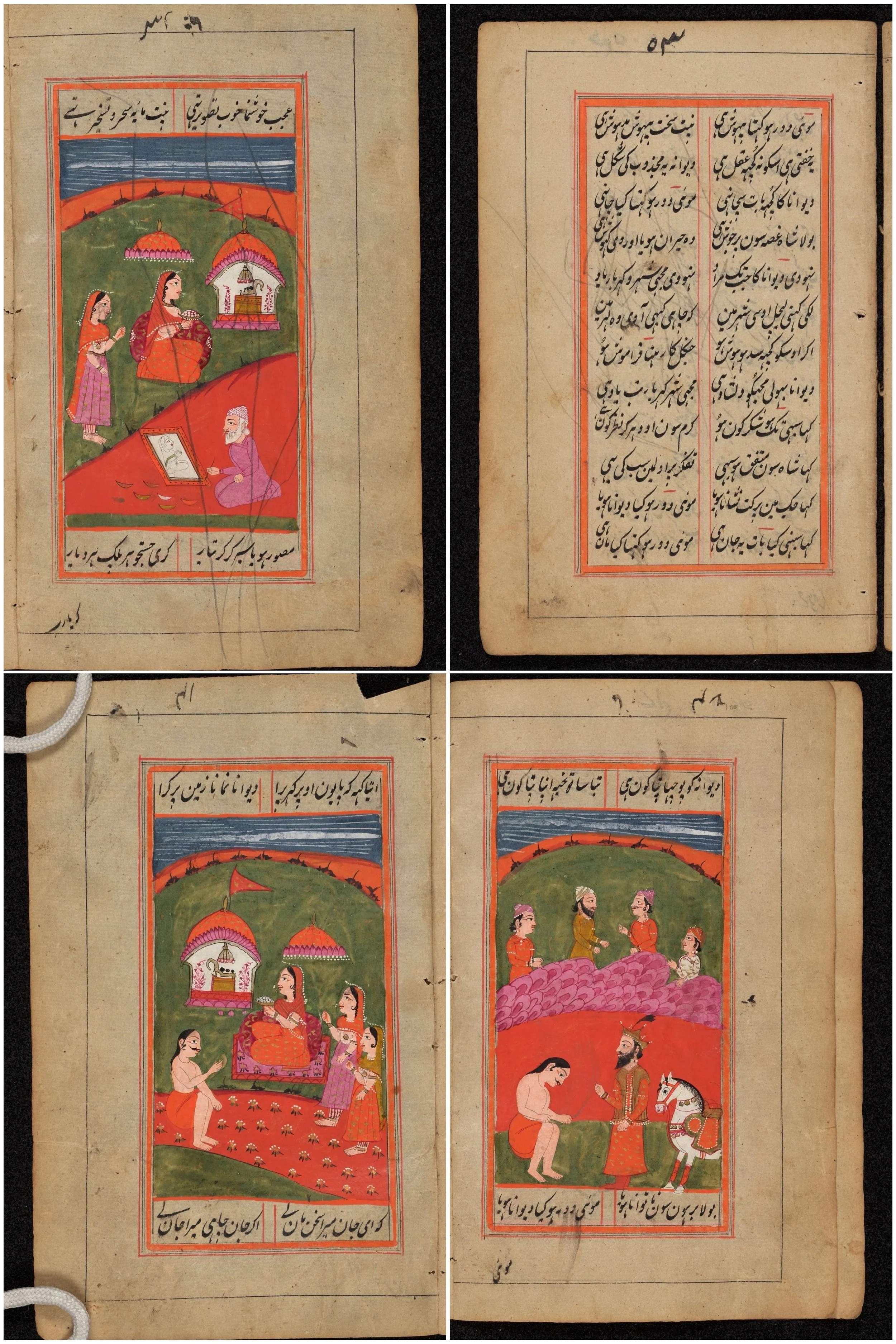
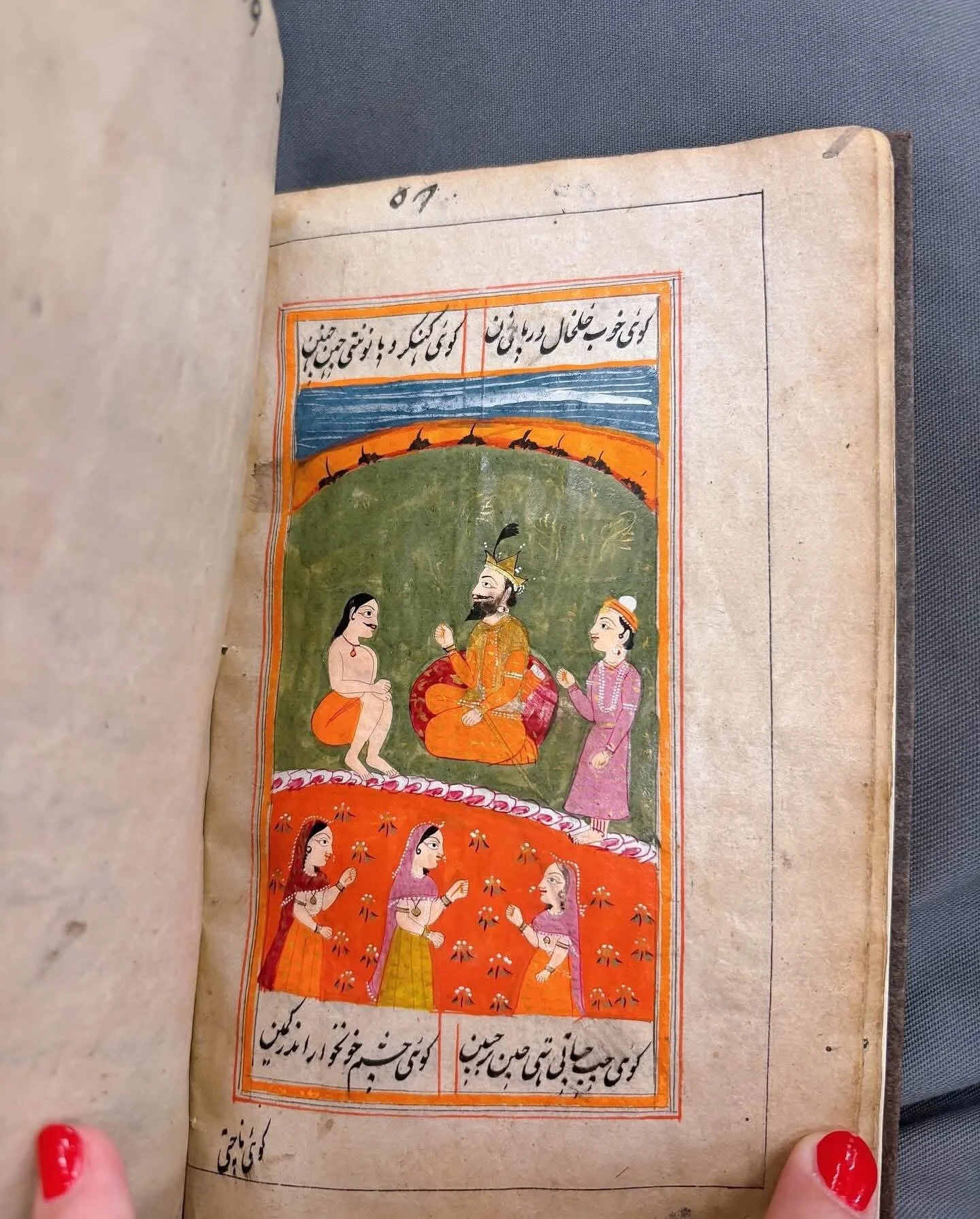
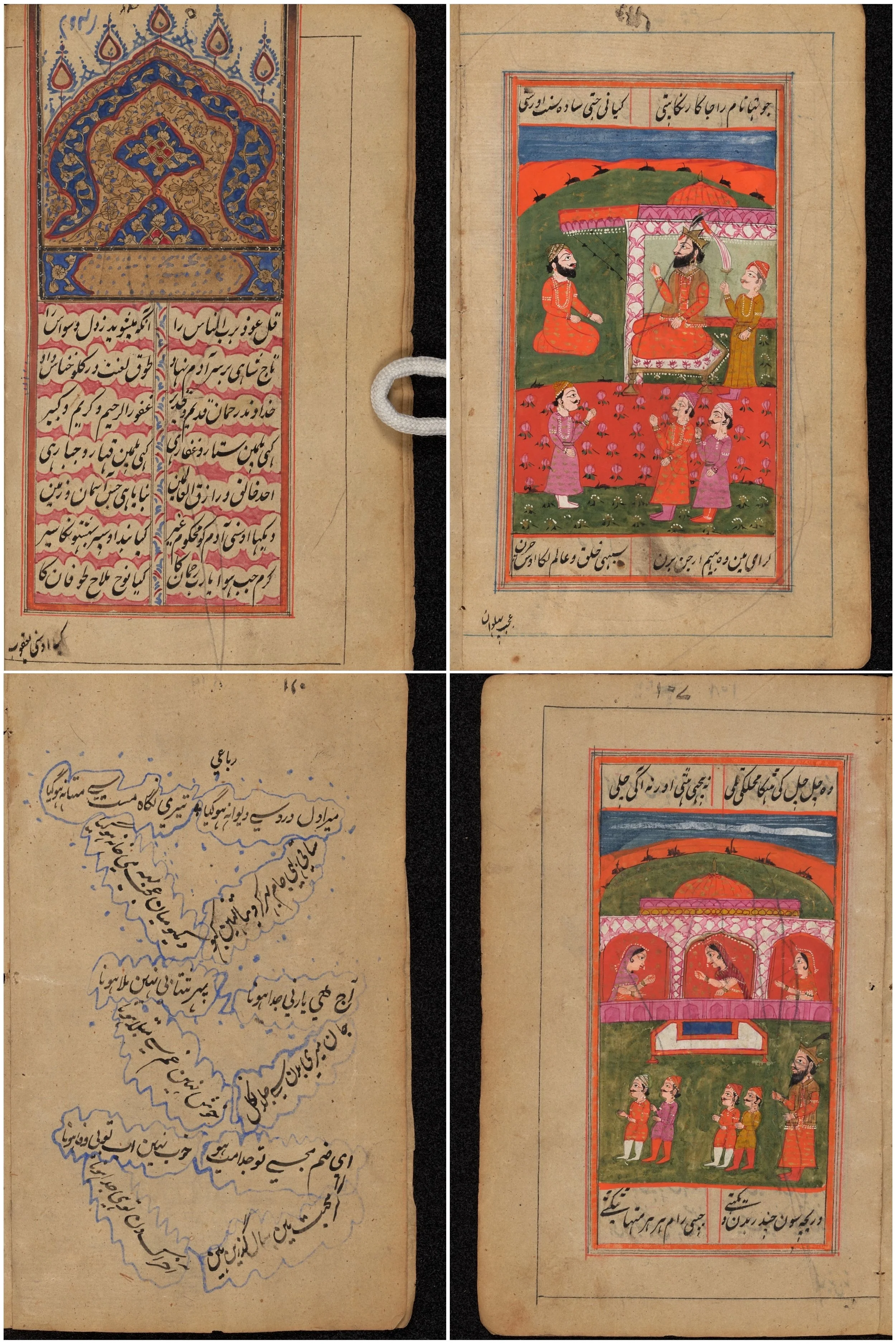

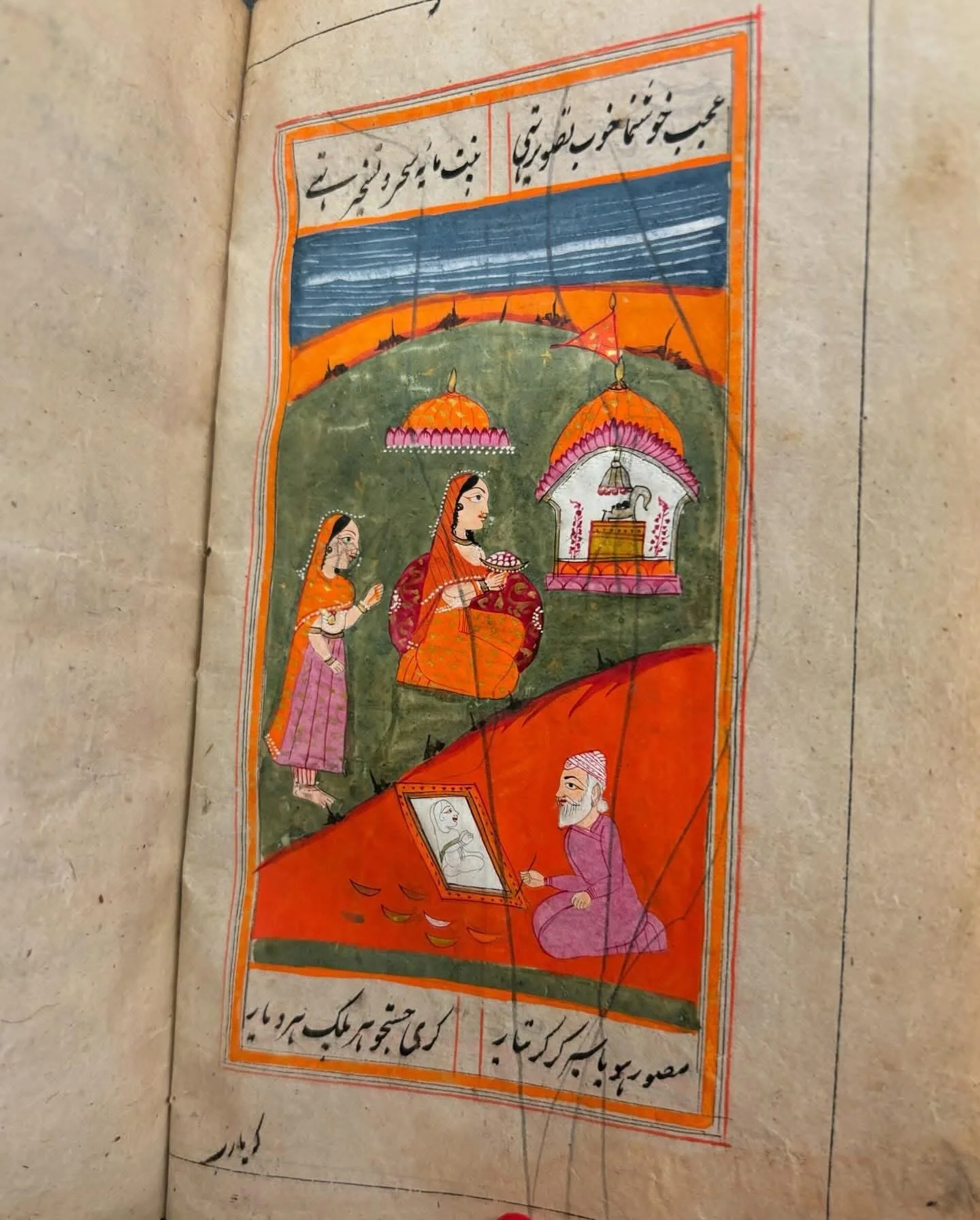

Title: Qiṣṣah-i Candar Badan - قصہ چندر بدن
Masnavī-yi Candar Badan va Mahayār - مثنوى چندر بدن و مہیار
Author (Creator): Saif Allah Dihlawī (سیف اللہ دهلوى)
Scribe: Ṭūṭī Rām (طوطی رام)
Language: Urdu
Script: Nastaʿlīq
Date: Original composition: 17th century (Dakhni Urdu, Adil Shahi period)
Manuscript copy: ca. 1838–1839?
Colophon date: 1895 (Vikrami calendar)
Place of Origin: India (probable)
Genre: Masnavi (narrative poetry)
Collection: Wellcome Collection of Near Eastern Manuscripts
Current Location: UCLA Library Special Collections, Charles E. Young Research Library