The Rare Illuminated Qur’an of Siyu: A Masterpiece from the Swahili Coast at UCLA Fowler Museum
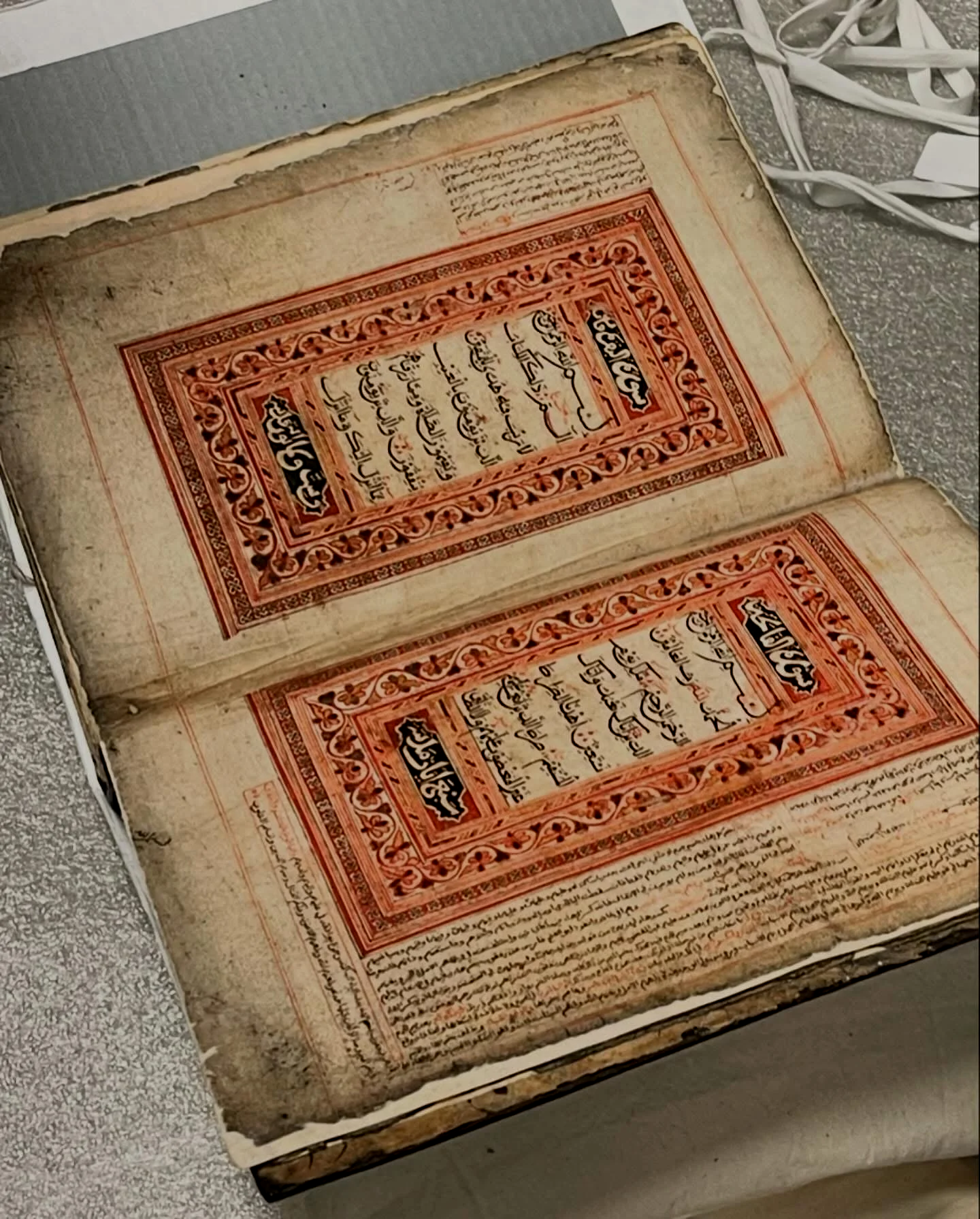
It was a privilege to see in person the illuminated Qur’an from Siyu, Kenya, now housed at the UCLA Fowler Museum. This manuscript, dating to the late 18th or early 19th century, is exceptionally rare. What makes it especially remarkable is that it is the only known single-volume Qur’an from the Swahili coast that preserves the entire text in one complete manuscript. Most other Qur’ans from this region survive only in parts or multiple volumes, making this object an extraordinary example of Eastern African manuscript culture.
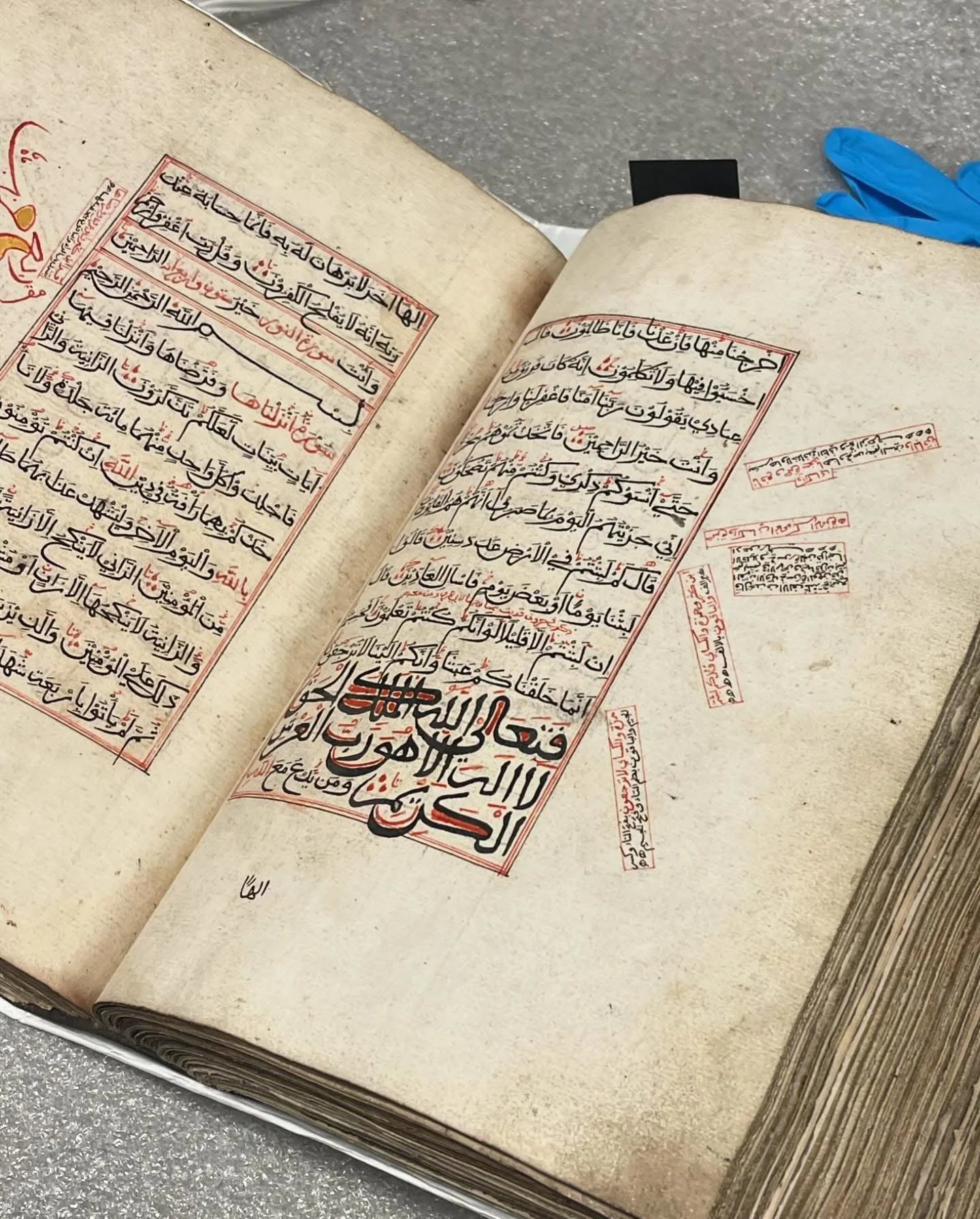
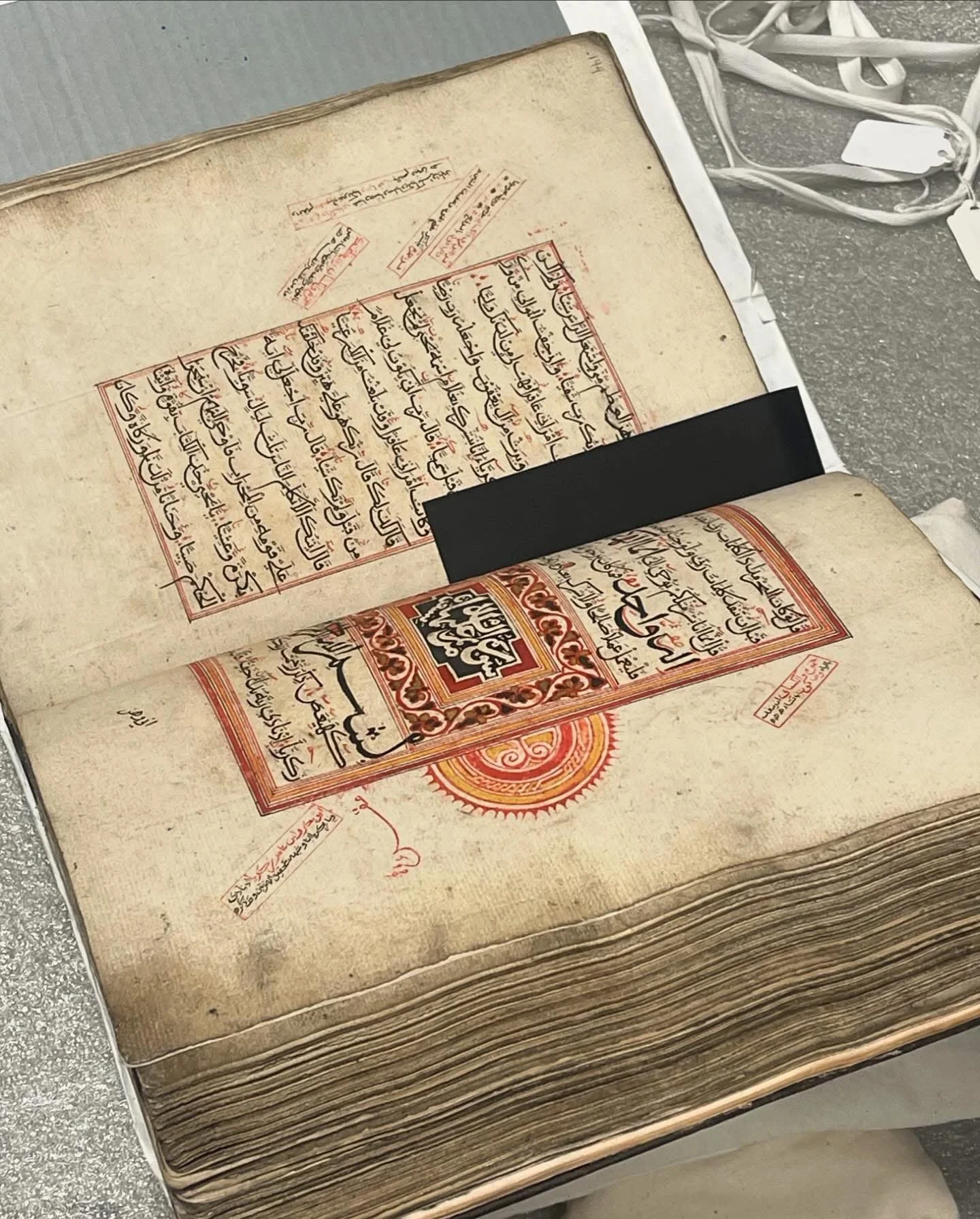
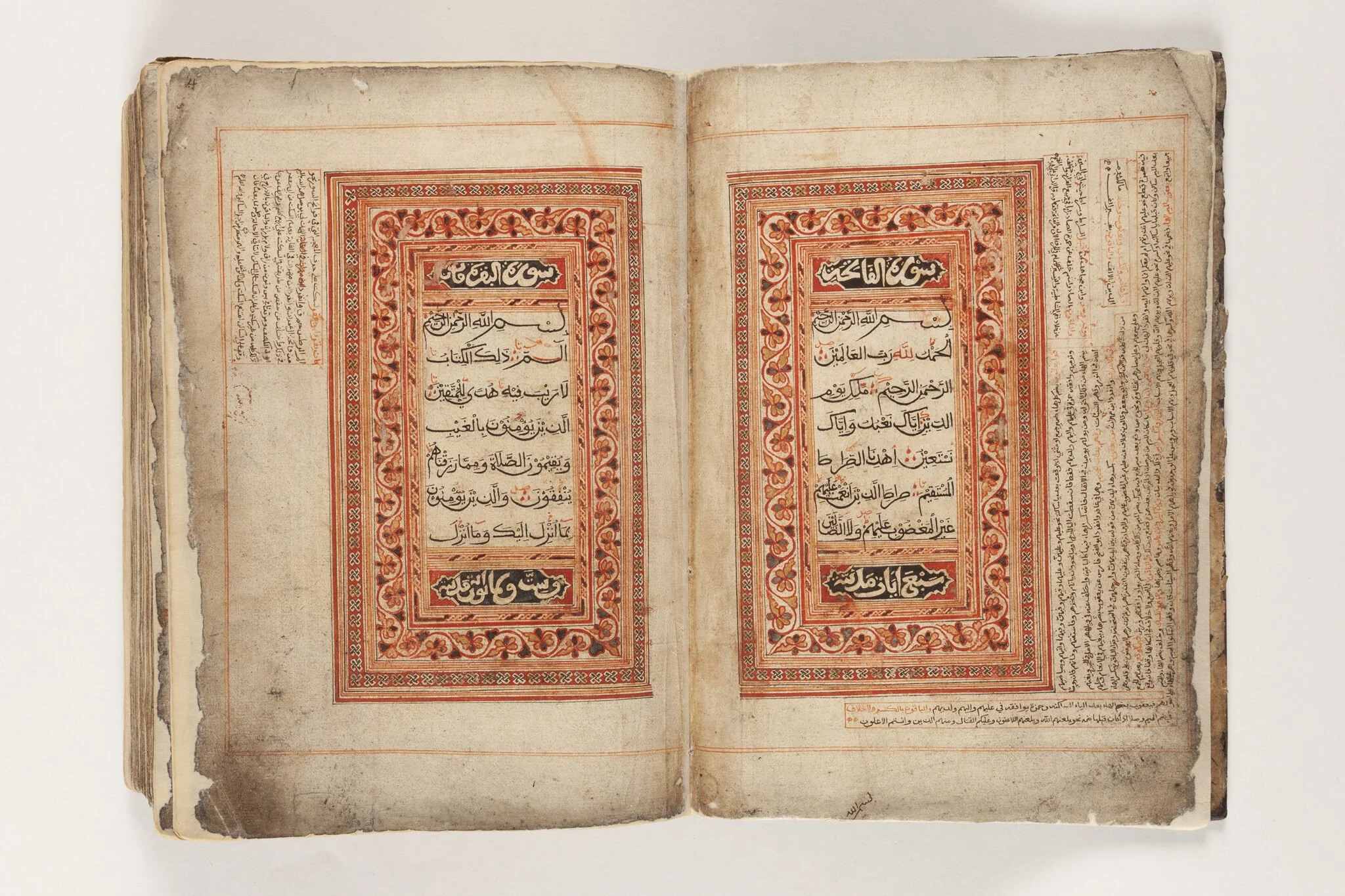
The Qur’an is bound in dark brown leather, embossed with geometric and floral patterns, while the pages inside feature black, red, and yellow inks that create a striking visual contrast. Siyu scribes carefully arranged the text and ornamentation, using black outlines to define blank spaces and generate a dynamic rhythm across the page. The precision of this layout reflects both artistic skill and attention to readability, showing the dual function of the manuscript as both an object of devotion and a work of art.
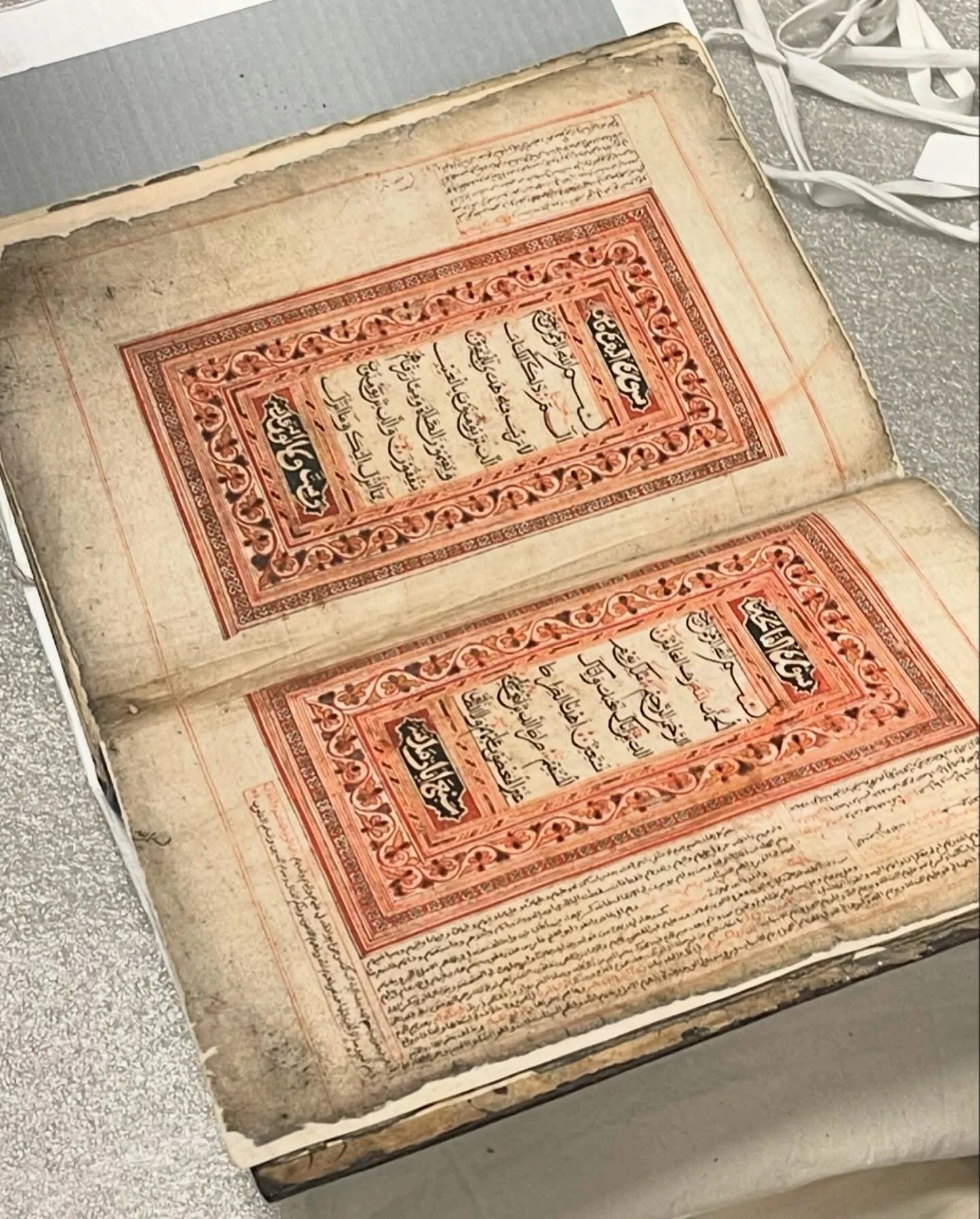
Its decorative motifs are deeply rooted in local Swahili traditions. Geometric knot patterns, floral and foliate designs, and the “Solomon’s knot” appear throughout the manuscript, echoing motifs seen on tombstones, carved doors, and other Swahili artworks. At the same time, the style demonstrates connections to other East African coastal cities such as Lamu and Mogadishu, indicating that Siyu’s scribes were part of a broader, cosmopolitan network of Islamic manuscript production.
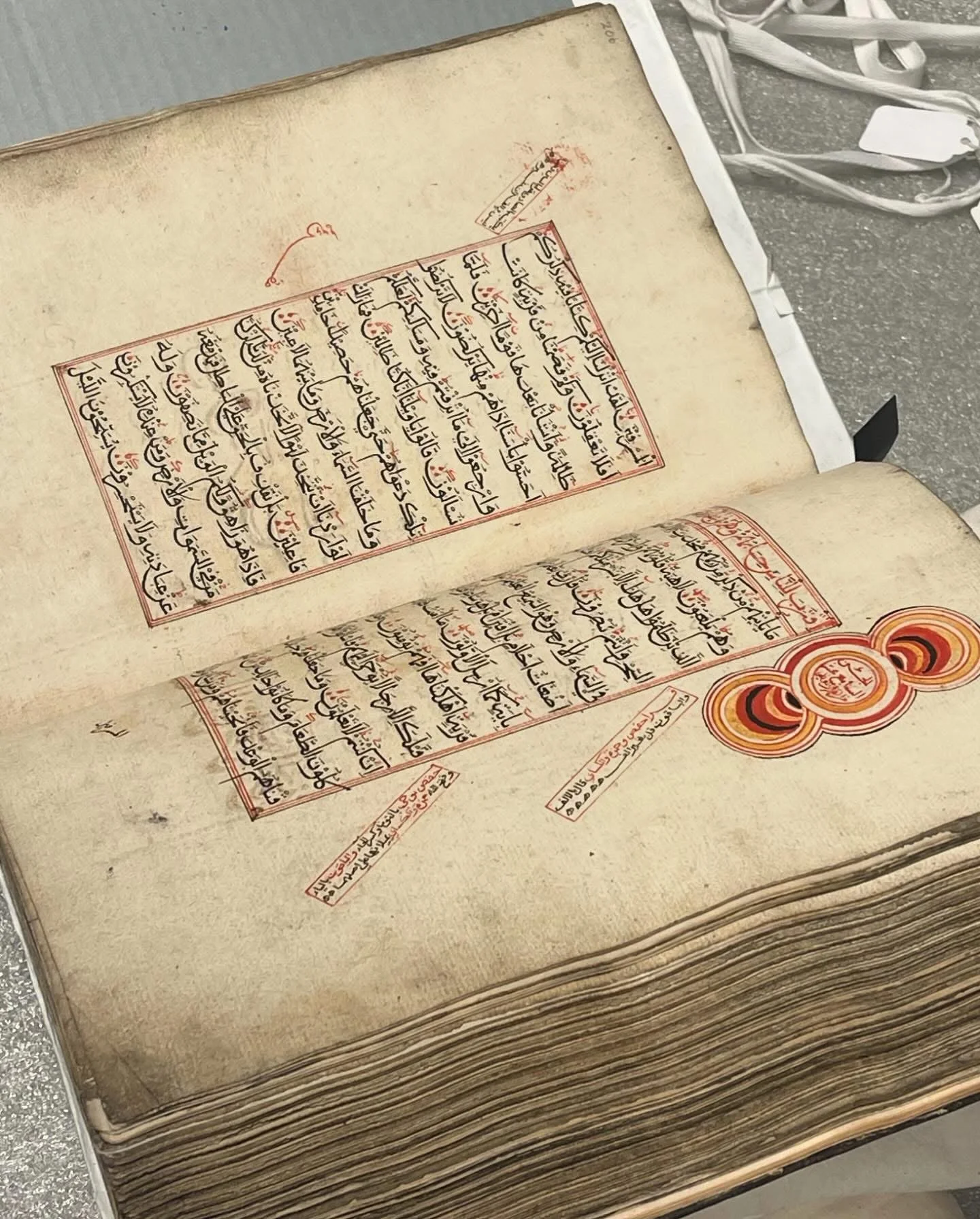
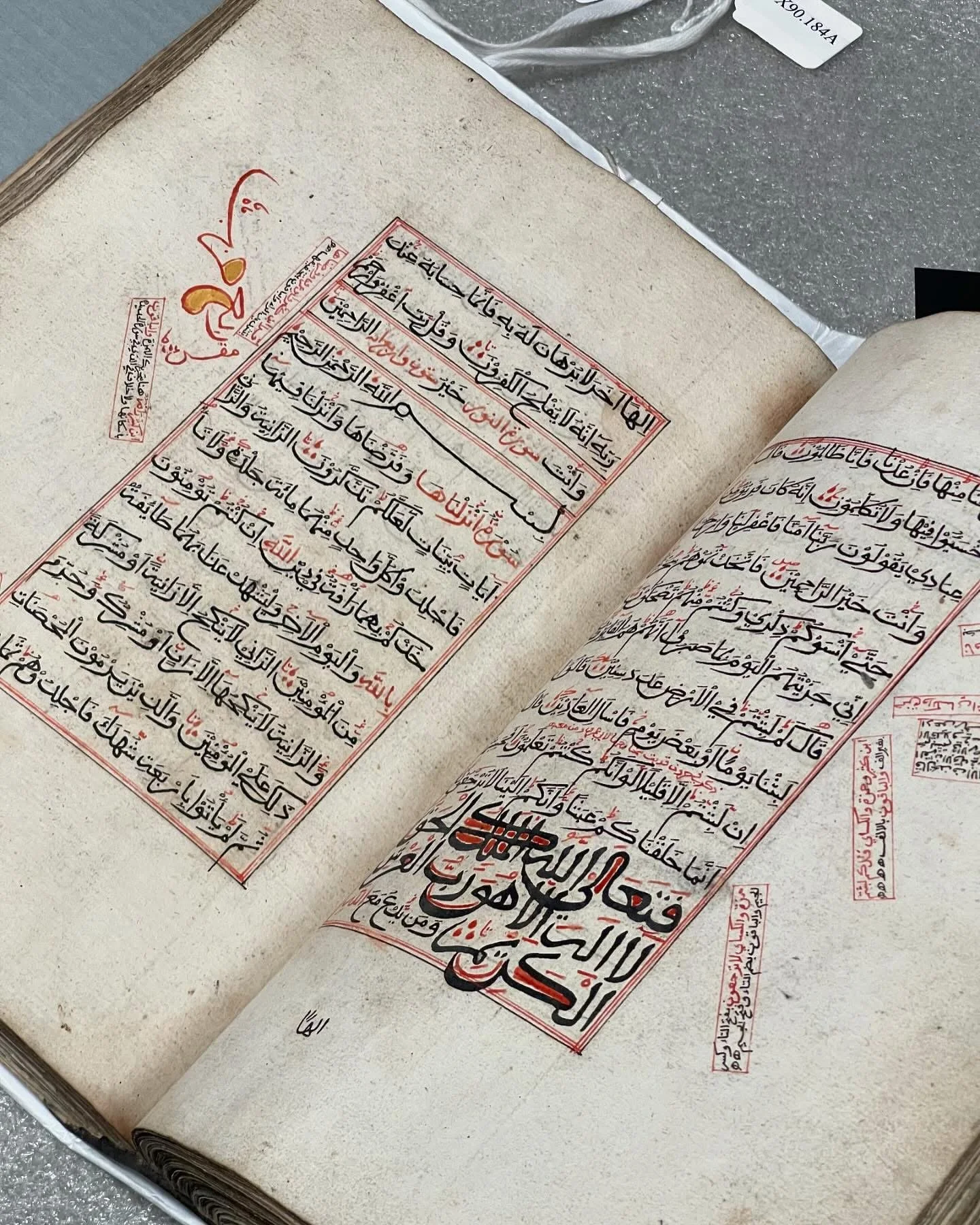
The Qur’an was also created for practical use. Marginal annotations, chapter divisions, and markers for prostration (sajda) suggest that it was intended for study and recitation. Its combination of functional clarity and intricate illumination exemplifies the intellectual and artistic achievements of Siyu. The opportunity to see this complete manuscript in person is rare, offering a unique window into the rich cultural, scholarly, and artistic life of the Swahili coast.
Date & Origin: Made between the late 18th and early 19th century on Pate Island, part of the Swahili Coast, by Swahili scribes in Siyu.
Uniqueness: Only known complete, single-volume Qur’an from this region; most other East African Qur’ans survive in fragments or multi-volume sets.
Materials: North Italian paper, locally made ink in black, red, and yellow-brown, bound in dark brown leather with raised floral and geometric patterns (made with metal stamps or dies).
Size: Approximately 26.5 × 20.3 × 7.6 cm.
Calligraphy: Cursive script resembling naskh, with some unique local features like extended letter tails; Allah written in red, vocalization marks and verse endings also in red.
Decoration:
Frontispiece: layered rectangular frames with repeated knots, floral/vine motifs, and “S”-shaped cable patterns.
Chapter headings (sura): in white on black background, with stacked or overlapping letters.
Prostration (sajda) markers, division markers (juz), and stylized basmalas for reading guidance.
Margins: Rectangular boxes with commentary, variant readings, and scholarly notes in black and red ink, sometimes likely written by the same scribe.
Function: Manuscript intended for study, recitation, and worship, combining artistic beauty with practical use.
Cultural context: Reflects Swahili traditions, local motifs seen in tombstones, carved doors, and stucco work; also shows connections with Lamu, Mogadishu, and broader Indian Ocean Islamic communities.
Paper origin: Northern Italy, shipped via Egypt/Sudan; demonstrates trade links between East Africa and wider Indian Ocean world.
Rarity: Only twelve illuminated Qur’ans from the Swahili Coast survive; this one is particularly important for being complete and fully illuminated.